
There isn’t a single miracle cure for garden pests—but there are plenty of effective ways to keep insect damage under control naturally. The best organic pest control starts with healthy plants, beneficial insects, and simple prevention. When pests do appear, homemade insecticide sprays and natural repellents can help reduce populations without relying on harsh chemical pesticides. Here are practical, time-tested tips to protect your vegetable garden, flowers, and houseplants using safer, DIY solutions.
How to Prevent Garden Pests Naturally
Before resorting to using pesticides (even organic ones), consider the following techniques to discourage insect pests from attacking your plants:
- Nourish your plants with organic amendments such as aged compost. Strong plants don’t attract as many insects and can withstand their assault better than weak ones. If you’re using fertilizer, follow instructions closely. Over-fertilized plants will attract pests to eat their lush new growth.
- Use companion planting to repel insects naturally. Some plants thrive together; some do not. See our Companion Planting Guide.
- Use barriers like row covers to block pests from attacking your plants, especially tender transplants. (Remove the covers when plants are established and in bloom to allow for insect pollination.) Additionally, “collars” (paper towels or toilet paper cardboard rolls) inserted around the small transplants (1 to 2 inches into the soil) will prevent insects such as cutworms from eating the young stems.
- Time plantings to avoid peak insect populations. For example, plant squash as early as possible to avoid squash vine borers, which lay eggs in early to mid-summer. Plant carrots after June 1 and harvest by early September to avoid the carrot fly.
- Select varieties that are naturally resistant to some pests. I grow a lot of butternut squash because it is highly resistant to attack from the squash vine borer.
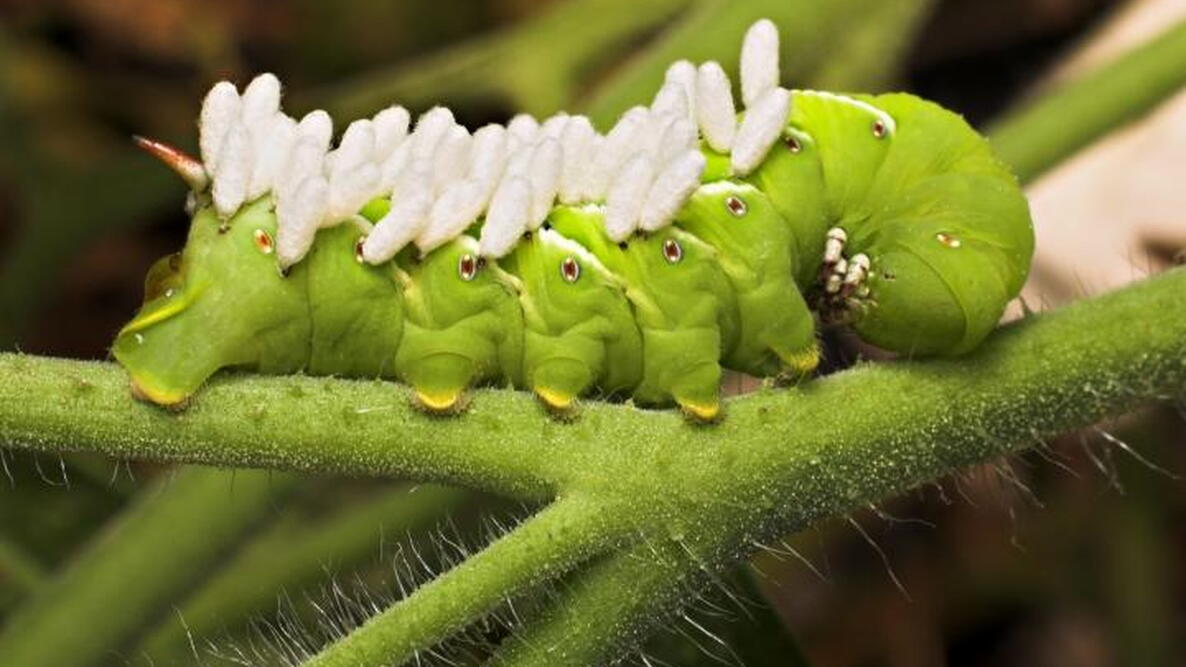
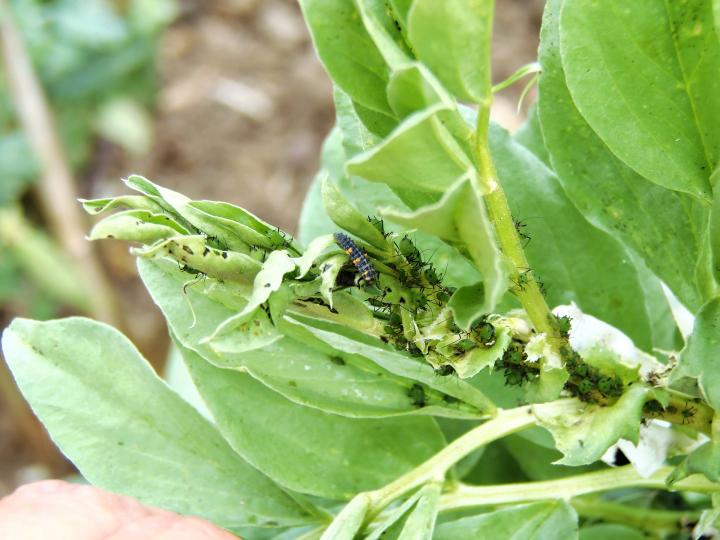
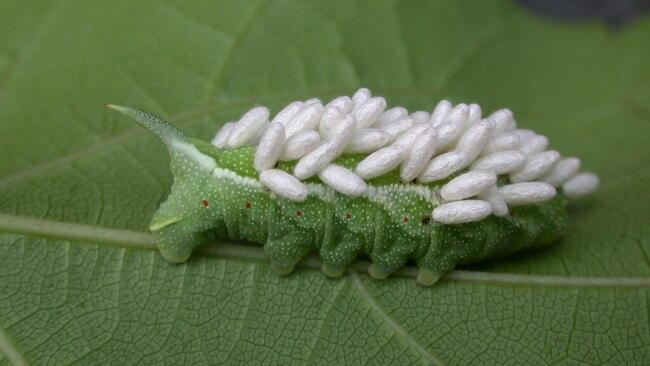
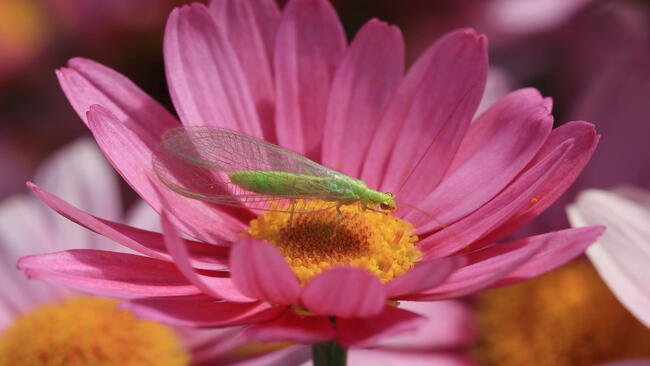
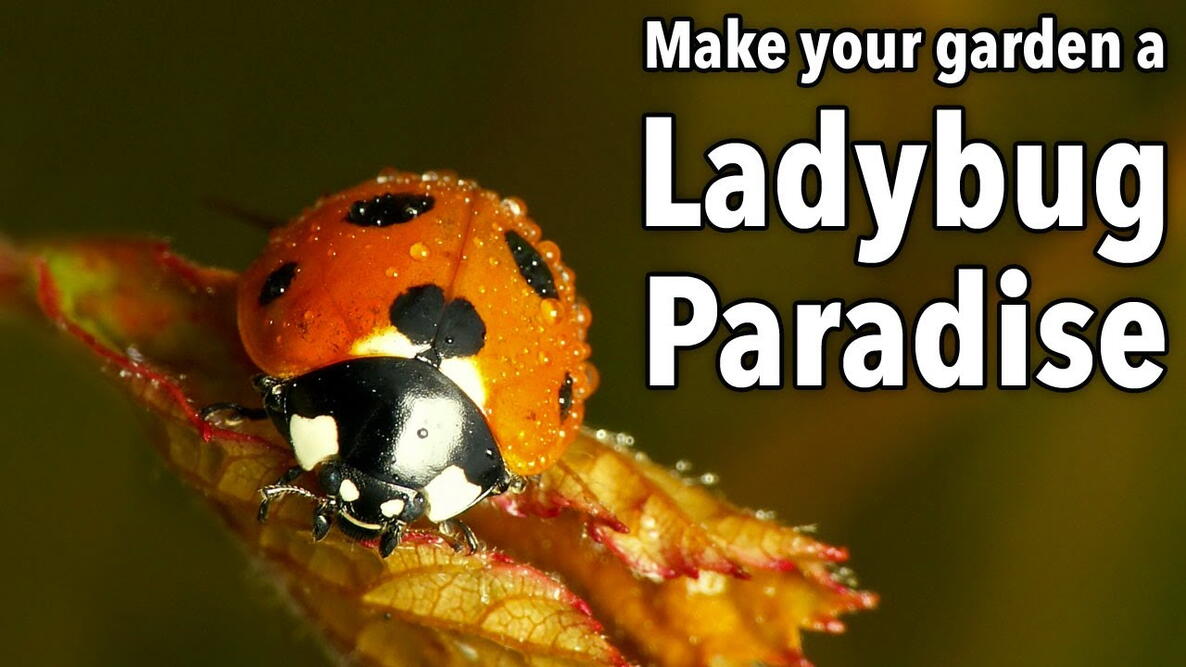
- Make your garden welcoming to beneficial insects, and they will do a lot of the work for you by keeping the bugs they feed on in check. For example, lady beetles are an effective biological control of many insect pests. If you see a tomato hornworm with white cocoons on its back (above photo), leave it alone. A parasitic wasp has laid her eggs on him, and soon, her babies will eat him from the inside out. A fitting death for such a gruesome pest!
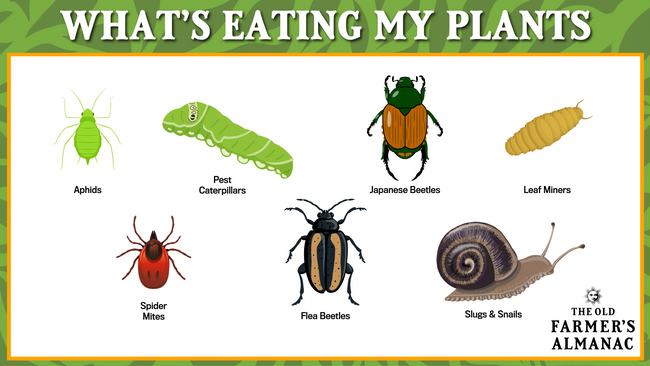
- Learn to identify the bugs in your garden. You can’t beat them if you don’t know who is a friend and who is a foe. Learn what their larvae and eggs look like to head them off before they become adults.
5 Homemade Organic Insecticide Sprays
If you have exhausted all these methods and feel you must use a spray, don’t reach for harsh chemicals. They will do more harm than good by polluting the watershed, killing good and bad bugs alike, and eventually, the insects you are trying to kill may grow resistant to those chemicals, requiring you to use even stronger ones! They can also harm birds, animals, you, and your children!
Try a more natural approach by making one of these homemade insecticidal sprays. Remember that although they are less toxic, they are not totally harmless. Keep them away from kids and pets. Test them on a few leaves before you go all in to ensure they won’t injure your plants. Be sure never to spray them on your plants during the sunny, hot part of the day, or they will definitely cause foliar damage. Spray in the evening when bees and other pollinators are not active.
1. Dish Soap Spray
Dissolve 1 tablespoon of mild liquid soap, such as pure dish soap (no bleach, degreaser, or detergents added) or castile soap, in 1 quart of water. Dr. Bronner’s soap may be expensive, but it uses no animal fats, which makes it a good choice for vegans. Insecticidal soaps are effective for killing soft-bodied insects. Be sure to cover the whole plant—the stems and both sides of the leaves. Soap sprays only work when wet, so they will need to be reapplied every 4-7 days or until you notice that populations have decreased. After a few applications, if rain hasn’t done the job for you, spray the plants with plain water to rinse off any soapy residue.
2. Homemade Oil Spray
Mix 1 cup of vegetable oil with 1 tablespoon of mild liquid soap. Add 2-8 teaspoons of this mixture to 1 quart of water and spray your plants as above. The oil in this spray smothers the insects, so it is effective on aphids, thrips, mites, and scale.
3. Tomato Leaf Insecticide
The leaves of tomatoes contain solanine and tomatine and can be used as an insecticide. Soak 2 cups of fresh leaves in 1 quart of water overnight. Strain and spray. It kills aphids and many types of chewing insects but also attracts beneficials. Don’t use it on other nightshades like eggplants, peppers, or potatoes because it could spread disease from plant to plant.
4. Garlic Repellent Spray
Despite all you’ve read, garlic is more of a repellent than a killer. Purée 2 bulbs of garlic with 1 cup of water and let sit overnight. Strain the liquid into a quart jar, add 1/2 cup vegetable oil and 1 teaspoon liquid soap, and fill the jar the rest of the way with water. Put one cup in a 1-quart sprayer, fill it with water, and apply it to your affected plants. It is good for repelling aphids, cabbage worms, leafhoppers, squash bugs, and whiteflies.
5. Hot Pepper Spray
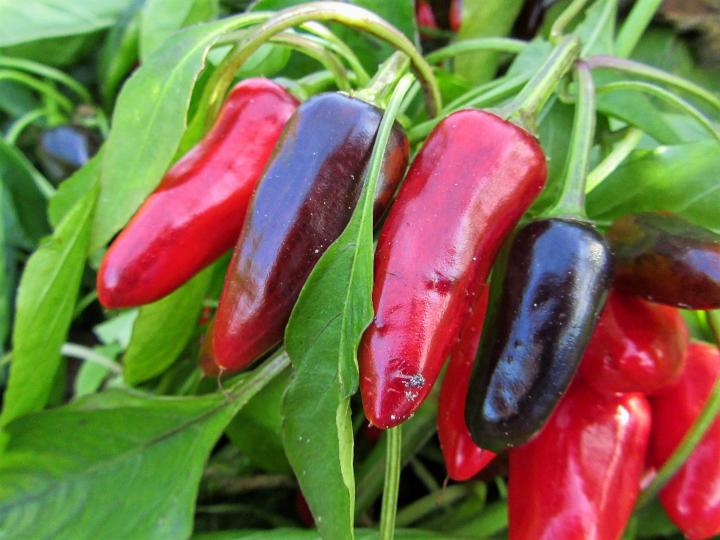
Hot pepper is also a good repellent and works on rabbits and deer, as well as many insects. Mix 1 tablespoon dried chili powder, 1 quart of water, and 1 teaspoon of mild soap. Spray full strength on the plants under attack.
If you have lots of hot peppers growing in your garden, you can make a fresh concoction from 1/2 cup of chopped peppers pureed in 1 cup of water. Add the puree to 1 quart of water and bring to a boil. Let sit until cool, and then strain. Add 1 teaspoon mild soap and spray full strength on plants. You might want to wear gloves when working with this spray, and avoid getting it into your eyes!
Many other plants have been reported to have insecticidal qualities, including hyssop, lettuce leaves, onions, pennyroyal, peppermint, and radish leaves.
There is no one-size-fits-all approach to pest management. At best, we can try to maintain a healthy balance of good guys and bad guys and still get some decent produce!
Frequently Asked Questions
Do homemade insecticide sprays really work?
Yes. Homemade sprays such as insecticidal soap and oil sprays can effectively control soft-bodied pests like aphids, mites, and whiteflies when applied correctly and reapplied as needed.
What is the best homemade spray for aphids?
A simple insecticidal soap made with mild liquid soap and water is one of the most effective homemade treatments for aphids.
Is homemade insecticide safe for vegetable gardens?
Most homemade sprays can be used on vegetables when applied properly. Always test on a few leaves first, avoid spraying during hot, sunny weather, and wash produce before eating.
Can I use dish soap on plants?
Only use mild liquid soap without bleach, degreasers, or added detergents. Strong soaps can damage plant leaves.
What plants naturally repel insect pests?
Companion plants such as marigolds, garlic, basil, and herbs can help deter certain insect pests while attracting beneficial insects.
Now that we’ve learned how to minimize insect pests… let’s tackle weeds. Here are tips on coping with weeds, including 5 Homemade Herbicides.
More Like This
Tobacco is a toxic substance that can kill not only the bad bugs but the good ones too. I would not want it sprayed on any edibles. Also it can spread Tobacco Mosaic Virus to 350 species of susceptible plants including peppers, tomatoes, and eggplant; cukes, melons, and squash; and ornamentals such as coleus, begonias, petunias, and impatiens. Once you have TMV in your garden it is hard to get rid of. The short answer is - I do not recommend sprays made with tobacco.

Vinegar contains acetic acid, and spraying a 50/50 solution of vinegar and water on aphids will kill them.
- « Previous
- 1
- 2
- …
- 10
- Next »

Comments