
Think you know space? There are plenty of common astronomy misconceptions that have been repeated for generations. From whether the Moon really has a “dark side” to what happens during a total solar eclipse, some familiar space facts aren’t quite what they seem. Here are 10 common astronomy myths—and the fascinating truths behind them.
One of the most common misconceptions relating to astronomy involves the equinoxes. We read each year that days and nights are equal on the date of an equinox. However, if you were to look at the sunrise and sunset times listed on your smartphone, you would see that those times didn’t match up. There was more day than night!
Astronomy misconceptions are prevalent even when it’s not the equinox. Here’s a top 10 list of common space and astronomy errors.
1. Do Total Solar Eclipses Make the Sky Completely Dark?
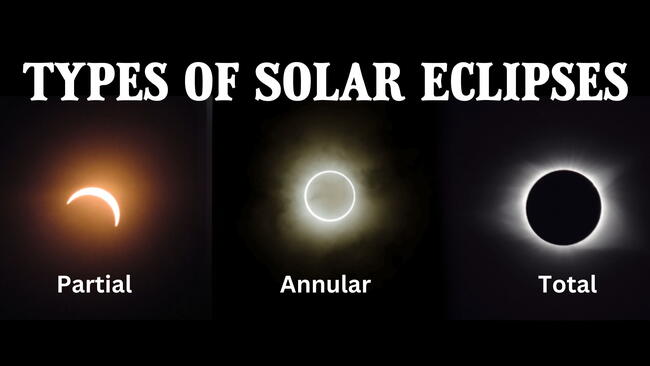
Total solar eclipses do not turn the day pitch black. It’s brighter during totality than during a Full Moon.
2. Does the Moon Spin?
It’s wrong to say the Moon doesn’t spin. It whirls completely around every 2 weeks.
3. Does Water Drain in Different Directions in Each Hemisphere?
Water does not spiral down drains in different directions in different hemispheres. It goes down randomly.
4. Is the Sun Just a Bright Star From Pluto?
From Pluto, the Sun is not “just a bright star.” From there, the Sun is an unbearably dazzling point of light 300 times brighter than the Full Moon—still too dangerous to look at. If Pluto had an atmosphere like ours, the Sun would make it look blue.
Do you know why Pluto is no longer a planet?
5. Do Astronauts Float Because There Is No Gravity?
Space Station astronauts do not float around because they’ve escaped Earth’s gravity. There’s 90% as much gravity 230 miles up as there is in your bathtub. Orbiting astronauts are merely falling freely.
6. Does the Moon Have a “Dark Side”?
The Moon does not have a permanent “dark side.” Writers often allude to the “dark side” of the Moon when they really mean the “far side.” Learn more about the far side of the Moon!
7. Why Is Mars Red?
Mars is not red, any more than a pumpkin is red. It’s more of an orange-red, which is caused by the iron in its soil. 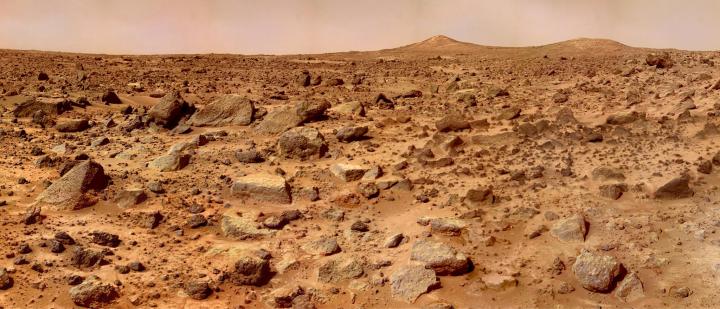
8. Are Meteors Hot When They Hit the Ground?
Not necessarily! Although a meteorite may look like it should be scorching hot after its fiery journey through the atmosphere, its surface can actually be cool—or even cold—when it reaches the ground. The intense heat from atmospheric entry affects the outer surface, while the interior remains much colder. In addition, the meteorite may lose heat as it travels through the atmosphere. So, despite the dramatic fiery streak we see in the sky, meteorites don’t typically land glowing hot.
9. Why Is the Sky Blue?
The sky is not blue because it’s reflecting our blue oceans. Actually, it’s blue because the light from the Sun scatters when it reaches Earth’s atmosphere and the shorter, smaller waves are blue. 
10. Do Black Holes Suck Up Everything?
Black holes don’t suck up everything around them like cosmic vacuum cleaners. Their gravity behaves like the gravity of any other object with the same mass at a given distance. Objects have to come sufficiently close to a black hole—or lose enough orbital energy—to fall in.



Comments