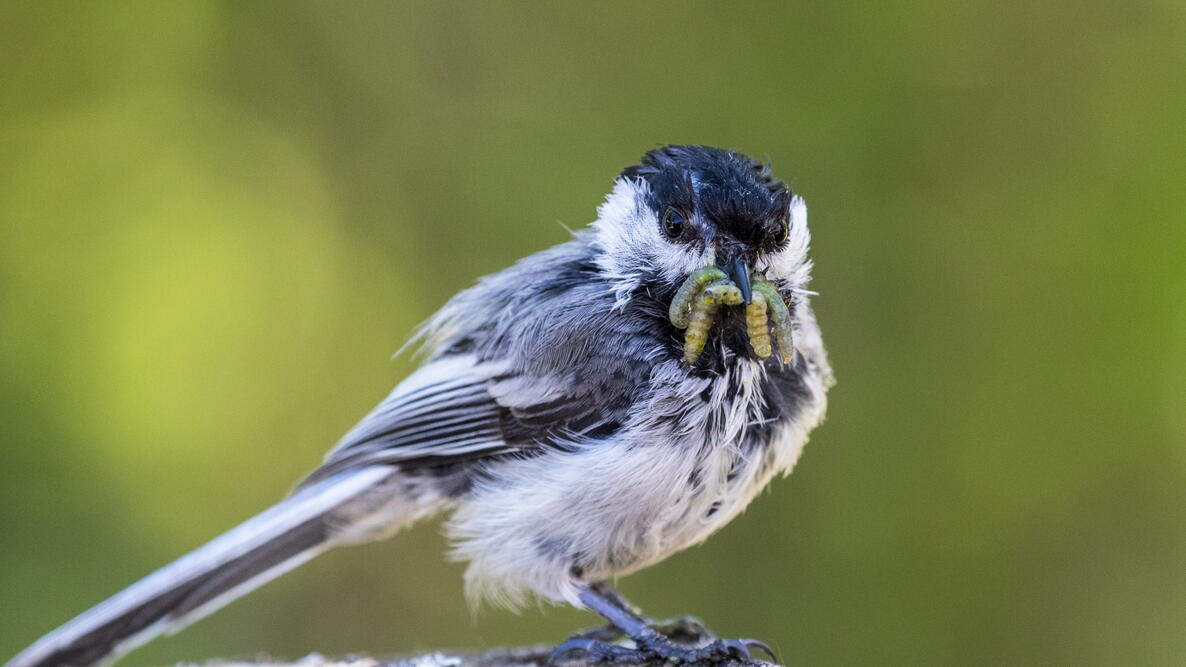

If you have noticed that the number of birds—especially those beloved songbirds—has dwindled over the years, you are not alone. Most gardeners are keen observers of what is going on in their yards, and we’ve noted the decrease in bird populations.
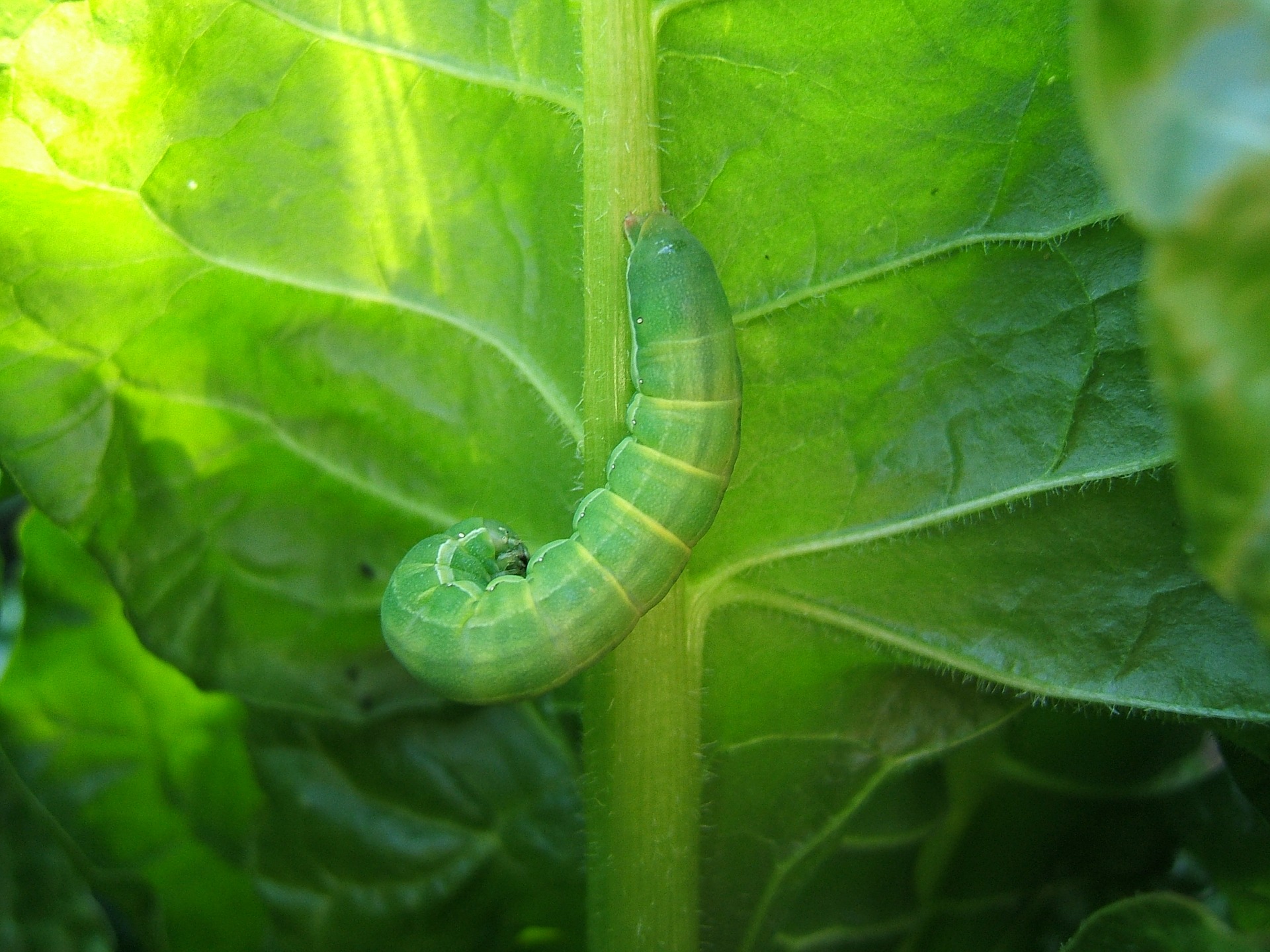
Gardeners are also aware of the pests they have to deal with in their gardens, with caterpillars being especially noticeable due to the damage that they cause. But here’s the rub: If you care about birds, you need to garden for caterpillars. Yes, caterpillars!
Raise your awareness about caterpillars and take a bird’s-eye view of the situation. This is going to be a tough sell, but birds need those caterpillars, so don’t be in a hurry to squish, stomp, or spray every single one that you see. In spring, when they have a nest full of hatchlings, bird parents are busy delivering food to their babies. Soft, squishy caterpillars are digestible by baby birds and provide the right proteins, lipids, and carotenoids for good nutrition.
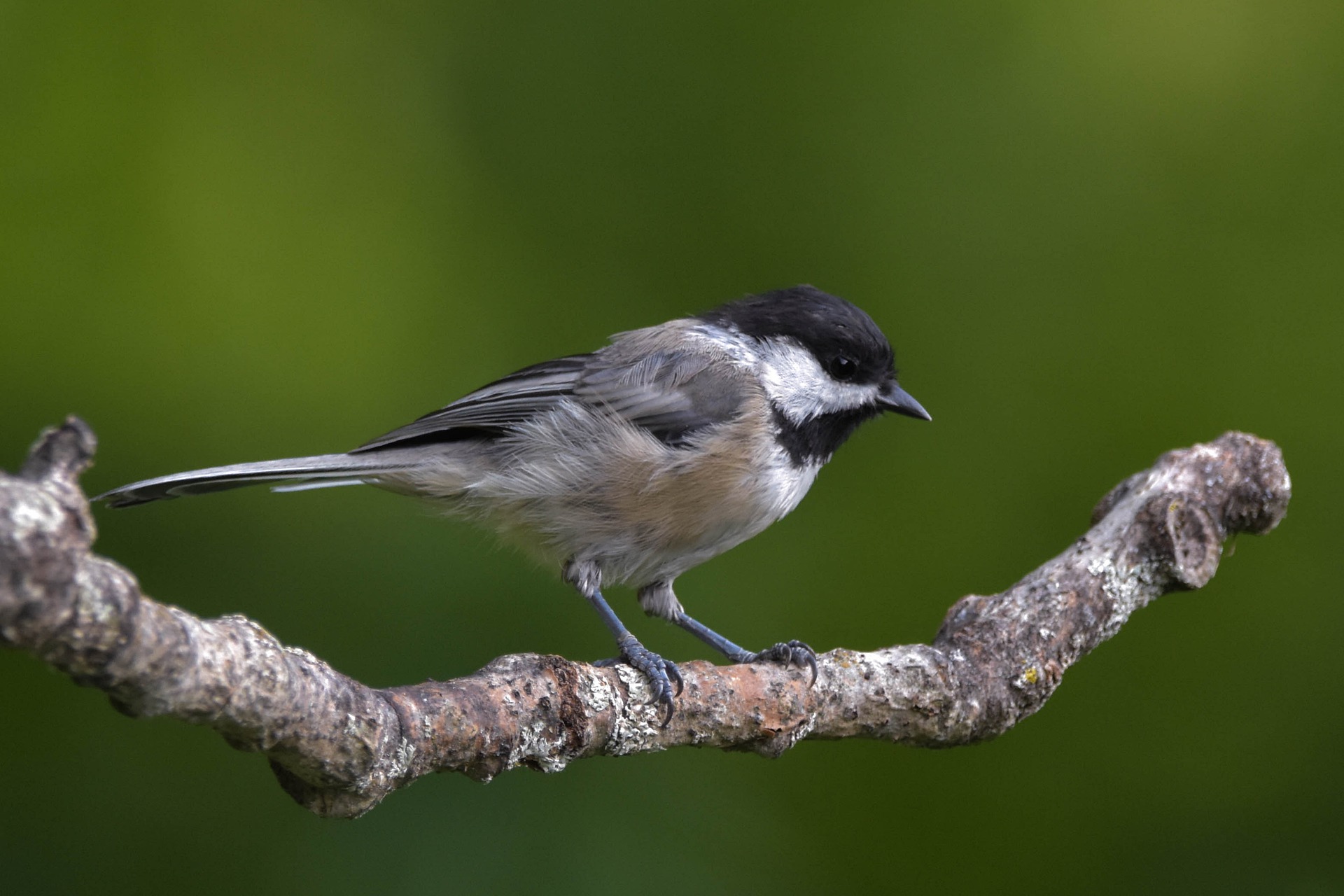
For example, chickadees have one brood each spring that can stay in the nest for up to 16 days and require as many as 9,000 juicy caterpillars, depending on the number of chicks. That’s a lot of caterpillars! Over the summer, caterpillars and other insects make up most of an adult chickadee’s diet, too. How many chickadees do you think your yard can support?
→ Learn more about chickadees and hear their song!
Although some of the caterpillars that the chickadees and other birds eat are the larvae of butterflies, most are from moths. As observant as gardeners are, there are many different species of moths living in your yard that you may never notice due to the fact that they are nocturnal and their larvae are small and unobtrusive. Some, such as the Esther moth larvae, hang off of a branch like twigs, while the pug moth larvae look like sticks. Only a sharp-eyed bird is going to find them.
Native Trees That Support Caterpillars (and Birds)
A single native tree can support hundreds of different species of moths and butterflies. Importantly, birds go to native trees where the caterpillars are. To further complicate matters, different caterpillars and insects often co-evolved with very specific plants. The quintessential example is the Monarch butterfly; its caterpillars only eat milkweed plants. Rather than get into all the specific pairings of plants and wildlife, the important thing to know is that a yard or landscape with a diversity of plants is important (versus a monoculture).
And consider which trees attract the most species of moths and butterfly larvae (caterpillars).
| Native Tree | Caterpillar Species Supported | Why Birds Love It | Best Planting Notes |
|---|---|---|---|
| Oak | 534 | Provides protein-rich caterpillars for chickadees, warblers, and many songbirds | Full sun, well-draining soil; great as a centerpiece tree |
| Willow | 456 | Attracts a variety of moth and butterfly larvae | Moist soil; tolerates partial shade |
| Cherry / Plum | 456 | Supports caterpillars for robins, cardinals, and orioles | Prefers full sun; prune for airflow |
| Birch | 413 | High caterpillar density feeds fledglings in early spring | Cold-hardy; tolerate acidic soil |
| Poplar / Cottonwood | 368 | Early-season caterpillar food for insectivorous birds | Fast-growing; needs space |
| Maple / Box Elder | 285 | Provides caterpillars for bluebirds and chickadees | Adaptable soil; full sun to partial shade |
| Elm | 213 | Supports moth larvae for a variety of backyard birds | Prefers moist soil; prune for structure |
| Pine | 203 | Hosts needle-feeding caterpillars for crossbills and nuthatches | Acidic soil; full sun |
| Hickory | 200 | Feeds caterpillars for woodpeckers and chickadees | Slow-growing; needs space and well-drained soil |
(These numbers are from Bringing Nature Home by Douglas Tallamy)
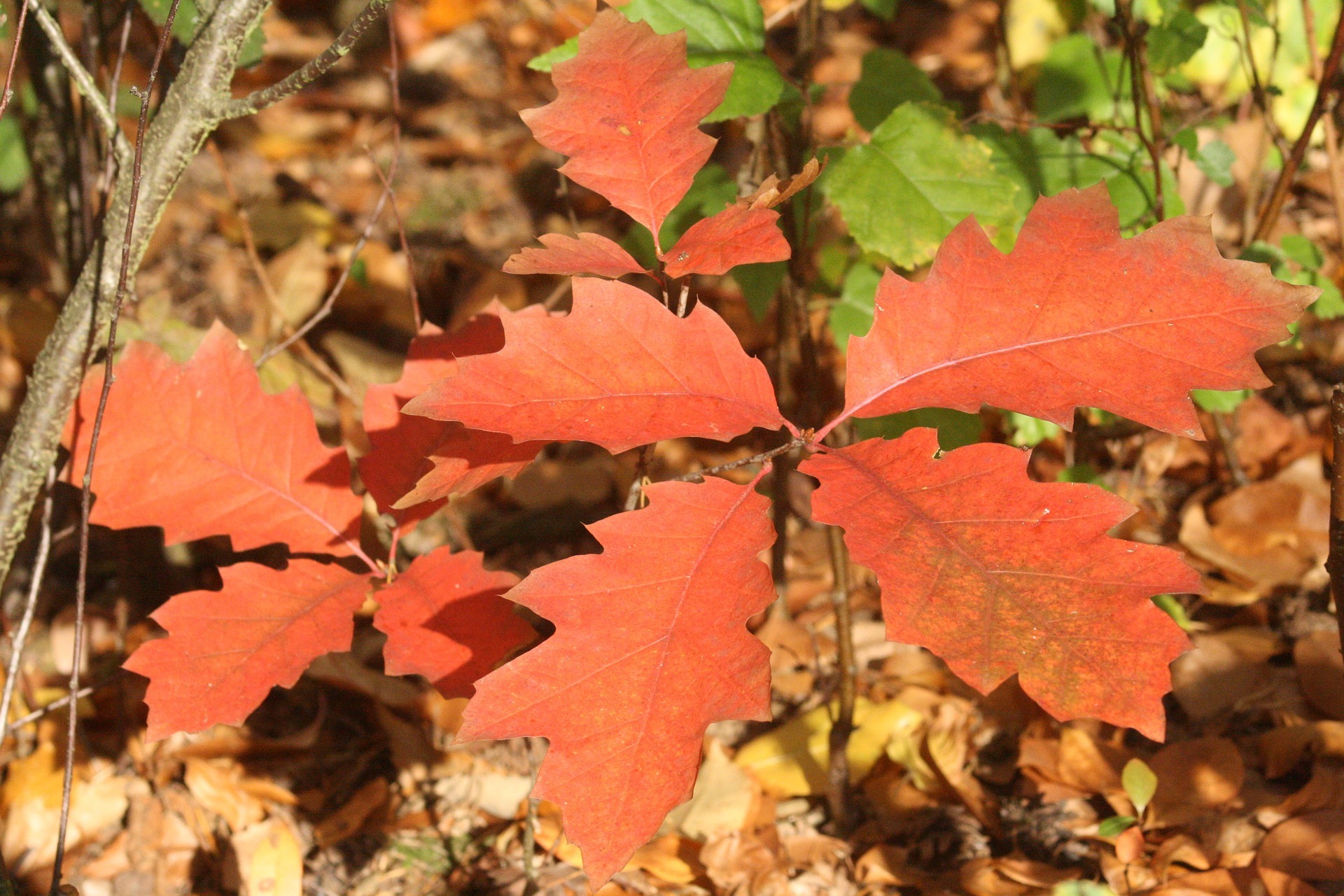
If you would like to help the birds, please consider planting one of these native trees in your yard. Native plants will not only play host to caterpillars and birds, but also support bees and other wildlife. They will absorb and filter rainwater, improve air quality, and make a beautiful addition to your landscape. When tree shopping, be sure to purchase a native species rather than an exotic. A native variety can support 35 times more caterpillars than a non-native variety of the same species!
If the trees are providing an adequate supply of food for your birds, then you can go back to squishing those caterpillars that are eating your veggies without feeling guilty!

More Like This

Comments