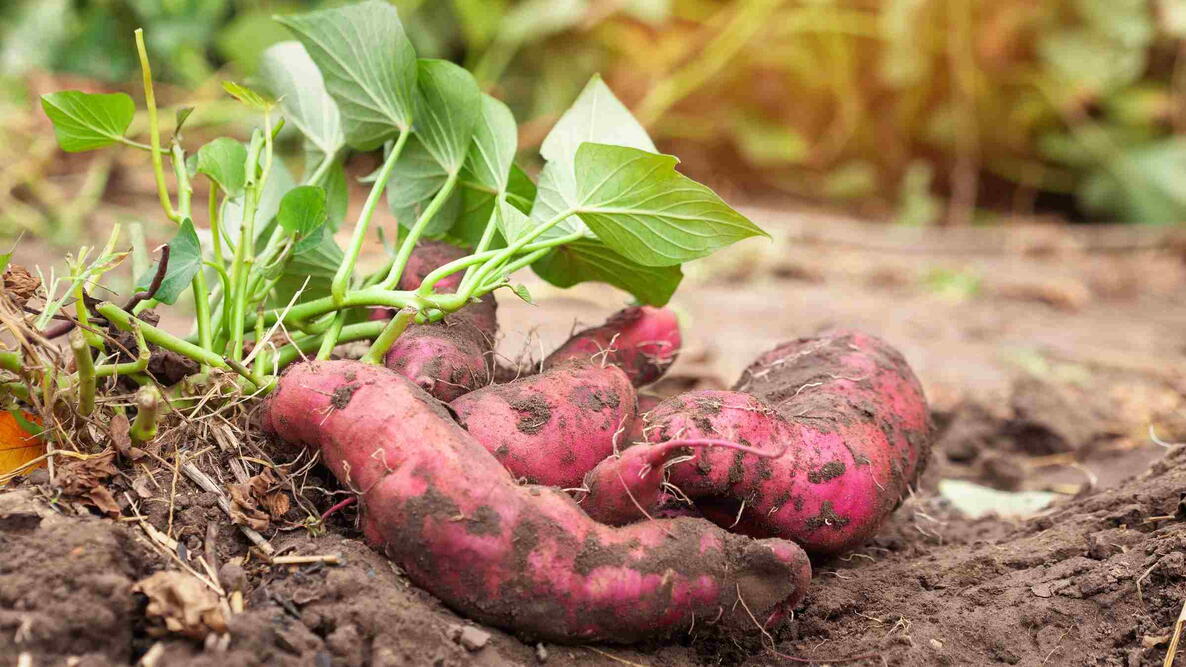

Let’s get to the root of harvesting sweet potatoes! I’ve grown them in both garden beds and grow bags, and over the years, I’ve picked up a few tricks for knowing exactly when to dig them up. Sweet potatoes thrive in summer heat and get sweeter with time, but harvesting before the first frost is crucial for flavor and long-term storage. In this guide, I’ll show you how to tell when they’re ready, how to harvest without damaging the tubers, and how curing can help them stay fresh and delicious all winter long.
How to Know When Sweet Potatoes Are Ready to Pick
Much of the magic of growing sweet potatoes takes place underground, making it hard to judge when they are ready to pick. If you dig up too early, you’ll end up with undersized tubers or no tubers at all, but if you leave sweet potatoes in the ground too long, they can become fibrous and unpleasant to eat. However, there are a few ways to tell when they’re ready without digging up your entire crop!

Days to Harvest for Popular Sweet Potato Varieties
One of the best ways to decide if sweet potatoes are ready is to check the “days to harvest” information for the types of sweet potatoes you’re growing. Most sweet potatoes require about 85 to 120 days to reach maturity, but some types of sweet potatoes mature faster than others, and long periods of drought or hot weather can cause sweet potatoes to mature more slowly than they normally would.
To keep track of things, I like to write the recommended “days to harvest” date for each potato variety I’m growing right on my calendar so I always have an idea of when I should start digging.
Variety | Days to Maturity |
Bayou Belle | 90 to 100 |
Beauregard | 90 to 100 |
Covington | 100 |
Garnet | 90 to 120 |
Georgia Jet | 90 |
Jewel | 120 |
Luminance | 85 |
Murasaki | 120 |
O’Henry | 90 to 100 |
Purple Majesty | 100 |
Vardaman | 100 to 110 |
Checking Sweet Potato Vine Color for Ripeness
Aside from the “days to harvest” date, one of the clearest signs that sweet potatoes are ready is the color of the sweet potato leaves. In cooler climates, sweet potato leaves will often turn yellow and start to die back as the tubers reach maturity, which is a sign that it’s time to start digging. However, leaf color is not a reliable indicator of ripeness in warm climates where sweet potatoes grow perennially and their leaves stay green year-round!
(If you follow lunar gardening, check out the best days to harvest underground crops.)

Measuring Tuber Size Before Harvest
Sweet potatoes can be eaten as soon as they reach a usable size, but it’s much more satisfying to dig up and use larger spuds. I’ll often dig up a “test tuber” or two first, and only harvest the rest of my crop if the test tuber is at least 5 inches long. Remember, although sweet potatoes are often orange, some varieties will produce white, purple, red, or even yellow tubers.
Watching Cold Weather to Avoid Crop Damage
Cabbage, broccoli, and Brussels sprouts actually get sweeter if they’re harvested after a light frost, but sweet potatoes can turn mushy fast if they get too cold. To avoid this fate, I always harvest my sweet potatoes when soil temperatures begin to linger below 55°F. However, if an early frost or a killing freeze is on the forecast, you may need to harvest sweet potatoes even earlier!

Step-by-Step Guide: How to Harvest Sweet Potatoes Without Damage
Picking sweet potatoes when they’re perfectly ripe helps them last better in storage. But harvesting them carefully and taking a bit of time to prep for winter storage can help them last even longer. Here’s the process I personally use to harvest sweet potatoes from my garden. (But if I’m growing in grow bags, I simply dump the entire bag out on a tarp and collect the spuds I find!)
Step 1: Cut the Plant Leaves to Prepare Tubers
About a week before I plan to harvest, I cut some of the leaves off the plants either by hand or with a weedwhacker. Removing sweet potato leaves makes the skin thicken up and can extend shelf life. I also usually reduce watering about 1 month before I plan to harvest, as I find this makes the tubers less likely to crack.
Tip: Sweet potato leaves are edible and can be cooked just like spinach or kale!
Step 2: Dig Up Sweet Potatoes Carefully
If possible, harvest sweet potatoes on an overcast day when the soil is moist but not muddy. To start, dig an 18-inch-wide circle around the plant’s central stem or crown with a shovel, spade, hand trowel, or spading fork, and then gently use the blade to lift the buried spuds up. Be careful as you work—the skin bruises easily, and cut or bruised roots won’t store well.
Keep in mind that while most sweet potatoes form beneath the center of the plant, they’ll also grow anywhere the vine has rooted into the soil. Digging around each of these rooted stem areas should reward you with even more buried treasure!

Step 3: Inspect and Cure Sweet Potatoes for Storage
After harvesting, sweet potatoes should be handled gently, and immediately covered with a cloth or moved into shade to avoid sunscald. Once they’ve dried a bit, use a brush or your fingers to dust as much dirt off the tubers as you can, and then allow the sweet potatoes to cure for 1 to 2 weeks in a single layer in ventilated bins, or on shelves or screening. Curing makes sweet potatoes sweeter, but it also gives minor cuts and bruises the chance to heal and reduces the likelihood that they will spoil in storage.
If you’re experiencing hot and sunny weather, you can cure sweet potatoes in a shady section of your garden. But I like to cure them on shelves in my potting shed. The important thing is to keep curing roots out of direct sun and to make sure the curing location is well-ventilated, humid, and stays between 75 and 85°F during the curing process.
FAQ: Harvesting and Storing Sweet Potatoes
How long can you store sweet potatoes after harvest?
Sweet potatoes can be stored in your fridge, but they’ll last up to 9 months in a cool root cellar that stays between 50 and 60°F.
What happens if you leave sweet potatoes in the ground too long?
Sweet potatoes can turn fibrous and crack if they’re left in the ground too long.
Do sweet potatoes taste better after curing?
Yes, sweet potatoes taste sweeter if you cure them for 1 to 2 weeks after harvesting.
With the right timing and care, harvesting sweet potatoes can be one of the most rewarding moments in the garden. By watching for maturity signs, digging gently, and curing properly, you’ll enjoy sweet, flavorful tubers for months. Whether you grow sweet potatoes in raised beds, rows, or containers, these tips will help you get the sweetest yield every season!
Are you harvesting sweet potatoes? Please share your experiences and any tips below!

More Like This

Comments