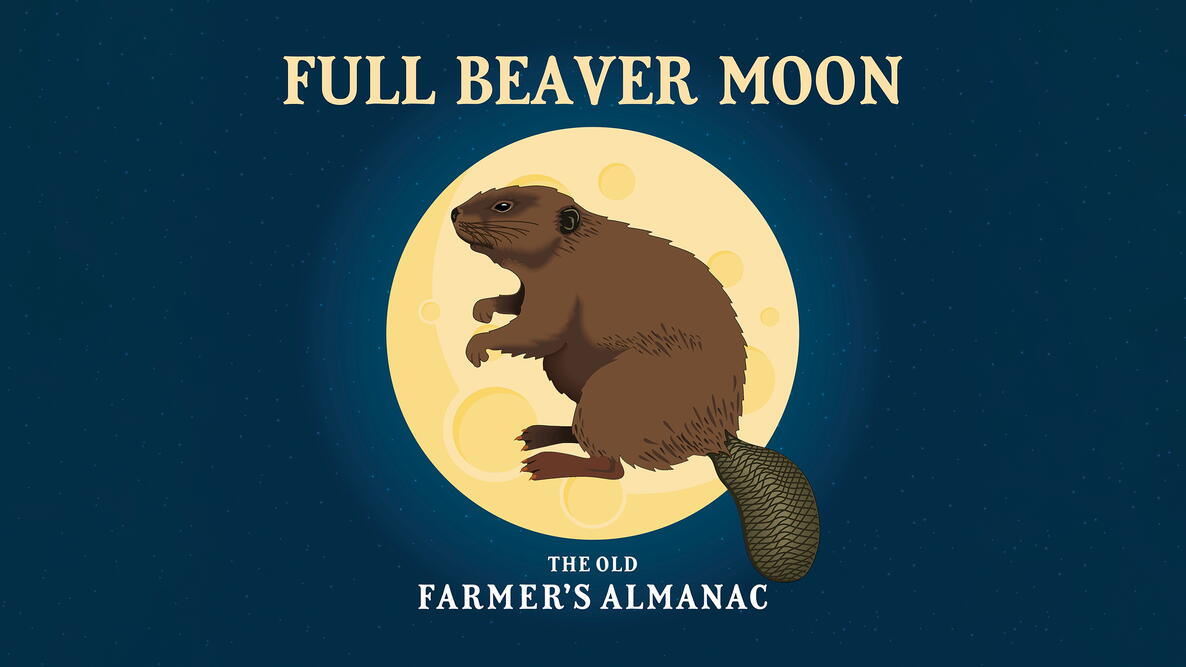

The Full Beaver Supermoon of November 2026 peaks on Tuesday, November 24, just days before Thanksgiving, making it the final Full Moon of autumn. Get more information, including Full Moon rise times, why we call it a Beaver Moon, and the best days by the Moon.
When to See November’s Full Moon
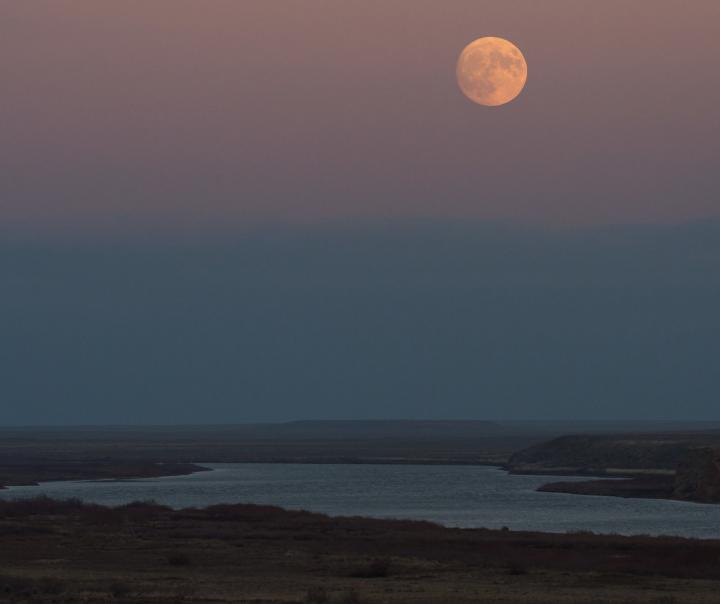
The Beaver Moon reaches peak illumination on Tuesday, November 24, at 9:5 A.M. EST. It will be below the horizon at that time, so be sure to look for it on the evenings of November 23 and 24. Find out exactly what time the Full Moon will appear above the horizon in your area with our Moonrise and Moonset Calculator.
What Makes the November 2026 Full Moon Special
The November Full Moon is a supermoon, the first in a series of three consecutive supermoons (November, December, January). A supermoon occurs when the Moon is at its closest point to Earth in its orbit, called perigee.
Because it’s a supermoon, it may appear slightly larger and brighter than a typical full Moon—up to 8% larger in diameter and 16% brighter. For most casual observers, the difference is subtle, but it’s more noticeable if compared to a micromoon, when the Moon is at its farthest point from Earth.
Being near perigee and full, this Moon can also produce slightly higher tides, known as perigean spring tides or king tides, especially along coastlines, though the effect is modest.
Why Is It Called the Beaver Moon?
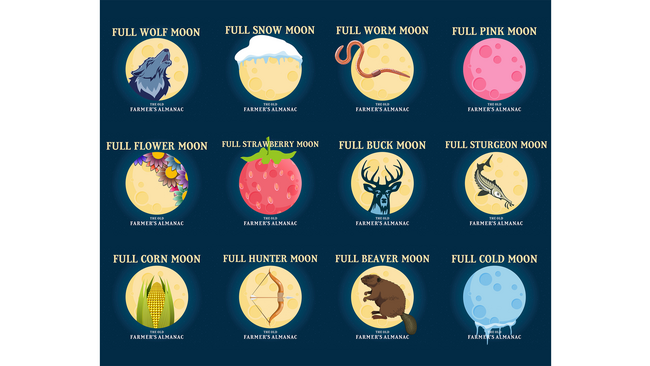
For decades, the Almanac has referenced the monthly Full Moons with names tied to early Native American, Colonial American, and European folklore. Traditionally, each Full Moon name was applied to the entire lunar month in which it occurred and through all of the Moon’s phases—not only the Full Moon.
The Beaver Moon
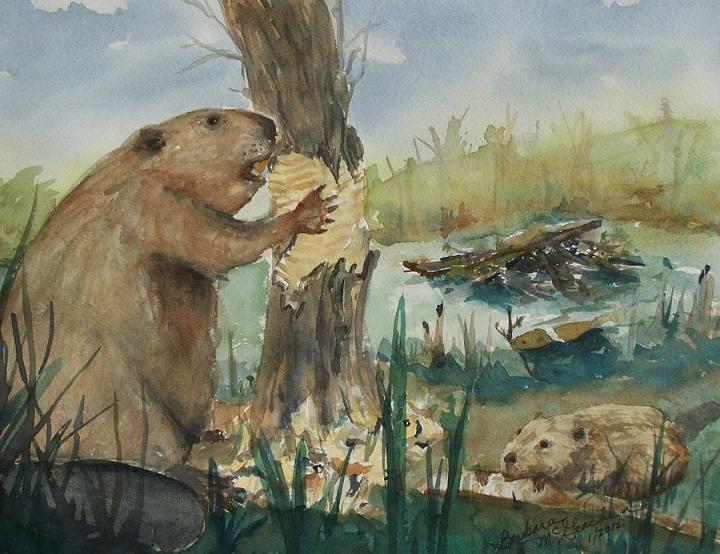
Why the “Beaver” Moon? This is the time of year when beavers begin to take shelter in their lodges, having laid up sufficient food stores for the long winter ahead. During the fur trade in North America, it was also the season to trap beavers for their thick, winter-ready pelts.
Alternative November Moon Names
November’s Moon names highlight the actions of animals preparing for winter and the onset of the colder days ahead. Digging (or Scratching) Moon, a Tlingit name, evokes the image of animals foraging for fallen nuts and shoots of green foliage and bears digging their winter dens. The Dakota and Lakota term Deer Rutting Moon refers to the time when deer seek mates, and the Algonquin Whitefish Moon describes the spawning time for this fish.
About the seasonal change of November, this Moon has been called the Frost Moon by the Cree and Assiniboine peoples and the Freezing Moon by the Anishinaabe—for good reason, as winter is right around the corner!
→ See more Full Moon names and their meanings.
Moon Phases for November 2026

Below are the times for each Moon phase this month (in Eastern Time). Click here to see the Moon Phase dates and times for your location.
 | Last Quarter: November 1, 3:28 P.M. EST |
 | New Moon: November 9, 2:02 A.M. EST |
 | First Quarter: November 17, 6:48 A.M. EST |
 | Full Moon: November 24, 9:53 A.M. EST |
→ When is the next Full Moon? Consult our Full Moon Dates chart.
Full Beaver Moon Video
An Almanac editor shares more facts and folklore about November’s Full Beaver Moon. Click below to watch the video.
Best Days in November 2026
Below are the best days for certain activities, based on the Moon’s sign and phase in November.
For Harvesting:
- Aboveground crops: 22, 23
- Belowground crops: 8, 26, 27
For Setting Eggs:
- 24, 25
For Fishing:
- 9-24
See Best Days for more activities.
Moon Facts
- Did you know: The spin time of the Moon on its axis is identical to the time it takes the Moon to revolve around Earth, which is why the Moon always keeps almost precisely the same face toward us. Learn more about the far side of the Moon.
- How much would you weigh on the Moon? Just multiply your weight (it doesn’t matter if it’s in pounds or kilograms) by 0.165. You’d weigh about 80% less!
Learn more about Full Moon Names and share your thoughts about this month’s Moon below!

More Like This

Thanks for asking, Cyndee. We produce two versions of the paperback Almanac, one for $7.99 and one for $8.95. The version at the slightly higher price has 32 pages of Reference material at the back (like the Calendar and Weather Forecast pages, the Reference pages each have a black tab on them that you can see as a black "line" when you look sideways at the issue). The $8.95 version is sold at bookstores, the $7.99 on newsstands, checkouts, our own magazine stands, and the like. We have different price points to serve different readerships and channels of distribution.
BTW, the extra Reference section is also bound into the the $9.99 "large print" version and the hardcover version ($15.95). We say "large print" because the pages are slightly larger and the paper is better quality (whiter) so the ink is easier to read. This is not "large print" as it is found, say, in a library book.
I hope this does not add confusion but helps to clarify. You can purchase any version of the Almanac at Almanac.com/store and the "large print" version on Amazon.com.

Interesting question! There's an Almanac Moon phase calendar that goes back to 1970 of that helps! www.almanac.com/astronomy/moon/calendar
- « Previous
- 1
- 2
- …
- 10
- Next »

Comments