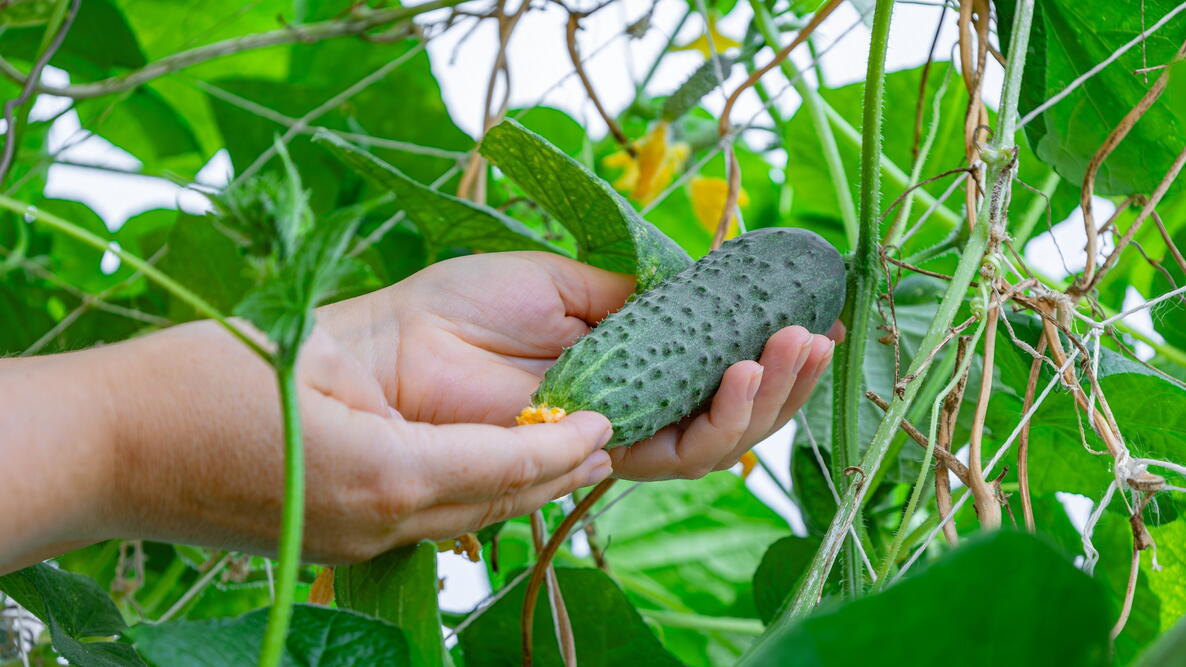

With their big, wide leaves and trailing stems, cucumbers take up a lot of room in the garden and require plenty of nutrients and water to grow. But if you pair cucumbers with the right plants, you can save garden space, simplify plant care, and enjoy a bigger harvest. To get you started, here are 10 cucumber companion plants, plus companion planting tips on what to plant with cucumbers for the best results!

Key Takeaways
- The right companion plants for cucumbers make gardening easier by repelling pests, improving soil health, and boosting yields.
- Some of the best companion plants include: Dill, Nasturtiums, Beans, Peas, Sunflowers, and Borage.
- You can use companion planting with any type of cucumber.
- Cucumbers should not be planted with sage, potatoes, and other plants in the Cucurbit family.
Benefits of Companion Planting for Cucumbers
Most vegetables benefit from companion planting, a traditional gardening technique in which certain plants thrive when paired together and improve each other’s growth.
In the case of companion planting for cucumbers, flowering companion plants are particularly beneficial, as they draw in pollinators, which help move pollen between cucumber flowers and increase the fruit set of cucumber plants.
The right companion plants for cucumbers typically have the same basic care needs as cucumbers and can make gardening easier by repelling cucumber pests or improving soil health.
In return, cucumbers may also benefit neighboring plants, such as providing shade for sun-sensitive veggies or suppressing weeds with their vining stems.
Companion planting isn’t just helpful for cucumbers—many vegetables and herbs benefit from thoughtful plant pairings. If you’re planning your garden layout, this companion planting guide can help you choose the best combinations for a healthier, more productive garden.

Companion Plants for Cucumbers
You can use companion planting with any type of cucumber and in any garden setup, including in-ground gardens, raised beds, and container gardens. Some of the best companion plants include:
- Dill
- Nasturtiums
- Beans and Peas
- Sunflowers
- Borage
- Marigolds
- Alliums
- Root Vegetables
- Oregano
- Lettuce
The top companion plants for cucumbers vary depending on whether you’re growing cucumbers on trellises or not.
Trellised cucumbers do particularly well with other vining plants, as well as low-growing veggies, herbs, and flowers that can be tucked in around the base. Bush-type cucumbers and untrellised vines can be grown with companion plants, too. They often do better with taller plants and plants with a more upright growth habit.

Some of the best companion plants include:
Dill
Dill pickles, anyone? If you grow dill and cucumbers together, you’ll have most of the ingredients you need for homemade pickles right in your garden. Beyond that, dill flowers are highly attractive to insects, and they’ll draw beneficial bugs and pollinators to your cucumbers if you allow your dill plants to bolt!

Nasturtiums
Like dill, nasturtium flowers attract beneficial insects like hoverflies and ladybugs that feed on cucumber pests. Nasturtium plants can also be used as trap crops to lure aphids away from cucumbers and reduce damage from cucumber beetles and squash bugs. If possible, try out trailing nasturtium varieties, which grow beautifully in the shade of bush-type cucumbers and can be used as a living mulch to keep weeds down.

Beans and Peas
Beans, peas, and other legumes fix atmospheric nitrogen into the soil, which is a fancy way to say that they improve soil health and fertility! Growing legumes near cucumber plants naturally adds nitrogen to the soil, helping the cukes grow and fruit better. Pole beans tend to work best with vining cucumbers and can be grown on the same trellising system, while bush-type beans and cucumbers are both well-suited for growing in containers or rows.
Sunflowers
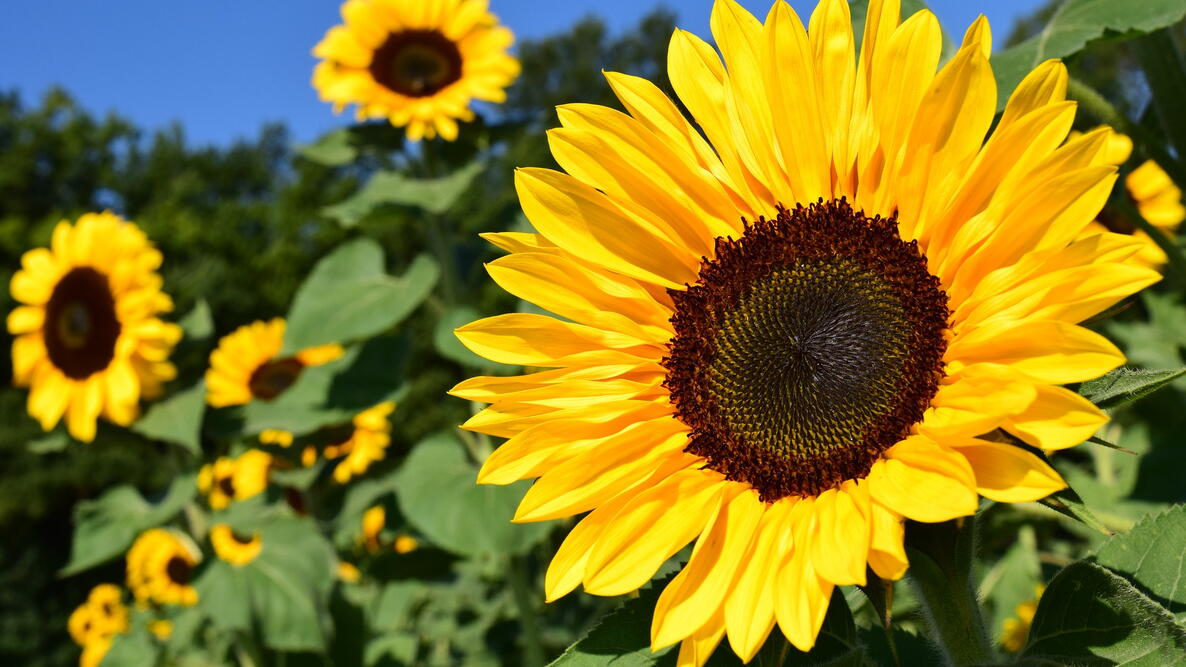
Tall and sturdy sunflower stems can be used as living supports for vining cucumbers. This works best with cucumber varieties that have small fruit, like ‘Lemon’ or ‘Mini Me’ cucumbers. Even if you don’t want to use sunflowers as supports, growing cucumbers and sunflowers together can attract more pollinators and increase fruit set.

Borage
Borage is often overlooked as a companion plant, but it has lots to recommend it. Growing readily from seed, borage thrives in the same basic conditions as cucumbers, and its periwinkle blue blooms are irresistible to pollinators and predatory insects that feed on cucumber pests. On top of that, borage is an edible plant with leaves and flowers that taste a bit like cucumber and make dainty garnishes for fresh cucumber salads.
Marigolds
As with nasturtiums, marigolds are versatile companion plants that attract pollinators and predatory insects that feed on cucumber pests. Marigolds also help to reduce pressure from squash bugs and cucumber beetles, and they thrive under the same basic growing conditions as cucumbers.
Alliums
Thanks to their strong, sulfur-like aroma, alliums are adept at repelling pests of all sorts, including aphids, slugs, and snails. Garlic, onions, chives, leeks, and shallots all grow low to the ground and won’t block light from reaching cucumber plants.
Root Vegetables
Carrots, radishes, beets, and other root veggies can be easily squeezed in around the base of cucumber plants to fill in empty soil space and make gardens more productive. These fast-growing veggies can also be succession planted throughout the season, so you can continue to harvest even when your cucumbers aren’t fruiting. Radishes are especially good partners for cucumbers, as they grow ultra-fast and naturally deter cucumber beetles!
Oregano
When it comes to natural pest control, oregano is hard to beat. This fragrant herb repels most pests, but its flowers also attract beneficial insects and pollinators that help to safeguard cucumber plants from damage and boost harvest yields.

Lettuce
Lettuce also makes an excellent companion for cucumbers, as these plants both like damp, rich soil and lots of sun. What’s more, lettuce grows quickly and has shallow roots and relatively low nutrient needs, which means it won’t compete with cucumbers for soil space or fertilizer. You may even be able to harvest several crops of lettuce before your cucumbers start fruiting!
Planning beyond cucumbers? Explore our Companion Planting Chart to find the best plant pairings across your garden.
What Not to Grow with Cucumbers
While cucumbers can be grown with many common herbs, veggies, and flowers, growing cucumbers with a few specific plants is not recommended, as it can increase pest issues and other problems.
Potatoes
Heavy-feeding potatoes can compete with cucumbers for nutrients, reducing cucumber productivity. These plants are also both vulnerable to blight and a few other diseases, which can potentially spread from potatoes to cucumbers.
Tomatoes
Although tomatoes and cucumbers share similar growing needs, tomatoes are also vulnerable to blight and have high nutrient requirements, which can compromise cucumber growth.
Fennel
Fennel is a notoriously allelopathic plant, which secretes compounds into the soil that suppress the growth of neighboring plants, including cucumbers.
Sage
Most herbs pair beautifully with cucumbers. However, sage can interfere with growing cucumbers and cause plants to become stunted.
Other Cucurbits
Zucchini, squash, melons, and other plants in the Cucurbit family prefer the same growing conditions as cucumbers, but these plants are vulnerable to the same pests and diseases. Growing cucumbers and cucurbits together can increase pest and disease problems in your garden.

FAQ
What Should You Not Plant Next to Cucumbers?
Cucumbers should not be planted with sage, potatoes, and other plants in the Cucurbit family, so choose carefully when deciding what to plant with cucumbers.
What Is a Great Companion Plant for Cucumbers?
Dill is one of the best companion plants for cucumbers, as it repels pests, attracts pollinators, and adds great flavor to cucumber pickles!
Can Basil and Cucumbers Be Planted Together?
No. Basil and cucumbers should not be planted together, as they can interfere with each other’s growth.

More Like This

Comments