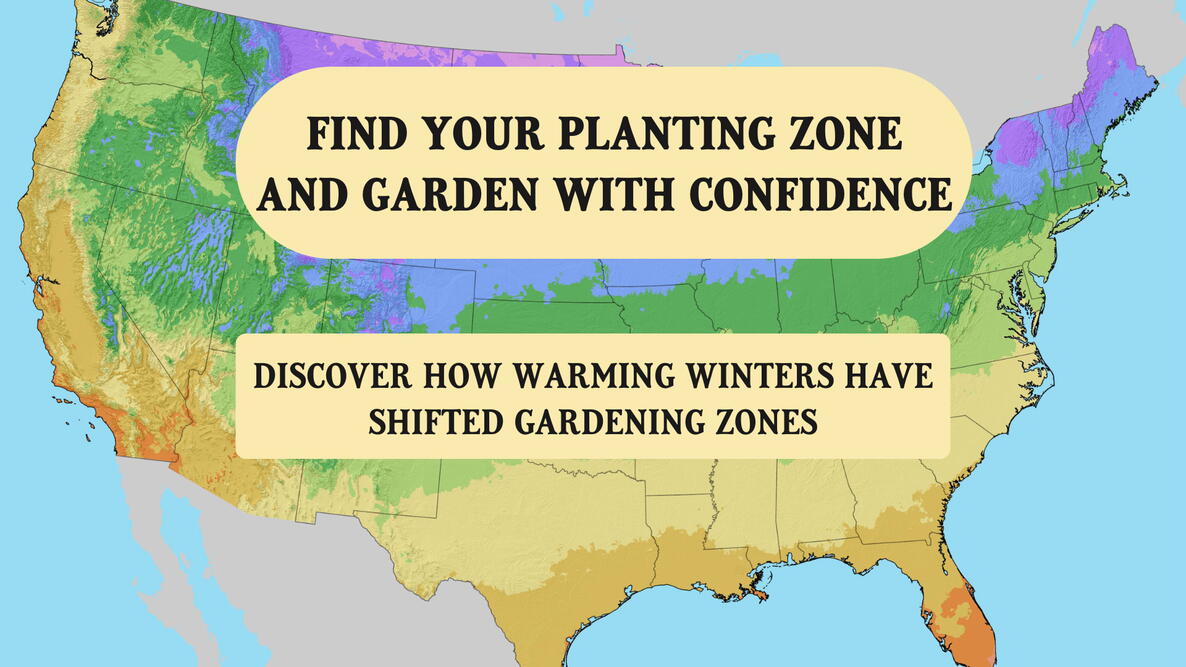

The USDA Plant Hardiness Zone Map helps gardeners determine which plants can survive winter in their region. Understanding your USDA planting zone is essential for choosing perennials, trees, shrubs, and even vegetables that will thrive in your garden.
Find your USDA Plant Hardiness Zone here.
Plant Hardiness Zone Maps
Below is the official USDA National Plant Hardiness Zone Map (last updated in 2023). The map displays 10°F Zones (1 to 13) across the United States. Readers have mentioned that the legend on the official USDA map is difficult to see. (We agree!). See an enlarged legend below.

| Avg. Annual Min Temp | Zone | Map Color |
|---|---|---|
| -60° to -50°F | 1 | |
| -50° to -40°F | 2 | |
| -40° to -30°F | 3 | |
| -30° to -20°F | 4 | |
| -20° to -10°F | 5 | |
| -10° to 0°F | 6 | |
| 0° to 10°F | 7 | |
| 10° to 20°F | 8 | |
| 20° to 30°F | 9 | |
| 30° to 40°F | 10 | |
| 40° to 50°F | 11 | |
| 50° to 60°F | 12 | |
| 60° to 70°F | 13 |
Also, below is the official USDA Plant Hardiness Zone Map that includes the 5°F half-Zones. For a closer look, there is an interactive map on the USDA website here, and you can also find maps for your specific region.

What Are USDA Planting Zones?
This USDA Hardiness Zone Map is the most popular gardening tool and reference in the United States. It’s all about WINTER SURVIVAL for plants, based on the average annual extreme minimum winter temperature in a location. The map divides the U.S. into 13 Zones, each covering a 10°F range, with subzones (a/b) representing 5°F differences. It’s important to note:
- Hardiness Zones are only about tracking the coldest temperature your area typically experiences each winter, which helps you determine whether a plant can survive the winter in your location. It does not take into account:
∼Summer heat (The American Horticultural Society (AHS) has a heat zone map that measures the number of days above 86°F (30°C) per year.
∼Humidity,
∼Rainfall
∼Wind chill/cold snaps
- A plant hardiness Zone isn’t about climate politics—it’s about plants. Each set is based on 30 years of historical weather data, showing average winter lows so gardeners know what will survive in their backyards. Using data from more weather stations than in the past—13,000—the map reflects local climate conditions more accurately than ever. Think of it as Mother Nature’s cheat sheet: no opinions, no agendas, just information to help our gardens thrive.
Why Your Zone Matters
- Perennials, shrubs, and trees: Choosing varieties suited to your updated Zone ensures they survive winter and thrive year after year.
- Annuals and vegetables: Focus on frost dates, which may also shift with warming winters.
- Microclimates: Factors like soil, sun exposure, wind, and urban heat islands can shift your effective Zone by half a Zone or more.
How to Use Your USDA Planting Zone
Understanding your Zone is more than knowing a number. Here’s how to make it actionable:
1. Choosing Perennials, Shrubs, and Trees
Perennials, shrubs, and trees live beyond a single season. Use your Zone to pick plants hardy enough for your winters. Refer to the chart above to find examples suited to your area. We also list Zones in all our plant-growing guides.
2. Planting Annuals and Vegetables
Annuals only last a single growing season. Instead of Zones, focus on first and last frost dates to schedule planting. Use our frost date tool for precise guidance.
3. Considering Microclimates
Even within the same Zone, sun exposure, soil type, slope, and wind can create microclimates that shift plant survival. Consider planting tender species in protected spots or using windbreaks and mulch.
Tips for Interpreting the USDA Map
- Subzones (a/b) show fine temperature differences.
- Zones are averages, not guarantees — extreme winters may still occur.
- Use the map as a guide, not a strict rule, especially in areas affected by climate change.
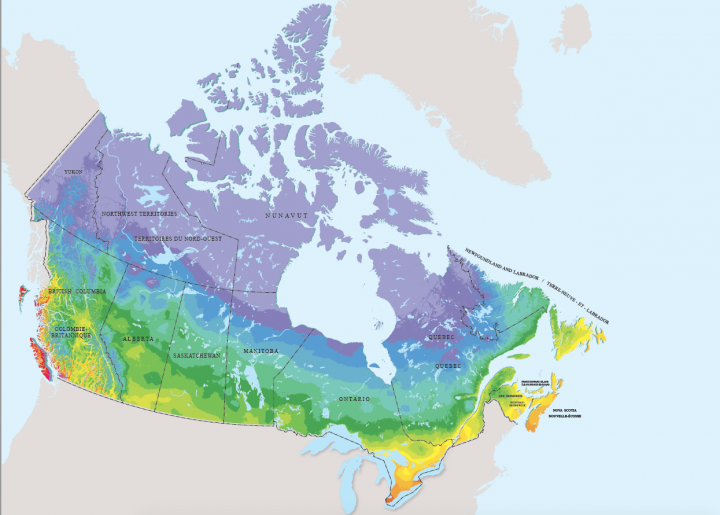
Canadian Planting Zones (NRC Map)
For readers in Canada, Natural Resources Canada (NRC) produces a planting Zone map that accounts for:
- Maximum and minimum temperatures
- Length of the frost-free period
They also offer a USDA-style map based solely on extreme minimum temperatures.
USDA Plant Hardiness Zones Shifted: What This Means for Your Garden
Plant “hardiness” Zones focus on winter survival based on average annual minimum winter temperatures. They’re the standard gardeners and growers use to determine which plants are most likely to survive in a given location.
In November 2023, the USDA released an update for the first time in 11 years — and the changes were significant: about half of the U.S. shifted to a warmer half-Zone.

Whether you have a backyard, a balcony, or just a sunny stoop, this matters for every gardener! The updated map opens new possibilities, but there are limits:
- You may now be able to grow plants that were previously considered too tender for your area.
- Some plants that once thrived may now need extra winter protection.
Understanding your updated Zone is key to planning a resilient garden that can thrive now—and for years to come.
Hardiness Zones and Sample Hardy Plants
| Zone | Avg. Minimum Winter Temp (°F) | Sample Hardy Plants |
|---|---|---|
| 3 | -40° to -30°F | Choose extremely cold-tolerant perennials and early crops that can handle harsh winters. Examples: Peonies, Delphinium, Columbine. |
| 4 | -30° to -20°F | Cold-hardy flowers and shrubs thrive with reliable snow cover for insulation. Examples: Lilacs, Coneflowers, Hellebores. |
| 5 | -20° to -10°F | A wide range of perennials and hardy vegetables grow well; protect tender shoots from late frosts. Examples: Bleeding Heart, Astilbe, Coral Bells. |
| 6 | -10° to 0°F | Excellent for mixed gardens of perennials, shrubs, and hardy ornamentals. Examples: Hydrangeas, Sedum, Black-eyed Susan. |
| 7 | 0° to 10°F | Mild winters allow subtropical plants and flowering shrubs to thrive; mulch tender roots. Examples: Lavender, Camellia, Crepe Myrtle. |
| 8 | 10° to 20°F | Warm climate supports evergreen shrubs, citrus, and long-blooming ornamentals. Examples: Gardenia, Fig Tree, Agapanthus. |
| 9 | 20° to 30°F | Ideal for tropicals, succulents, and heat-loving species; many annuals grow year-round. Examples: Citrus, Oleander, Bougainvillea. |
| 10+ | 30°F+ | True tropical conditions—lush foliage and exotic flowers flourish year-round. Examples: Banana, Bird of Paradise, Hibiscus. |
Tip: Check your subzone (a/b) for more precise planting guidance.
Frequently Asked Questions
What is my USDA planting Zone?
Enter your ZIP code on the USDA map to find your Zone. Zones range from 1 (coldest) to 13 (warmest).
How often are Zones updated?
Major revisions happen roughly every 10–15 years. The last update was November 2023.
What does “Zone 7b” mean?
Subzones (a/b) indicate 5°F differences. Zone 7b is 5°F warmer than Zone 7a, offering greater flexibility in plant selection.
Are the temperatures with or without wind chill?
They are ambient air temperatures only, not adjusted for wind chill. Wind chill affects people and animals (because it changes how quickly heat leaves skin), but it doesn’t change how cold the air actually is. Plants respond to actual air and soil temperatures.
I’m in Zone 9b, but my plants fry in the summer—is there a map for maximum heat?
Due to a warming climate, the American Horticultural Society (AHS) Heat Zone Map (mentioned above) is becoming the counterpart to the USDA’s Plant Hardiness Zone Map. Together, they help match plants that can handle both your winters and your summers.
Many plant tags now list both USDA and AHS Zones (e.g., “Hardy to Zone 6 / Heat Zone 9”)
My local conditions don’t match the USDA map.
That can definitely happen—especially in high-elevation, windy, or microclimate-rich areas like parts of Colorado. The map shows long-term regional averages, so some areas may be warmer or colder than their Zone suggests. If your winters are usually colder, choose plants for a colder zone. The map is updated periodically as new data becomes available.
What if I live on the border between two USDA Zones (like 8a and 8b)?
If you’re on a Zone border, your area may experience winters from either Zone. To be safe, choose plants hardy to the colder Zone. Microclimates—like sheltered spots or open, windy areas—can also make your yard warmer or colder than the map shows.
If I’m in Zone 9b, can I grow plants from Zones 9b and lower (like 7b)?
Yes—any plant hardy to your Zone or a lower-numbered one (colder Zone) can survive your winters.
So in Zone 9b, you can grow plants hardy to: 9b, 9a, 8b, 8a, 7b, etc.—but not those that require colder winters to trigger dormancy (like some apples or lilacs).
Final Thoughts
The USDA Plant Hardiness Zone Map is an essential tool, but knowing your Zone is just the first step. Use this guide to:
- Plan your garden with perennials, shrubs, and trees that will survive winter.
- Make smart choices about annuals and frost-sensitive plants.
- Keep a garden journal to track plant performance across seasons and microclimates.
Share your Zone and favorite plants in the comments below, and connect with other gardeners in your region.
More Like This

Comments