What Are Earth Tides? The Moon’s Surprising Pull on the Solid Earth

Primary Image
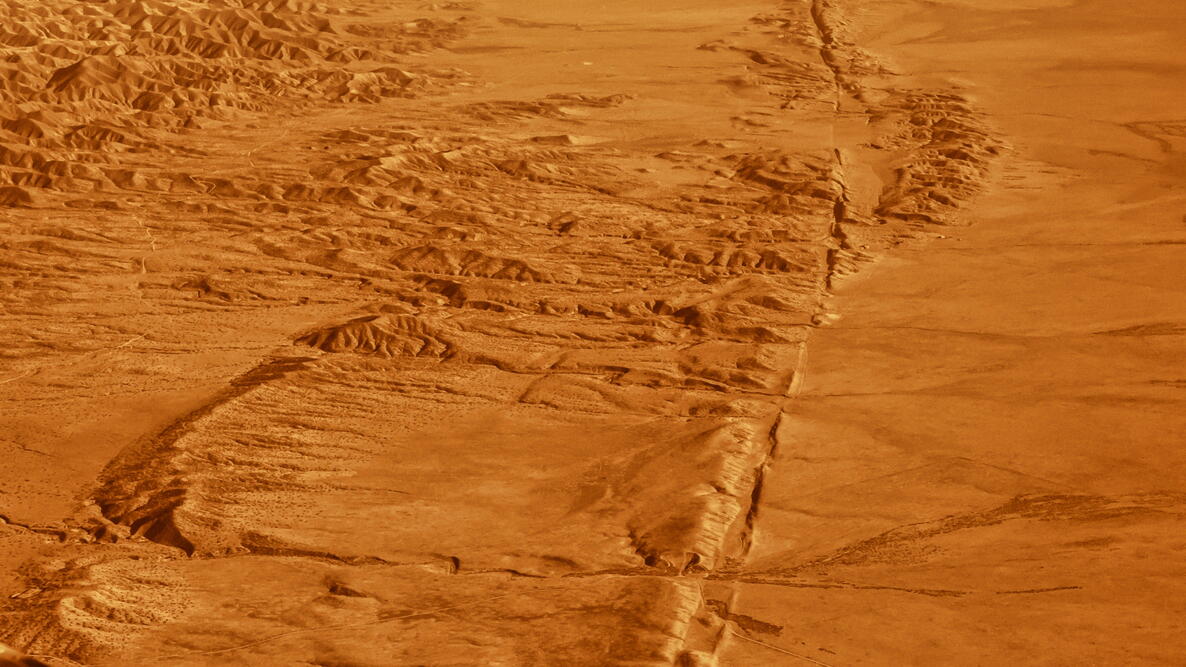
Aerial photograph of the San Andreas Fault
Photo Credit
Oliverdelahaye/Shutterstock

What causes tides on Earth and more facts

Written By: Bob Berman Astronomer
Body

Did you know the solid Earth has tides just like the ocean? These subtle shifts, called Earth tides or body tides, occur as the gravitational pull of the Moon and Sun causes the planet’s crust to rise and fall each day. While we can’t feel these movements, Earth tides play an important role in geophysics, earthquake research, and even precision scientific experiments. Understanding what Earth tides are, what causes them, and how they affect our planet offers a fascinating look at the hidden forces constantly shaping Earth.

What are Earth Tides?

Earth tides are the gentle rising and falling of the Earth’s solid crust—yes, the ground itself—caused by the gravitational pull of the Moon and the Sun. Just like ocean tides make water bulge outward, Earth tides make the land very subtly stretch, compress, and lift.

What Causes Earth Tides? 

The Role of the Moon

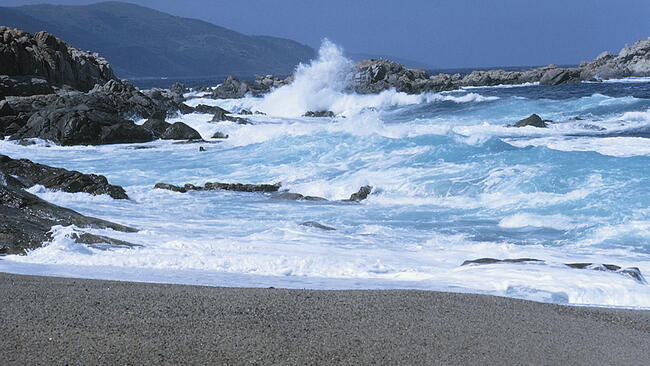
The Moon’s gravitational pull not only affects our bodies of water. The solid crust of Earth also moves to a lunar rhythm. The Moon’s gravity causes our oceans to bulge out on the side closest to the Moon and the side farthest from the Moon. These bulges of water are high tides. The low points are where low tides occur. Learn more about how the Moon affects tides.

The Role of the Sun

The Sun’s gravity is important, too, though lunar amplitude (Earth bulge/depression distances) is just over 2 times the height of solar amplitudes. In fact, when the Moon and Sun are aligned (at the New Moon and the Full Moon, we see the greatest tidal range. At the Quarter Moons, the tidal range is at a minimum. 

How Tall Are Earth Tides?

While the seas rise and fall by a worldwide average of 3 feet daily, the ground oscillates by about 8 inches (scientists measure this with satellites). 

This mutation is not merely a surface phenomenon; the entire planet undergoes constant and complex rhythmic deformations. The tides go through a single cycle (high and low tide) every 12 hours. 

Why Earth Tides Matter to Science

Some scientists say that Earth tides are important, though not as important as ocean tides. Earth tides are correlated with earthquakes as well as volcanic events. 

In some scientific experiments, Earth tides must be accounted for. For example, sensitive particle physics experiments at large particle accelerators must compensate for tidal variations.

However, overall, there isn’t much effect. Indeed, what’s remarkable is that they’re so small. It’s evidence that our planet is incredibly well–built. To have a body as massive and as near as the Moon, and to have our planet changed so little by its presence, means that Earth is one of the solar system’s construction success stories.

Earth Tides vs Ocean Tides: Key Differences

FeatureEarth TidesOcean Tides
What Moves?The Earth’s solid crustThe Earth’s oceans (water)
Primary CauseGravitational pull of the Moon and SunGravitational pull of the Moon and Sun
Typical Height Change~8 inches (20 cm)~3 feet (1 meter) on average; can exceed 30 ft in some regions
Cycle LengthAbout 12 hoursAbout 12 hours
VisibilityNot visible to the naked eyeHighly visible as water rises and falls
Where It OccursEntire solid Earth surfaceCoastal areas and bodies of water
Effects on EarthSlight crust deformation; small impacts on earthquakes & volcanoesShoreline changes, coastal ecology, navigation, erosion
Scientific ImportanceMust be corrected for in physics labs, GPS, satellites, and geophysical measurementsImportant for fishing, shipping, weather, and coastal management
Strength of Lunar vs Solar InfluenceLunar tides are just over 2× stronger than solar tidesLunar tides remain dominant but solar tides enhance or diminish them
Human PerceptionNot feltEasily noticeable

Learn more about Spring Tides and Neap Tides.

About The Author
Bob Berman

Bob Berman

Astronomer

Bob Berman is an astronomer, author, and science communicator with decades of experience making the wonders of the universe accessible and engaging. Known for his wit and insight, Bob has captivated a...