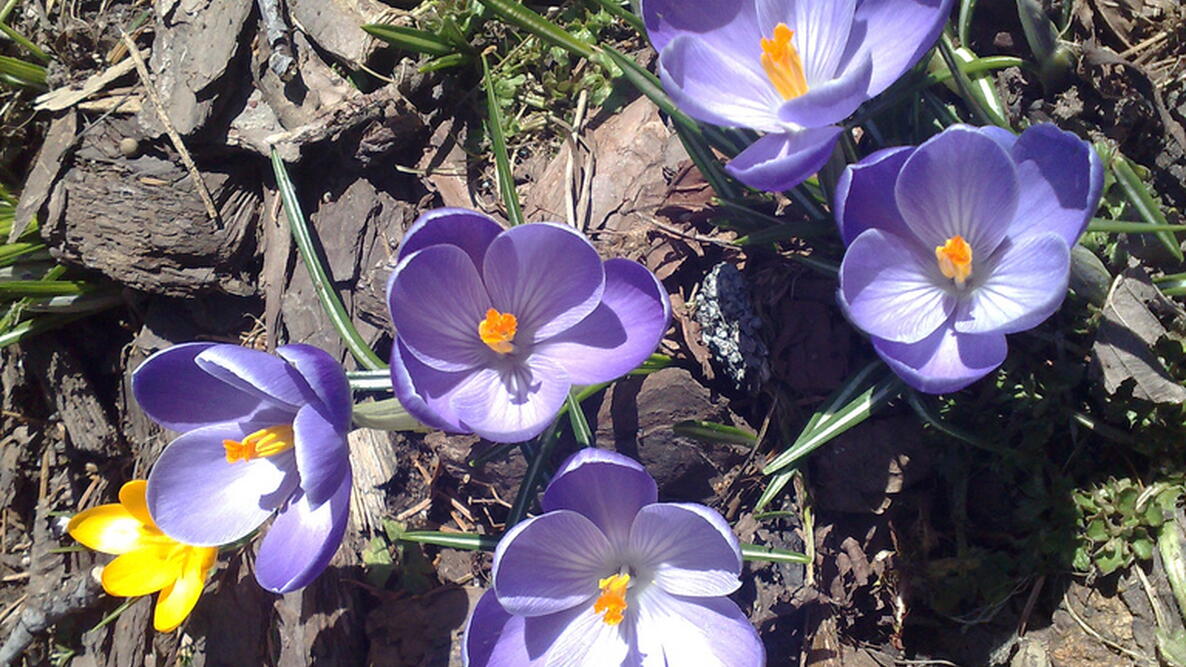
Caption

If you want a garden that returns bigger and better every year, naturalizing bulbs is the perfect solution. These reliable spring- and summer-flowering bulbs multiply on their own, creating drifts of color with minimal maintenance.
When planted in autumn, naturalizing bulbs adapt to their environment, spreading informally through lawns, borders, and woodland edges. From early-blooming snowdrops and crocuses to long-lasting daffodils and ornamental alliums, these perennial bulbs reward gardeners year after year. Below, you’ll find the best bulbs for naturalizing, along with sun requirements and bloom times to help you plan a vibrant, low-effort garden.
What Does “Good for Naturalizing” Mean?
When you shop for bulbs, you’ll see some labeled as “good for naturalizing.” This means that they can be counted on to come up year after year and spread informally throughout your garden.
Examples of bulbs that naturalize easily:
- Daffodils
- Crocuses
- Alliums
- Grape hyacinths
- Snowdrops
Best Spring-Flowering Bulbs for Naturalizing
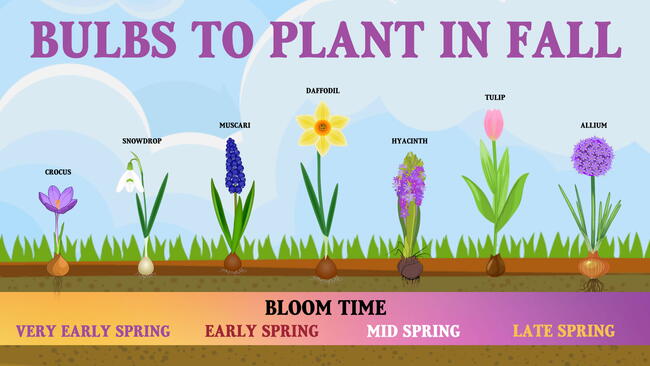
The following spring- and summer-flowering bulbs are reliably perennial in habit. For best results, plant these bulbs in the fall.
(Average blooming periods in parentheses.)
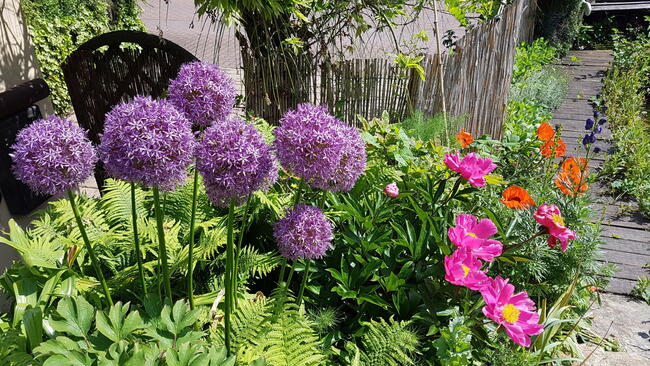
Alliums
Require sun; can also manage on the sunny edges of woods:
- Allium aflatunense – Ornamental garlic (summer)
- A. giganteum – Giant onion (summer)
- A. karataviense – Turkestan onion (summer)
- A. moly – Lily leek or golden garlic (summer)
- A. neapolitanum – Naples onion, daffodil garlic, flowering onion (summer)
- A. oreophilum – Ornamental garlic (early summer)
- A. sphaerocephalon – Drumsticks, ballhead onion, round-headed garlic (summer); the best allium for naturalizing
Anemones
Need sun and are beautiful in borders:
- Anemone blanda ‘Blue Shades’ – Greek anemone, windflower (spring)
- A. blanda Mixed – Windflower mixed (spring)
- A. blanda ‘Pink Star’ – Windflower (spring)
- A. blanda ‘White Splendour’ – Windflower (spring)
Learn more about planting and growing anemones.
Crocuses
Come in a wide range of colors; will spread quickly:
- Crocus ancyrensis – Golden bunch crocus (late winter/early spring)
- C. Botanical Mixed – Species crocus (early spring)
- C. chrysanthus ‘Blue Bird’ – Botanical crocus (early spring)
- C. chrysanthus ‘Blue Pearl’ – Botanical crocus (early spring)
- C. chrysanthus ‘E. P. Bowles’ – Botanical crocus (early spring)
- C. chrysanthus ‘Cream Beauty’ – Botanical crocus (early spring)
- C. flavus Yellow or C. x luteus ‘Golden Yellow’ – Dutch crocus (spring)
- C. vernus ‘Jeanne d’Arc’ – Dutch crocus (spring/early summer)
- C. vernus ‘Pickwick’ – Dutch crocus (spring/early summer)
- C. vernus ‘Purpureus Grandiflorus’ – Dutch crocus (spring/early summer)
- C. vernus ‘Remembrance’ – Dutch crocus (spring/early summer)
- C. tommasinianus ‘Ruby Giant’ – Botanical crocus (late winter/early spring)
- C. tommasinianus ‘Whitewell Purple’ – Botanical crocus (late winter/ early spring)
Our Crocus Grow Guide gives you everything you need to know about planting and caring for crocuses.
Daffodils
Bringing sunny colors to the garden before the taller tulips are in bloom:
- Narcissus ‘Actaea’ – Small-cupped daffodil (late spring)
- N. ‘Barrett Browning’ – Small-cupped daffodil (mid-spring)
- N. ‘Birma’ – Small-cupped daffodil (mid-spring)
- N. ‘Carlton’ – Large-cupped daffodil (mid-spring)
- N. ‘February Gold’ – Botanical daffodil (early spring)
- N. ‘Flower Record’ – Large-cupped daffodil (mid-spring)
- N. ‘Fortune’ – Large-cupped daffodil (mid-spring)
- N. ‘Hawera’ – Botanical daffodil (late spring)
- N. ‘Ice Follies’ – Large-cupped daffodil (mid-spring)
- N. ‘Jack Snipe’ – Botanical daffodil (early to mid-spring)
- N. ‘Minnow’ – Botanical daffodil (early spring)
- N. ‘Mount Hood’ – Trumpet daffodil (mid-spring)
- N. ‘Peeping Tom’ – Botanical daffodil (early spring)
- N. ‘Salome’ – Large-cupped daffodil (mid-spring)
- N. ‘Suzy’ – Botanical daffodil (mid-spring)
- N. ‘Tete a Tete’ – Botanical daffodil (early spring)

Photo: Walter Erhardt
Muscari
Tolerate late snowfalls; work well with crocuses:
- Muscari armeniacum ‘Blue spike’ – grape hyacinth (spring)
- Muscari botryoides ‘Album’ – grape hyacinth (spring)

Photo: Julie Star
Tulips That Will Naturalize (Yes, It’s Possible!)
Tulips are hard to naturalize, but not impossible! You must be cultivar-specific in choosing those you plant, as only certain ones will work. Learn more about planting and caring for tulips.
The following are recommended for a naturalized setting:
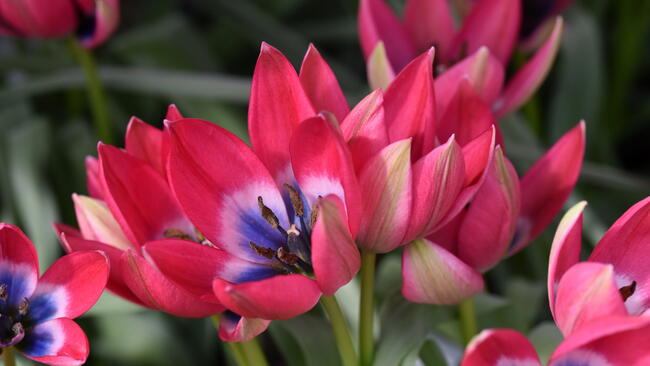
- Tulipa ‘Candela’ – Botanical tulip (early spring)
- T. ‘Orange Emperor’ – Botanical tulip (mid-spring)
- T. ‘Don Quichotte’ – Triumph tulip (mid-spring)
- T. ‘Kees Nelis’ – Triumph tulip (mid-spring)
- T. ‘Praestans Fusilier’ – Botanical tulip (early spring)
- T. ‘Princeps’ – Botanical tulip (early spring)
- T. ‘Purissima’ – Botanical tulip (early spring)
- T. ‘Red Emperor’ – Botanical tulip (early spring)
- T. ‘Red Riding Hood’ – Botanical tulip (mid-spring)
- T. ‘Toronto’ – Botanical tulip (early spring)

Photo: Sergey V Kalyakin
These showy, lily-flowering tulips will also spread:
- T. ‘Aladdin’ – (late spring)
- T. ‘Ballade’ – (late spring)
- T. ‘Maytime’ – (late spring)
- T. ‘Red Shine’ – (late spring)
- T. ‘White Triumphator’ – (late spring)
Darwin hybrid tulips such as these are great multipliers:
- T. ‘Apeldoorn’ – (mid-spring)
- T. ‘Apeldoorn’s Elite’ – (mid-spring)
- T. ‘Beauty of Apeldoorn’ – (late spring)
- T. Darwin Hybrid Mixed – (mid- to late spring)
- T. ‘Golden Apeldoorn’ – (mid-spring)
- T. ‘Holland’s Glorie’ – (late spring)
- T. ‘Oxford’ – (mid-spring)
- T. ‘Striped Apeldoorn’ – (late spring)
Lesser-Known Bulbs That Spread Reliably
- Brodiaea – Star flower (early summer)
- Camassia cusickii – Quamash, Cusick’s camass (late spring)
- Chionodoxa gigantea – Glory-of-the-snow (early spring); need sun
- Chionodoxa luciliae – Glory-of-the-snow (early spring); need sun
- Colchicum autumnale – Meadow saffron (autumn); need sun
- Erythronium – Dog-toothed violet (spring); good in shade
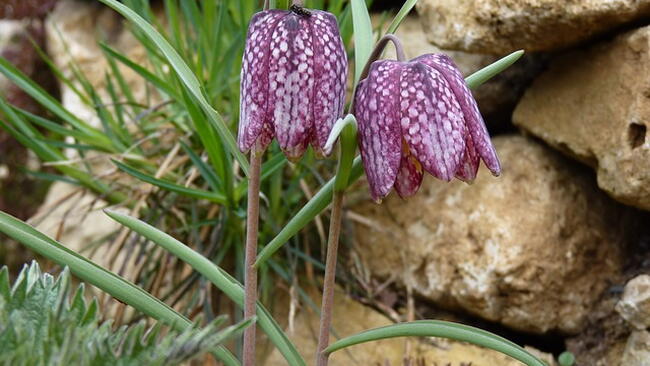
- Fritillaria meleagris – Guinea hen flower (spring); very good at naturalizing
- Galanthus nivalis – Common snowdrop (late winter/early spring)
- Ornithogalum umbellatum – Star of Bethlehem (early summer); good in shade with some sun
- Puschkinia libanotica – Striped squill (spring)
- Scilla campanulata Mixed – Spanish bluebells (spring)
- Scilla siberica – Siberian squill (spring)
Naturalizing Bulbs Chart: Sun Exposure and Seasonal Bloom Guide
| Bulb Type | Sun Requirement | Bloom Time |
|---|---|---|
| Alliums | Full sun | Early–mid summer |
| Anemones (blanda) | Full sun | Early spring |
| Crocuses | Full sun to partial sun | Late winter–early spring |
| Dwarf Irises | Full sun | Late winter–early spring |
| Muscari (Grape Hyacinth) | Full sun to partial sun | Spring |
| Daffodils (Narcissus) | Full sun to partial shade | Early–late spring |
| Botanical Tulips | Full sun | Early–mid spring |
| Darwin Hybrid Tulips | Full sun | Mid–late spring |
| Snowdrops (Galanthus) | Partial shade | Late winter |
| Glory-of-the-Snow | Full sun | Early spring |
| Fritillaria meleagris | Partial sun | Spring |
| Erythronium | Partial to full shade | Spring |
| Camassia | Full sun to partial shade | Late spring |
| Colchicum | Full sun | Autumn |
Frequently Asked Questions
What does it mean when a bulb is “good for naturalizing”?
A bulb labeled “good for naturalizing” reliably returns each year and multiplies on its own, spreading naturally throughout the garden without needing replanting.
What are the easiest bulbs to naturalize?
Daffodils, crocuses, snowdrops, grape hyacinths, alliums, and species tulips are among the easiest bulbs to naturalize and require very little maintenance.
Do naturalizing bulbs need full sun?
Most naturalizing bulbs prefer full sun, but many—such as snowdrops, erythronium, and fritillaria—will thrive in partial shade or woodland settings.
Can tulips really naturalize?
Yes, but only certain types. Botanical tulips, Darwin hybrids, and lily-flowered tulips are the most reliable tulips for naturalizing.
When should I plant bulbs for naturalizing?
Plant naturalizing bulbs in the fall, ideally before the ground freezes, so they can establish roots before winter.
Do naturalizing bulbs require special care?
Once planted, naturalizing bulbs need minimal care. Avoid cutting foliage until it yellows naturally, allowing the bulbs to store energy for next year’s blooms.
Naturalizing bulbs make your garden come alive year after year with minimal effort. Plant the right varieties in sun or shade, follow the bloom-time chart, and watch your garden burst with color from late winter through summer. With just a little planning, your flowers will spread, return, and create a vibrant, low-maintenance display season after season.

More Like This


Anemone Blanda is for zones 4 to 9; however, Anemone Monarch de Caen is for zones 3 to 10. The colors are truly stunning. Plant in spring or fall into semi-shady spots, and they'll be up in no time. Be sure your location is never too hot, and never too dry. They need good drainage, but insist on a moist, somewhat shaded spot.
Plant tulip bulbs in the fall, 6 to 8 weeks before a hard frost is expected and when soils are below 60 degrees F. See our Tulip Growing Page for more information about planting tulips:

Comments