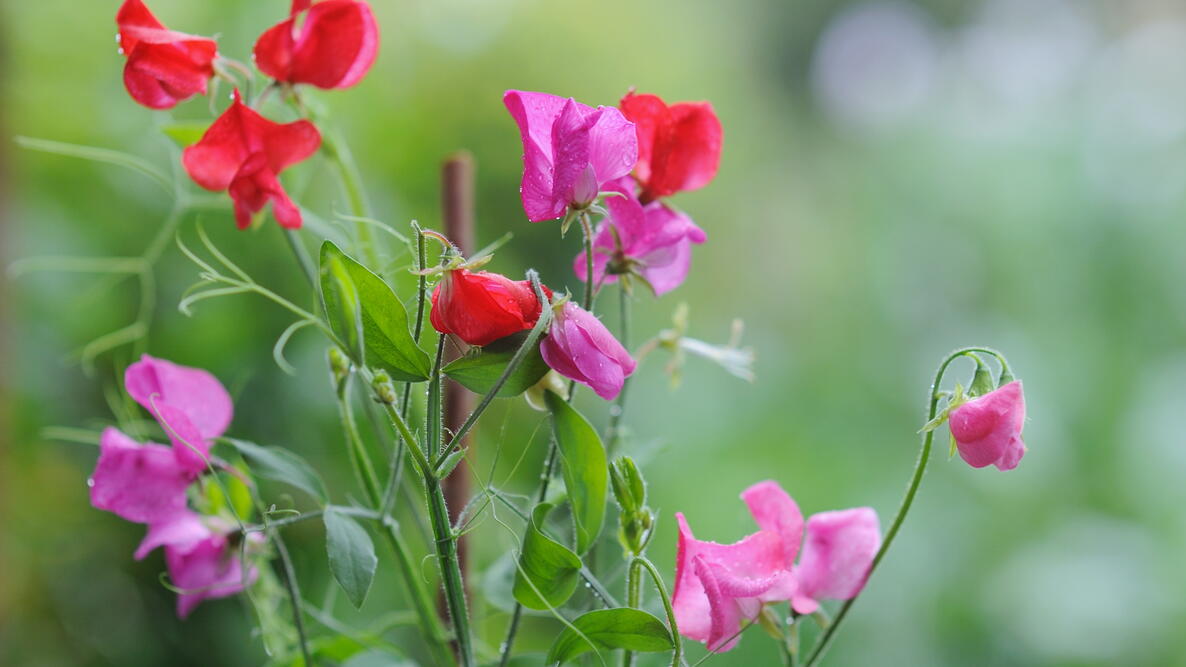

Sweet peas are fragrant annual flowers grown for their colorful blooms and exceptional scent, making them a favorite for cottage gardens and cut-flower bouquets. Gardeners love sweet peas for their long-lasting blossoms, climbing habit, and ability to add romantic charm to trellises, fences, and garden borders. This growing guide explains how sweet peas behave in the garden and how to enjoy their abundant blooms throughout the season.
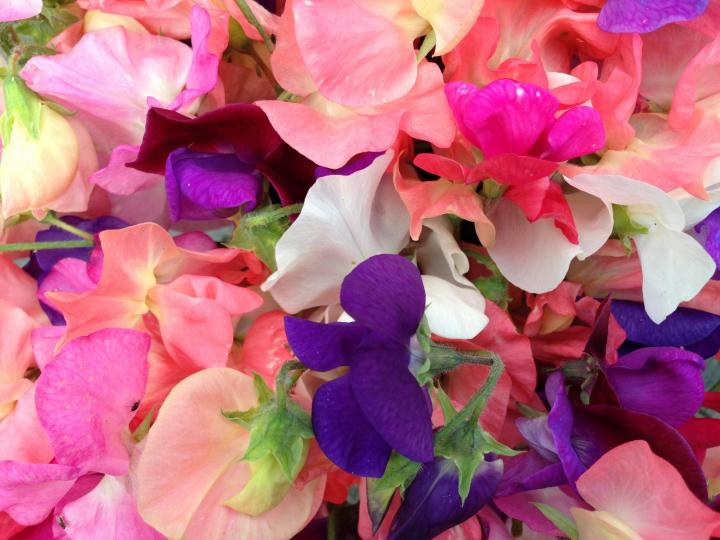
Sweet peas grow as climbing or trailing vines that produce delicate, winged flowers in shades of white, pink, purple, blue, and magenta. They twine easily onto trellises, arches, and supports, making them ideal for vertical gardens, cutting beds, and decorative garden structures. Their strong honey-like fragrance and steady bloom production make them especially popular for fresh bouquets and cottage-style landscapes.
Despite their delicate appearance, sweet peas are hardy annuals that produce abundant flowers over a long blooming period. They work well in borders, cutting gardens, and along fences, adding color, fragrance, and classic garden charm while attracting pollinators such as bees and butterflies.
Despite their delicate look, sweet peas are quite hardy. In USDA Hardiness Zone 7 or colder, plant them in very late winter or early spring as soon as the soil is dry enough to work. Find your USDA Plant Hardiness Zone here.
Planting
WARNING: Do NOT plant sweet peas near edible garden peas. All parts of the sweet pea plant are poisonous. If enough of the plant is consumed, it can cause a condition called lathyrism, which is exhibited by paralysis, shallow breathing, and convulsions.
When to Plant Sweet Peas
- In most locations where frosts occur regularly (Zone 7 and colder), sweet peas should be planted in very late winter or very early spring as soon as the soil is dry enough to work. (Do not wait until the last frost to sow! It will likely be too late.)
- If you garden in mild winter climates (Zones 8, 9, or 10), plant sweet peas in the late fall (November) so they can develop and bloom in late winter and early spring. To get the best display, dig a trench and fill it with well-rotted manure or compost 6 weeks before you sow the seeds. Sweet peas are greedy plants and need a good boost of nutrient-rich matter to thrive.
Sowing Sweet Peas Indoors
- In the coldest parts of the country, get a jump on the season by starting sweet peas indoors in a seed tray. Sow in seed-starting containers in early spring, about 6 to 7 weeks before the last frost date, then plant out as soon as the soil can be worked; sweet peas can handle light frosts.
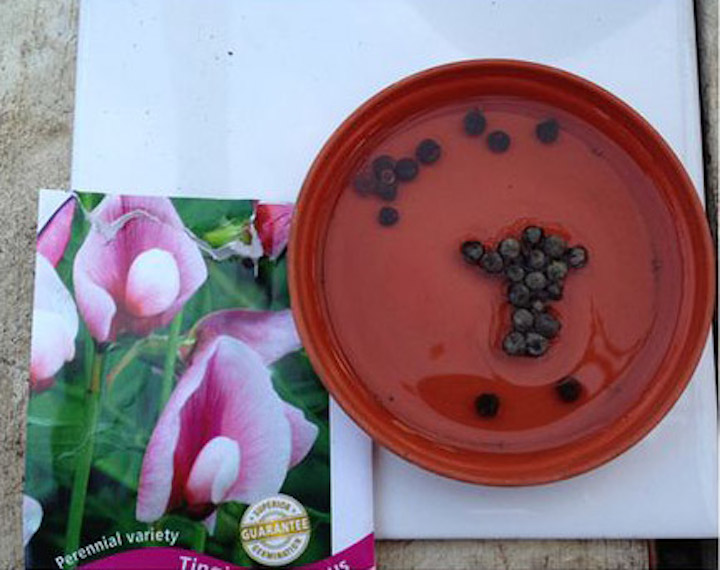
- Soaking the seeds overnight first softens the outer coating and aids germination. Lightly scoring the outer shell with a nail file can help, too.
- Sow the seeds about half an inch deep in individual cells of a seed tray—two seeds to a module is fine, but be aware that their long roots have a tendency to tangle and can make separation difficult.
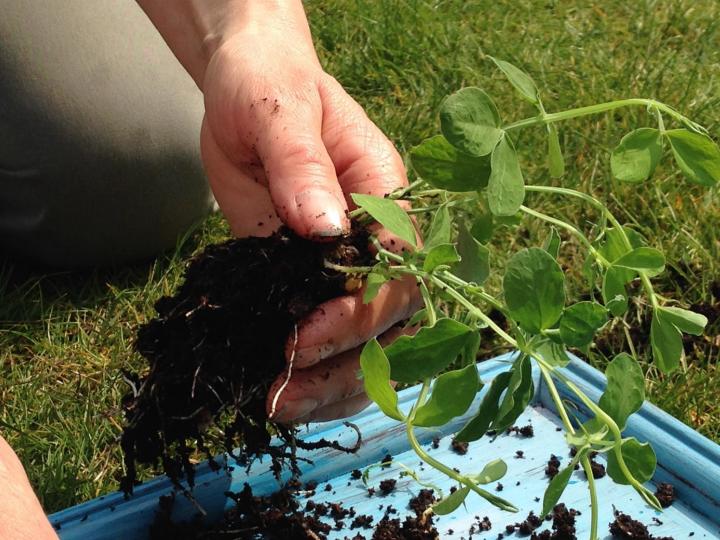
- Once they are showing their first pea-like leaves, gently scoop them out and put them into a larger pot to harden off. The advice I had from one of the most respected sweet pea growers was “to treat the seedlings how I would my husband: stick them in an unheated greenhouse, ignore them, and they will thrive.”
- As soon as the soil can be worked, plant them outside.
Sowing Seeds in the Ground
- Sweet peas are happiest with their heads in the sun and their roots deep in cool, moist soil. When possible, plant low-growing annuals in front of them to shade their roots.
- Choose a well-draining site. Alkaline soil is best; sprinkle some powdered lime on the surface if your soil tends to be acidic.
- Prepare a rich soil by mixing in generous amounts of compost or well-rotted manure to a depth of 2 feet. (If you want to learn more about preparing soil for planting.)
- Prior to planting, you’re going to want to dig a nice deep “compost” trench of about 4 inches in depth.
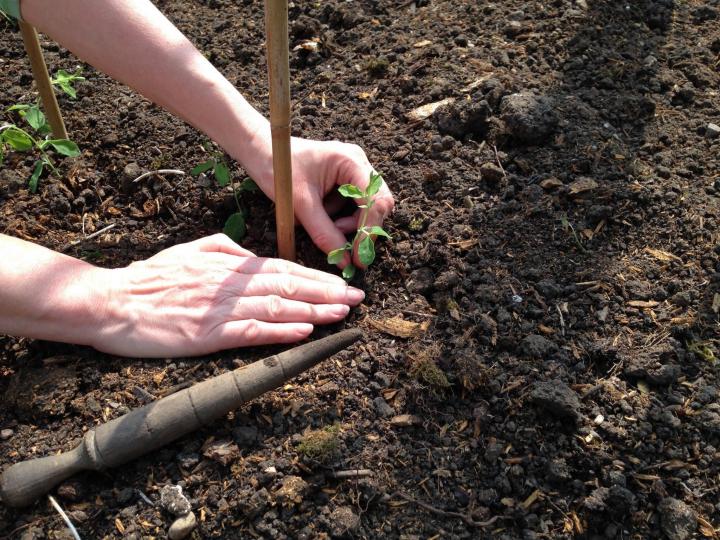
- After you dig the trench, make holes with a pencil, drop in the seeds, and press down on the soil to firm it and shut out any light.
- Before planting, soak the seeds in water for 24 hours. Then, nick the seeds with a nail file before planting to speed sprouting. You do not need to soak seeds in a temperate climate.
Join us as we show you how to plant sweet peas in this video demonstration:
Growing
How to Grow Sweet Peas
- Once planted, germination can take 7 to 15 days, depending on the soil temperature.
- As seedlings emerge and grow, gradually fill in the trench. Hoe more soil up to them.
- Keep soil moist. Summer rain may be ample. If you put your finger into the soil bed to its first joint and the soil is dry, water them at the soil level and do so in the morning; sweet peas can suffer from bud drop.
- If you use plenty of aged manure and compost when planting, you do not need to fertilize. If you do want to add nourishment, use high-potash feeds, as nitrogen feeds encourage too much top growth.
- When plants become established, mulch well to keep the soil cool and moist. If you mulch, you may not need to water your sweet peas unless the soil gets dry.
- To encourage bushy growth, pinch off the tops when plants are 6 inches tall—not before, or you’ll encourage premature side-shoot development.
Provide Supports
- Sweet peas prefer cool days and nights and will start to fade when temperatures go above 65°F.
- Except for the bush types, sweet peas are real climbers. Give them at least 6 feet of good support. Some varieties may climb to 9 or 10 feet. Other visually pleasing supports are bamboo poles in a teepee style, a woven willow obelisk, or a trellis. If you don’t have a fence or trellis, provide chicken wire or bushy, stubbly twigs that the plant can cling to.
- Tie the first few stems into the support to give the plants a good start, and the rest will follow. When they reach 4–8 inches high, pinch out the middle growing tip with your thumb and forefinger. This will lead to sturdier plants.
Picking Flowers
- Pick the flowers for bouquets often, and the plant will put energy into more blooms instead of going to seed. The more you pick, the more they produce, right until the first frosts.
- When the leaves start to lose their color, let a few of the last flowers form seedpods. Dry them on a windowsill and then store them in an envelope in a dry place to sow next year.
Types
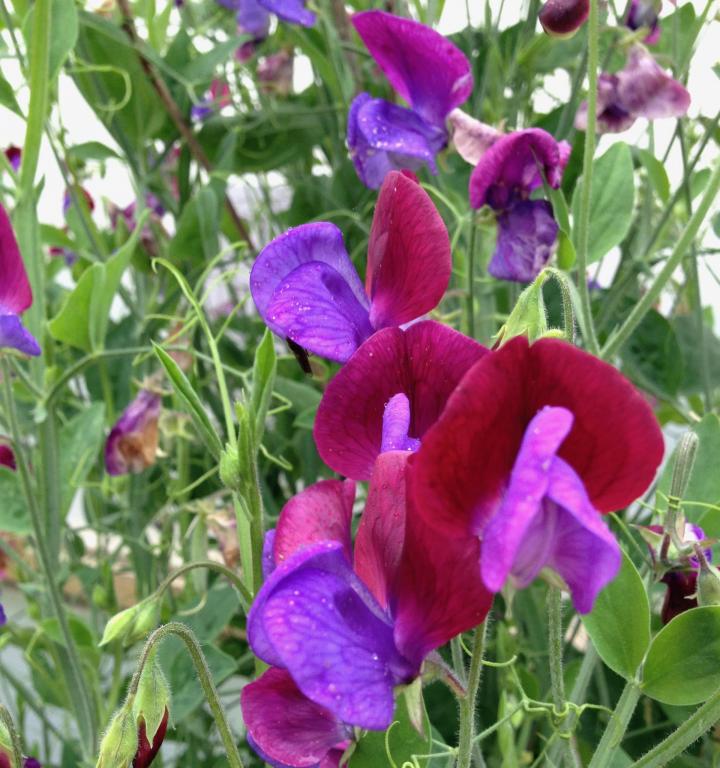
There are sweet pea varieties for every situation, from 8-foot-plus scramblers to dwarf bedding ones suitable for containers and borders without support.
- In their native Sicily, these ornamental peas have weak stems and an intense orange-jasmine-honey scent. Modern hybrids have stronger stalks and larger blooms.
- At the same time, some of these modern varieties with larger flowers and contemporary hues lack the fragrance of the earlier sweet peas. Sweet pea ‘Cupani’, with its bicolored flowers and maroon upper petals with violet “wings,” is still deservedly popular and is easy to grow.
- The deliciously scented ‘America’ is an heirloom dating to 1896. Its petals unfurl to show stunning, wavy red and white stripes.
- Look for heirlooms like the ‘Old Spice’ collection from Sicily. This strain blooms in shades of white, cream, pink, lavender, and purple.
- ‘April in Paris’ is a fragrant modern variety with large creamy-yellow blossoms and lilac shading.
- While the common sweet pea is an annual, there is also a perennial, unscented, broad-leaved everlasting pea, Lathyrus latifolius. These clambering plants can reach up to 6 or 7 feet and are hardy to Zone 5; they are low-maintenance plants that flower regularly year on year.

More Like This


Hi Tiffany,
There is a lot of conflicting information out there. What is considered toxic are the seeds that the plant produces late in the season. It is unclear just how toxic sweet pea seeds are to humans and animals, but any amount of toxicity should give you pause when deciding what to plant. When in doubt or if you have some concerns, it's best to go in another direction and plant something that does not possibly present a danger when ingested by children, pets, or livestock.
As for other plants that will help with flies, lemon grass, lemon balm, lavender, and rosemary are thought to help, but it requires more than just a couple plants in the garden. We'd suggest contacting your local cooperative extension to discuss as they will have more expertise in your area and what might be best to plant. Here is a list of cooperative extensions to guide you. https://www.almanac.com/cooperative-extension-services
Hope this helps!

The answer is yes to both questions. Make sure you do your homework and choose varieties and locations carefully when planting sweet peas. Although they are technically annuals, sweet peas drop seeds that can often take the next season. And because they tend to be quick growing, they can get out of control. To keep a lid on unwanted growth, it can be helpful to collect up as many of its fall seeds as possible, setting them aside for future planting right where you want them.
Hi Bernadette,
It sounds like you have really taken advantage of your growing spaces over the years. The area you describe sounds like a place where sweet peas could thrive given the fact that it gets sun early in the season before the weather gets too hot and has support at the ready.
It is hard to truly know if they will get enough sun during the early spring growing times, but it sounds like you would have enough at least early on. You would definitely want to start your sweet pea seeds indoors and then transplant to the area to get a jump start on the season. Depending on how much shade the leafing out trees cast on that area will determine how well the sweet peas do. If the trees do block some of the sun earlier, it might impact later blooms.
Given that sweet peas are an annual, it is worth taking the chance to see how they will do in that area. If they thrive, you will enjoy the beautiful vines and the delightful scent early in the season. If not, you will now know and can try something else next year.
Hope this helps!
- « Previous
- 1
- 2
- …
- 10
- Next »

Comments