Caption
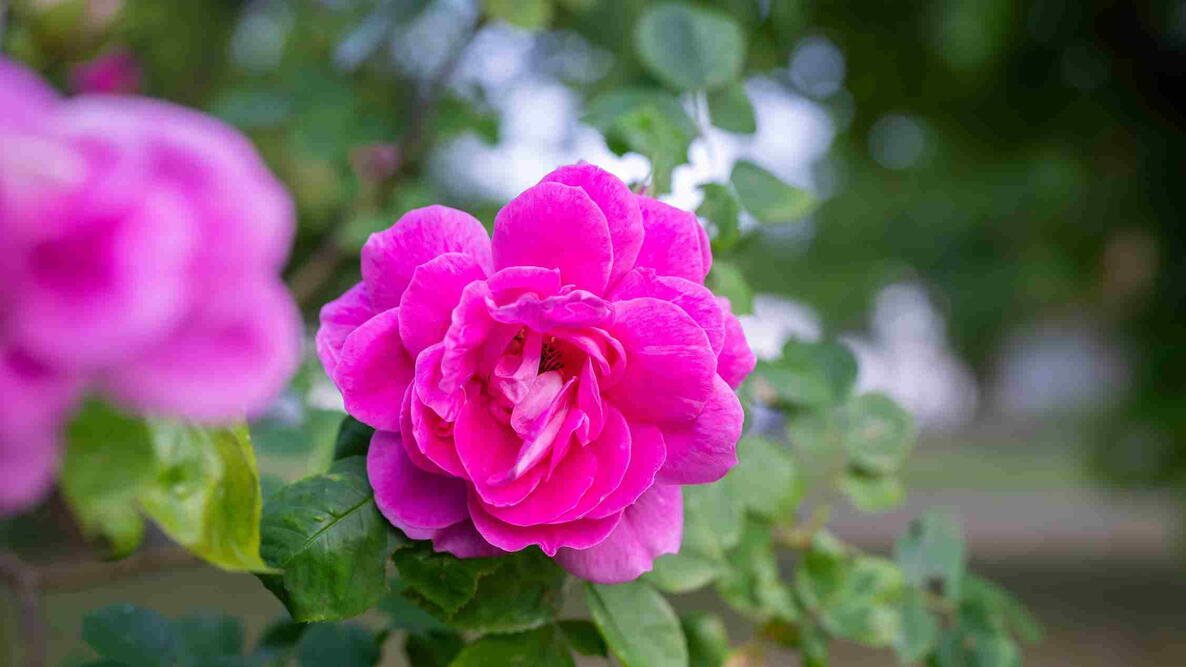
An old garden rose in bloom—valued for its rich fragrance and timeless beauty.

There’s a rose for every purpose today. But long before hybrid tea roses filled garden centers, there were the old garden roses—valued for their intense fragrance, full romantic blooms, and remarkable toughness. In my own garden, I learned the hard way which roses would survive. The ones that proved both hardy and richly scented changed the way I think about growing roses.
What Makes Old Garden Roses Different From Modern Roses?
After decades of growing roses, I’ve learned the hard way which ones are truly long-lived. I garden in areas where winters can be tough, and the only hybrid tea that consistently made it through was ‘Cherry Parfait’. It’s beautiful—but it has no fragrance. And I admit it: I miss the intense perfume and the full, romantic blooms that make a rose feel like a rose.
So which roses are both tough and deeply fragrant, with complex blooms and good disease resistance? The old garden roses.
These are the true roses that have stood the test of time. The American Rose Society defines them as any rose class existing before the first hybrid tea, ‘La France’, appeared in 1867.
They are often called heirloom or antique roses. However you name them, they are the classics. (And yes, some classics endure for good reason—The Old Farmer’s Almanac has been around since 1792.)
Old garden roses are what many people picture when they imagine a rose. Many are “once-bloomers” (summer flowering), though classes like Chinas and Bourbons repeat bloom later in the season. These hardy, historic shrubs are generally long-lived, adaptable, and often easier to grow than their more modern cousins.
Here’s a simple side-by-side look at how old garden roses compare with modern varieties:
| Feature | Old Garden Roses | Modern Roses |
|---|---|---|
| Era | Bred before 1867 | Bred after 1867 |
| Fragrance | Often intensely perfumed | Often lighter or less pronounced (though some modern varieties are fragrant) |
| Bloom Style | Full, romantic, many petals | Often bred for form and long stems |
| Bloom Cycle | Many bloom once; some repeat | Often bred for continuous bloom |
| Hardiness | Generally hardy and long-lived | Varies widely by type |
| Disease Resistance | Many are naturally resilient | Some require regular spraying |
| Garden Style | Shrub-like, informal | Often more structured or hybrid tea form |
If you’re interested in modern roses, too, here are some of the easiest modern roses to grow.
My Favorite Old Garden Roses
Old garden roses are grouped into historic classes, but what matters most is how they grow, bloom, and smell. I’ve found that the best way to understand them is to grow a few and see how they behave in your own garden.
Gallica Roses
My favorite is Rosa gallica officinalis, the oldest rose in existence. It’s also called the Apothecary’s Rose, because herbalists such as Benedictine monks—and even the fictional Brother Cadfael—used it to concoct potions said to cure everything from hangovers to the plague.
I treasure its heady perfume, the ultimate in rose essence. Rose oil is distilled from it commercially. I use the petals to make potpourri and rose tea, mixing dried buds and petals with oolong tea.
It’s a species rose, with long stamens that are easily pollinated by insects. The blooms set seed, drop them, and new plants sprout. I always have plenty of tiny plants to share with friends and neighbors.

Lady Banks (Rosa banksiae)
Lady Banks is a species rose—a vigorous, pale-yellow climber that can quickly cover fences, walls, or arbors. In warm climates, it can reach 15 to 20 feet or more and spread even wider over time.
That’s why Tombstone, Arizona, is home to what’s considered the world’s largest rose: a Lady Banks that spreads across nearly 8,000 square feet. Intertwined trunks have grown together over more than 130 years to form a massive plant.
Lady Banks thrives in mild regions but may be grown farther north in a protected microclimate. If you’re interested in native species, see our guide to native roses.

Souvenir de la Malmaison
Souvenir de la Malmaison is a Bourbon rose—a class of old garden roses known for combining strong fragrance with repeat bloom. It was grown in Josephine Bonaparte’s château garden at Malmaison and later adored by Catherine the Great for its voluptuous pale-pink flowers and rich scent.
Unlike many once-blooming old roses, Bourbons flower in flushes through the growing season. This variety grows as a bushy shrub, usually 3 to 5 feet tall.
It’s too tender (Zones 6–9) for my climate without help, but I’ve planted one near the east side of my house, where the north wing protects it from frigid winter winds. It receives plenty of sunshine there, too. With protection, it rewards gardeners with additional blooms and exquisite fragrance.

Green Rose (Rosa viridiflora)
The Green Rose is a China rose—a class of old garden roses that helped introduce repeat bloom to Europe. It dates back to the 16th century and is unlike any other rose you’ll see.
Its blooms have no true petals—only pronounced, red-striped green sepals that give the flower its unusual look. When stroked, they release a faint scent reminiscent of black pepper.
It grows as a compact shrub, typically reaching about 3 to 4 feet tall, making it suitable for smaller gardens or mixed borders.
It’s a love-it-or-hate-it plant, but it always starts a conversation.

Other Classic Old Garden Roses
Old garden roses include several other historic groups that gardeners still grow today. Damask roses are prized for their intense perfume and have long been used to produce rose oil. Alba roses are known for their pale pink or white blooms and exceptional hardiness. Centifolia roses—sometimes called “cabbage roses”—are admired for their many-layered petals and rich scent. Each reflects the fragrance and durability that define old garden roses.

Growing Old Garden Roses
One of the advantages of old garden roses is that they don’t demand heavy feeding or constant attention. For general rose care, including planting and soil preparation, see our complete guide to growing roses.
Go Easy on Fertilizer
Old roses, like other heirloom plants, don’t need large amounts of nutrients. They are accustomed to taking what they need from soil enriched with decomposed plant matter.
Many gardeners find that organic or slow-release fertilizers work best. Feeding large amounts of nitrogen and phosphorus—often found in commercial rose fertilizers—can result in excessive foliage and fewer flowers.
Old roses that bloom only once each year will flower without fertilizer. Only a modest amount of nutrients is needed to maintain healthy leaf color and cane growth. The best approach is simple: Feed lightly and observe how the plant responds.

Why Grow Old Garden Roses?
Modern roses have their place. But if fragrance matters to you—if you want a rose that perfumes the garden and returns year after year—old garden roses are worth considering.
In my view, fragrance and toughness matter—and that’s where old garden roses shine.

More Like This

Comments