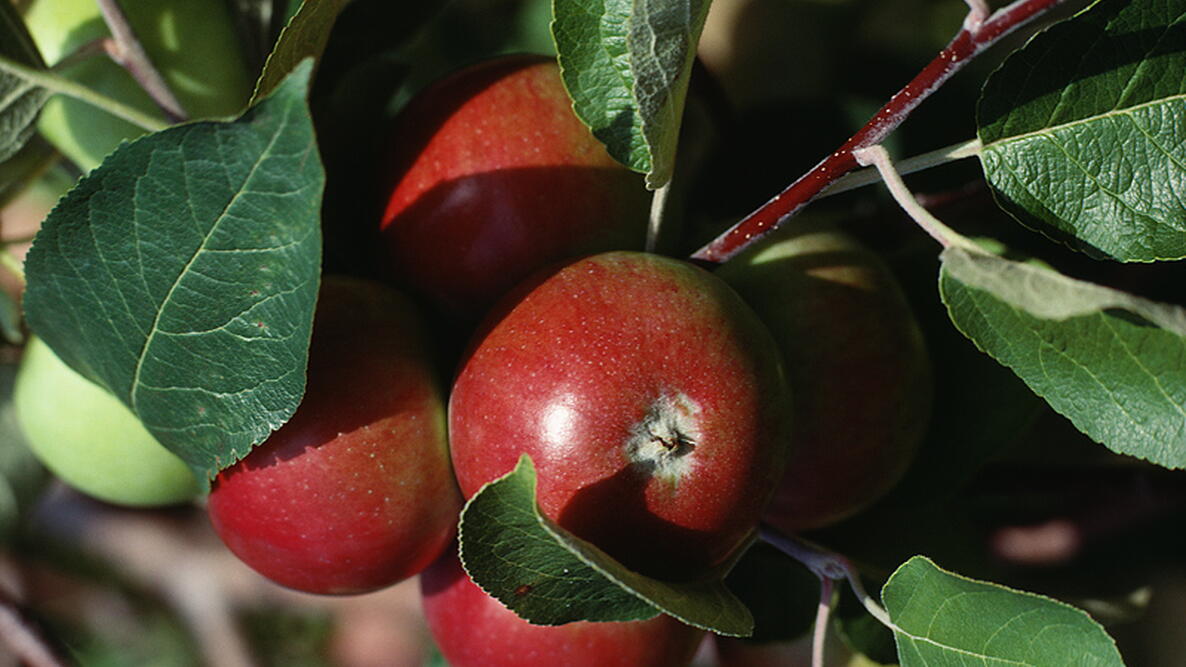

Dreaming of biting into a crisp, homegrown apple straight from your backyard? Growing your own apple trees is an incredibly rewarding experience, offering fresh fruit, beautiful blossoms, and a connection to the natural world. This comprehensive guide will give you the knowledge and confidence to embark on your apple-growing journey, including caring for apple trees, apple tree problems, and everything about planting and growing juicy apples in the home garden!
About Apples
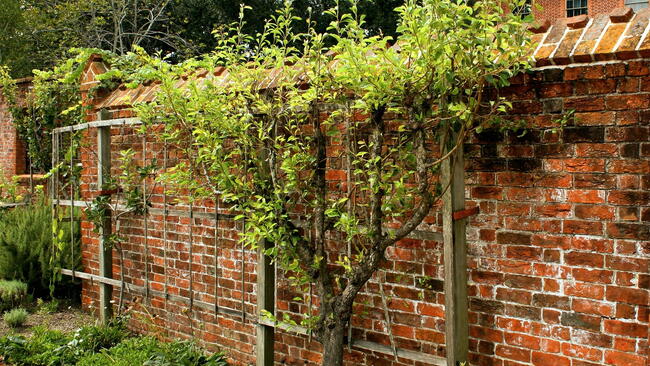
Apple trees aren’t just for people with acres upon acres of land. Even in a small space, you can plant a hedge of dwarf apple trees or an apple espalier and yield a successful crop. Spring planting is recommended in central and northern areas. Fall planting can also be successful, but only in areas where autumn and winter weather is generally milder and moister.
Where Do Apples Grow?
However, climate considerations are very important for growing apples. As a general rule, if an apple tree is called “hardy,” it grows best in USDA Hardiness Zones 3 to 5. If termed “long-season,” apple quality will be best in Zones 5 to 8. Check your zone here.
Tree tags don’t always tell you where the variety grows best, but many catalogs do. Also, check with your local Cooperative Extension Service for a recommendation specific to your area. Each variety has a number of chill hours needed to set fruit (i.e., the amount of time temperatures are between 32° and 45°F). The farther north you go, the more chill hours an apple variety needs to avoid late spring freeze problems. Check tree tags for chill hour information or ask the seller.
Can You Grow Apple Trees From Seed?
A common question is whether it’s possible to simply plant the seed of a variety that you like rather than buy a young tree. While it’s certainly possible to grow an apple tree from a seed, the apple tree you get probably won’t be the kind you hoped for!
Apple seeds are genetically different from their parent tree, which means that characteristics like tree size, hardiness, and fruit quality will differ (and will usually be poorer). So, if you plant a Honeycrisp seed, you won’t end up with Honeycrisp apples. Plus, it can take 8 to 10 years for an apple seedling to grow big enough to produce apples, so you may end up waiting a while!
Nevertheless, growing an apple seedling can still be a fun experiment.
How to Plant Apple Seeds
Apple seeds need to be exposed to cool, moist conditions before they are ready to germinate and grow. Sow them outdoors 1/2 inch deep in the fall, and the natural seasonal cycle will take care of the seed’s chilling needs for you. Alternatively, place the seeds in moistened sand in a plastic container and keep the container in the fridge for 3 to 4 months. Then, sow them outdoors 1/2 inch deep once the threat of frost has passed. Once the seedling emerges, be sure to keep it well watered and protected from pests.
Apples Need Pest Control
Also, it’s important to recognize that there are many diseases and fruit pests that attack apples, so it’s rare for this fruit to be grown without any type of pesticides. Growing apples organically is much more difficult on the East Coast than in the West due to the incidence of fungal diseases and types of pests that aren’t even present in the West. It will take much research and persistence to grow apples if you wish to avoid any type of spraying program.
Apple Trees Need Friends
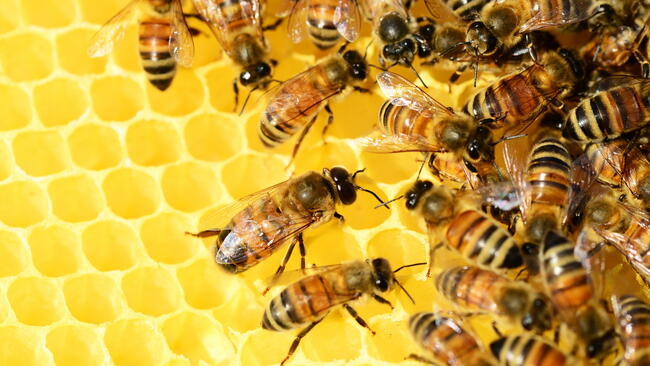
Most apples need pollen from another apple tree to produce fruit. This is called cross-pollination. This second tree must be a different cultivar, but also one that will flower at the same time. The presence of bees will be very important; poor pollination can reduce the amount of fruit and cause misshapen fruit; some orchards rent or maintain beehives for good pollination. Overusing broad-spectrum insecticides can reduce the number of bees.

Types
Choose the Right Varieties
- Look for disease-resistant trees, such as ‘Liberty’, ‘Jonafree’, ‘Macfree’, and ‘Williams Pride’, which will give you the ability to grow organic fruit or to use fewer chemicals. Maintenance is easier, too.
- You need to choose a rootstock. All apple trees sold have 2 parts: a “rootstock” or foundation and a “scion” or top portion, determining the fruit variety. A rootstock can be “seedling” or “standard” (which produces a full-size tree), or it can be “dwarfing” or “size-controlling” (which produces a smaller tree for easier care and harvest).
- For dwarf trees, make sure that the rootstock is specified. A Bud 9 is a common, hardy tree that’s easy to train for USDA Climate Zones 3 to 5. The M9 is probably the most widely planted rootstock, though it could die in frigid winters.
- Buy dormant, bare-root, 1-year-old nursery trees with good root systems. Dwarfs and semi-dwarfs will bear in 3 to 4 years, yielding 1 to 2 bushels per year. Standard-size trees will bear in 5 to 8 years, yielding 4 to 5 bushels of apples per year.
- The variety of apple selected should be based on fruit characteristics, bloom time, and pollen compatibility. Consult a local nursery to see which trees are potential cross-pollinators in your area. For best results, include a ‘Grimes Golden’, ‘Golden Delicious’, ‘Red Delicious’, or ‘Winter Banana’ in your planting. These varieties are known pollinators. Crabapple trees can also be used as pollinators if they bloom simultaneously as the desired variety. Nursery catalogs will provide pollination charts.
- Most apple varieties do not pollinate themselves or any flowers of the same apple variety; this requires planting at least two different apple tree varieties close to one another so that the bees can pollinate. (There are actually some self-pollinating apple tree varieties if you are really short on space. However, even these apple trees will bear more fruit if cross-pollinated.)
Also, consider how you will use your apples: Do you love to bake apple pies? Or, perhaps you just want apples that taste far better than what you could buy in a grocery store. See Best Apples for Baking for more information.
- A young dwarf tree produces about 1 1/2 bushels of fruit—and even less when the tree is part of an apple hedge. So, if you’re interested in baking lots of ‘Cox’s Orange Pippin’ apple pies, you’ll need to plant several trees of that variety to get enough fruit.
- If you have no particular culinary goal, try planting one of each different variety that ripen over the entire harvest season. Then, you can enjoy regular apple tastings and still have enough fruit on hand for a “mess” of cooked apples.
- Seek out the advice of local orchardists about the varieties that will do well in your area. Do the bulk of your planning from an easy chair with a half-dozen nursery catalogs in your lap!
More Like This

Young apple trees do not flower or produce fruit in the early stages of their lives. Dwarf and semi-dwarf varieties typically do not flower and bear fruit for 3 to 5 years, while standard size apple trees may not produce flowers/fruit for 5 to 10 years. It is important to follow a pruning regimen in late winter/early spring to avoid overcrowding. For pollination purposes, two cultivars are needed within 50 to 100 feet.
As for your older tree, it may take a few years of careful pruning to bring it back. You first want to remove a few larger branches to increase light and air flow, as well as any branches that are diseased or broken. Just remember not to prune too much to avoid the tree putting too much energy into growing new branches. And again, pruning in late winter/early spring is best.
Wish we could help but we don't have enough information to figure this one out. Our best advice it to take pictures and bring them to a local nursery, one that carries fruit trees, if possible. Good luck with this!
- « Previous
- 1
- 2
- …
- 10
- Next »

Comments