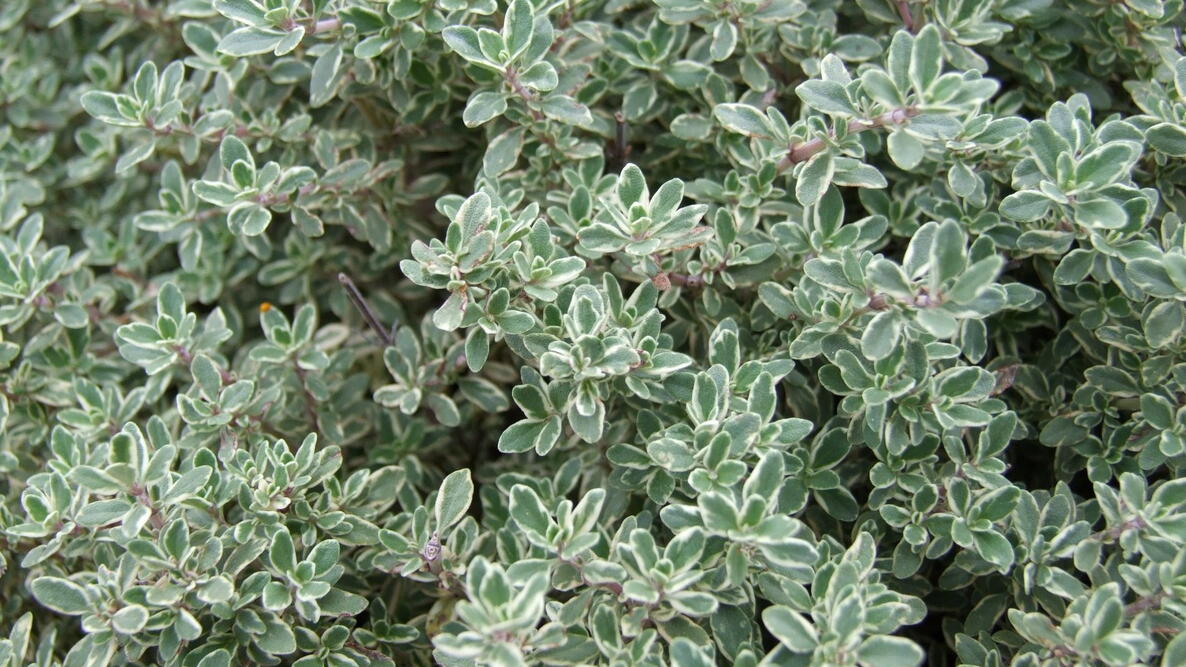
Caption
Learn how to plant, grow, and harvest thyme in your herb garden.

Growing
Watering
Water deeply only when the soil is completely dry.
Fertilizing
In early spring, you may fertilize with organic matter, like compost, but not much soil amendment is necessary.
Pruning
Prune the plants back in the spring and summer to contain the growth.
You can take some cuttings and plant them indoors in pots, too.
Mulching
If you have cold winters, remember to lightly mulch around the plants after the ground freezes.
How to Take a Cutting of Thyme
Clip a 3-inch cutting from the very tip of a stem, apply rooting hormone on the exposed portion of the stem, and plant it in either sterile sand or vermiculite. Roots will emerge within about 6 weeks. Transfer to a small pot, let the root ball form, and then transfer to a large pot or directly to your garden.

Photo: Rejdan
Types
The three most common varieties of culinary thyme are:
- French or English thyme (most common)
- Lemon thyme, for a hint of lemon
- Caraway thyme, for a nice fragrance of caraway and thyme

More Like This

Yes, you can eat the thyme flowers: they are not only pretty but perfectly edible. If you want to avoid flowering, however, be sure to trim your herbs. Thyme will regrow if you trim only the very top inch of each branch. (Do not cut into old wood.) The plant may look a bit sparse, but it will sprout again as long as you don't overwater it.
Hi Jeanne,
Yes, you can use thyme flowers in your cooking, to flavor butter or olive oil, or in salads.
Is the thyme healthy looking, otherwise? We usually like to start with a specimen that is stringy-looking to tie onto a frame. However, once you give the thyme plenty of bright light (6 to 8 hours) and fertilizer and water, the stems should start to get woody and stuff and self-supporting. Is the light bright enough? Is the soil moisture even, not soggy? Many people overwater herbs.
Herbs require minimal fertilization. In fact, herbs often suffer from overwatering and overfertilizing rather than from not enough. We like to amend with peat moss or any type of composted organic matter at planting but avoid fertilization after germination.
- « Previous
- 1
- 2
- …
- 10
- Next »

Comments