

Humans have been fascinated with the stars since the beginning of time. Whether we’re gazing at planets through a telescope or trying to understand ourselves through the zodiac signs, we can all agree on one thing: The cosmos reminds us that there is something greater out there—and perhaps within us, too.
Although astrology and astronomy are often confused, they’re not the same thing. One seeks to understand how the universe works. The other explores how celestial patterns may relate to human experience. Here’s what separates them—and why the two disciplines remain forever linked in our imaginations.
Astrology vs. Astronomy: The Simple Difference
In the simplest terms, astronomy studies what is happening in space. Astrology interprets the positions and movements of celestial bodies and explores how they may relate to life on Earth.
One is focused on understanding the universe “out there.” The other is concerned with finding meaning “down here.”
| Astrology | Astronomy |
|---|---|
| Interprets celestial patterns as they relate to life on Earth | Scientific study of stars, planets, galaxies, and the universe |
| Based on symbolism | Based on observation, measurement, and testing |
| Associated with horoscopes, birth charts, and lunar planning traditions | Used to understand how celestial objects and physical laws work |
| Shares ancient roots in Mesopotamian sky-watching traditions | Shares ancient roots in Mesopotamian sky-watching traditions |
What Is Astronomy?
Astronomy is the scientific study of space. That includes everything in the cosmos: stars, galaxies, planets, asteroids, comets, black holes—and perhaps even extraterrestrial life.
Astronomers use observation, mathematics, and scientific testing to understand how the universe works. This may involve studying nearby objects such as the Moon and planets or investigating distant galaxies with telescopes and other tools.
There is still so much we don’t know about space, which means astronomers have plenty to keep them busy for generations to come.
Learn about astronomical terms here.
What is Astrology?
Astrology is a language of symbols. An astrologer looks at the positions of the celestial bodies and uses that to determine character, personal development, and events that occur on Earth.
Planning via the planets, such as lunar gardening, is also something astrologers believe in. While astrology has no scientific basis, it can be uncanny. After all, if the Moon can control the tides, why wouldn’t it have something to say about our lives?
Learn more about astrology here.
Why People Confuse Astrology and Astronomy
I can’t count the number of times I’ve heard people use the terms interchangeably. It’s easy to goof them up! I’ve done it myself.
It’s a simple reason: linguistics. Both words come from Greek roots related to the stars. “Astronomy” means the study of celestial laws, while “astrology” refers to interpreting the stars.
But there’s a deeper reason. Astrology was once a serious academic study, on par with the study of mathematics. It was respected and treated like a science. Scholars observed the zodiac with the same rigor as they did space. Over time, that changed.
Astrology and Astronomy Used to Be the Same Thing
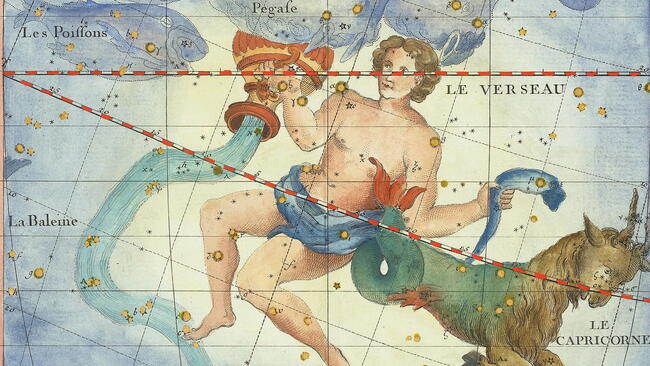
Believe it or not, astrology and astronomy once fell under the same umbrella. Ancient Mesopotamian sky-watchers carefully tracked the movements of the Sun, Moon, and planets. Their observations laid the foundation for both astronomy and astrology.

In the ancient world, there was little distinction between observing the heavens and interpreting their meaning. Scholars studied celestial movements to understand both the physical universe and their potential influence on life on Earth. The Greek astronomer Ptolemy explored the heavens through both practical observation and symbolic interpretation.
During the Middle Ages and Renaissance, astrology was taught in universities alongside mathematics and astronomy. Many scholars considered it an essential field of study, and rulers often consulted astrologers before making important decisions.
Johannes Kepler, one of history’s most influential astronomers, cast astrological charts while helping establish the scientific foundations of modern astronomy.
The disciplines began to separate during the 17th and 18th centuries. Improved instruments and scientific methods allowed astronomers to test theories through observation and evidence. Over time, astronomy developed into a scientific field, while astrology came to be viewed primarily as a belief system.
Why Astrology and Astronomy Don’t Match Today
If you study astronomy, you’ll notice that the stars are not in the same places they were when Western astrology was originally developed. This is due to a phenomenon called precession.
In simple terms, Earth’s axis slowly shifts over time, much like a wobbling spinning top. This gradual movement changes the position of the constellations relative to the seasons.
As a result, the actual positions of the constellations no longer align with the zodiac used in Western astrology, which begins with the vernal equinox as the first day of Aries. Because of precession, the constellation rising at the spring equinox is currently Pisces—a shift that occurred around 100 B.C. Around the year 2700, it will move into Aquarius.
Astronomers can observe this shift directly. The First Point of Aries—the celestial marker that traditionally marks the beginning of the zodiac—is no longer located in Aries at all. Today, it lies in Pisces, even though it retains its ancient name.

This is one reason astronomy and astrology describe the zodiac differently today. Western (Tropical) astrology remains tied to the seasons, while astronomy tracks the actual positions of the constellations in the sky.
Why Your Zodiac Sign Doesn’t Match the Constellations
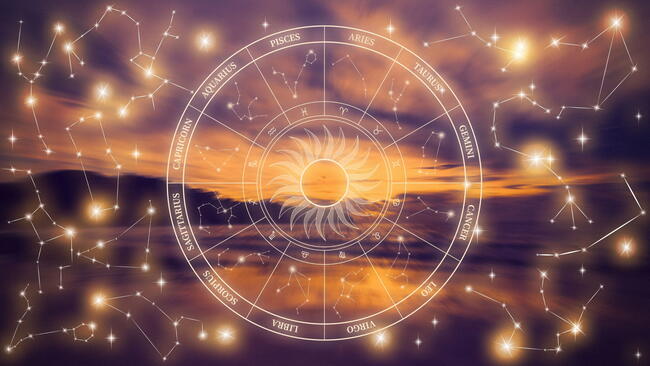
Astrology organizes the 12 zodiac signs into a neat system, centered around Aries as the first day of spring. However, due to precession, the stars have slowly shifted over time. While Western astrology still begins with Aries at the spring equinox, astronomy shows that the Sun is currently in Pisces at the start of spring.
Not all astrological traditions approach the zodiac the same way. Sidereal systems, including Vedic astrology, attempt to align with the current positions of the stars. Tropical astrology, the most common form in the West, remains tied to the seasonal calendar.
A few years ago, I decided to find out more, so I had a reading with a sidereal astrologer. When she told me that I was a Taurus according to that system, I bristled. I was proud of my Gemini quicksilver ways and couldn’t relate to the Bull’s slow-moving pace. She pointed out my love of food and sensuous things … which almost had me convinced. When I dug in my heels, she smiled and reminded me that Taurus is famous for being stubborn.
Guilty as charged.
Is Astrology a Science or a Pseudoscience?
Scientists have never found reliable evidence that astrology works. It’s generally viewed as a belief system rather than a science.
Still, astrology refuses to go away. Many people find it offers meaningful insights into personality, relationships, and life events. Just ask anyone who has gone through their Saturn return—they’ll have plenty of evidence it’s real!
Whether viewed as a symbolic language or simply a tool for self-reflection, its popularity has endured for thousands of years.
Why the Almanac Includes Both
The Old Farmer’s Almanac has included both astronomy and astrology in its calendar pages from the very first edition in 1793 when George Washington was president. After all, an almanac means a “calendar of the heavens” and is inherently about observing the cosmos of which we’re a part.
Alongside the Moon’s place in the Almanac’s calendar pages, you will also find the “Zodiac Man,” a traditional illustration that connects the zodiac signs to different body parts. (I was fascinated with this image as a child when I used to read my uncle’s copy.)
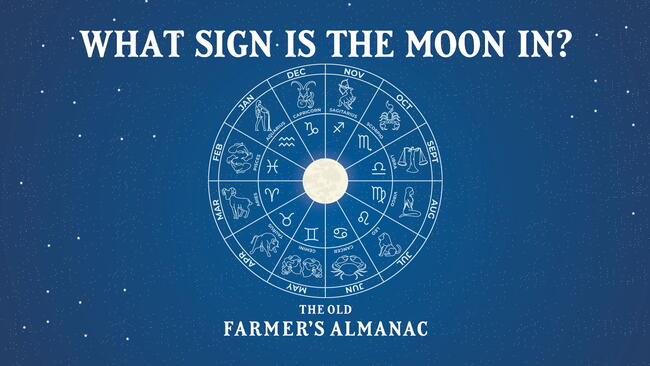
Throughout time, astronomy has helped determine everything from weather patterns to tides. It also informs the Almanac’s popular Planting Calendar, which uses the Moon’s phases and position in the sky to help gardeners choose favorable times for planting.
Astrology, meanwhile, is used to identify auspicious days for a wide range of activities. The Almanac’s “Best Days” calendar suggests favorable times for everything from painting the house to cutting your hair.
The balance between astronomy and astrology has provided readers of The Old Farmer’s Almanac with everything they need to live their best lives—and grow their best gardens.
Even if astrologers and astronomers don’t agree, we can come together on our love for the skies above. We’ll always be enchanted by the heavenly bodies. (I still refuse to accept the Taurus part, though.)
FAQ: Astrology vs. Astronomy
Is astrology the same as astronomy?
No. Astronomy is a science that studies objects and phenomena in space. Astrology is a symbolic system that interprets the positions of celestial bodies in relation to human life.
Which came first, astrology or astronomy?
Historically, the two developed together in ancient civilizations such as Babylon. They gradually separated as scientific methods advanced.
Why do astrology and astronomy sound alike?
Both words come from Greek roots related to stars and celestial observation, which reflects their shared origins.
Why doesn’t my zodiac sign match its constellation?
Because Earth’s axis slowly shifts over time through a process called precession. This has changed the apparent positions of the constellations since the zodiac was originally developed.
Can you enjoy both astrology and astronomy?
Absolutely. Many people appreciate astronomy for its scientific discoveries while also enjoying astrology as a symbolic system for reflection and meaning. Although the two disciplines approach the cosmos differently, both spring from humanity’s enduring fascination with the skies above.

More Like This


Comments