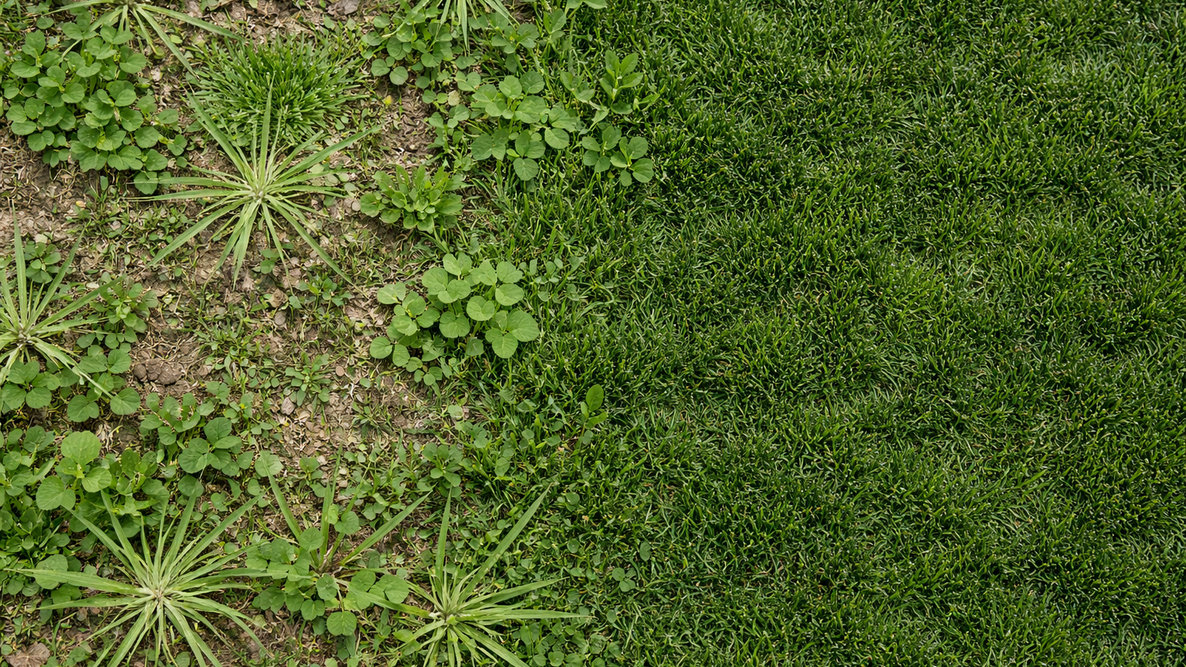
Caption
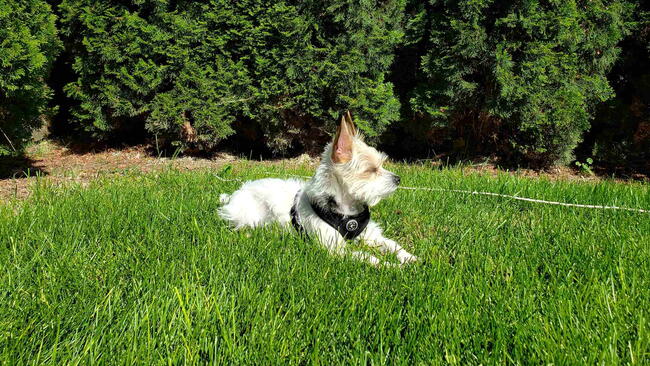
A mix of weeds and thinning grass alongside healthy turf — a common sight in spring lawns.
By July, many homeowners start wondering what happened to their lawn. Grass that looked lush and green in spring may now be turning brown, thinning out, or filling with weeds. After a few weeks of hot weather, it’s easy to assume the lawn is dying—but that’s often not the case.
The good news? Most summer lawn problems are normal, and many improve once cooler weather returns. The trick is knowing when to step in—and when to leave the lawn alone. In fact, some of the most common “fixes” can make summer lawn problems worse.
Key Takeaways
- Brown grass doesn’t always mean dead grass. Many lawns go dormant during hot, dry weather and recover later.
- Mowing a little higher helps grass handle summer heat.
- Deep watering is better than frequent light sprinkling.
- Weeds often move into thin lawns during summer, so targeted treatment can help prevent them from spreading.
Depending on where you live, these summer lawn problems may already be showing up—or they may just be getting started.
1. Brown Doesn’t Always Mean Dead
If your lawn suddenly looks brown, don’t panic.
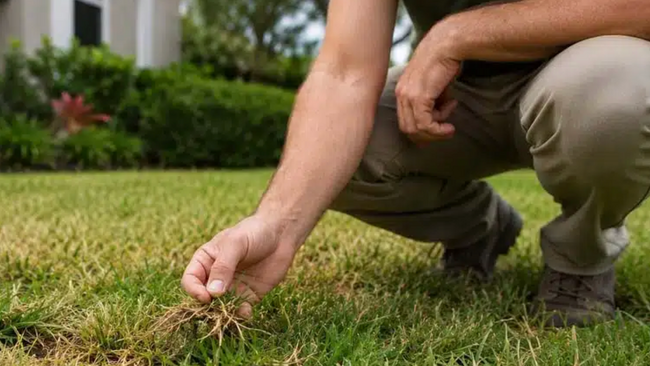
Many lawn grasses naturally slow down or even go dormant during long stretches of heat and drought. Think of it as a survival mode. Instead of putting energy into growing, the grass focuses on staying alive until better weather returns.
That’s why a lawn can go from green to tan seemingly overnight during a heat wave.
In many cases, the roots are still alive even though the grass blades have turned brown. Once cooler temperatures and rainfall return, the lawn often greens up again.
If your lawn has turned brown this summer, you generally have two choices:
- Keep it green: Water deeply when rainfall is lacking.
- Let it rest: Allow the lawn to naturally go dormant and focus on protecting it until cooler weather returns.
Either approach can work. The important thing is not to panic and start throwing every lawn product at the problem.
2. Help Your Lawn Through the Heat

Summer is usually a time to protect your lawn—not rebuild it. A few simple habits can make a big difference when temperatures climb.
Mow a little higher
Cutting grass too short during summer exposes the soil to more sun and heat. Taller grass shades the ground, holds moisture longer, and generally handles hot weather better.
Water deeply
If you’re watering, do it thoroughly rather than giving the lawn a light sprinkle every day. Deep watering encourages stronger roots and helps grass handle dry periods better.
Stay off stressed areas
Brown or wilted grass doesn’t bounce back quickly. Try to limit heavy foot traffic on areas that are already struggling.
Put major repairs on hold
Summer is usually not the best time to reseed large areas, aggressively rake the lawn, or tackle major renovation projects. Most lawns respond better to those efforts when cooler weather arrives.
3. Why Your Lawn Looks Thinner in Summer
Many homeowners notice that their lawn looks thinner in July than it did in May.
That’s normal.
During spring, grass grows quickly. In summer, growth naturally slows. At the same time, heat, drought, pets, kids, and everyday foot traffic can leave lawns looking worn and patchy.
Thin grass isn’t just a cosmetic issue. It also creates open space where weeds can move in.
If your lawn looks thinner than you’d like, focus on helping the existing grass survive summer. Fall is usually the better season for filling bare spots and thickening the lawn.
4. Why Weeds Seem to Take Over in Summer
Ever notice that weeds seem perfectly happy during the hottest part of the year?
Many weeds thrive in conditions that make lawn grass struggle. As the lawn thins, more sunlight reaches the soil, creating an opportunity for weeds to spread.
Crabgrass is a classic example. It loves summer heat and often appears just when homeowners think their lawn should be looking its best.
The best defense is a healthy lawn, but once weeds are established, they can quickly compete with grass for space, moisture, and sunlight.
Treat Weeds Carefully During Hot Weather
Summer weed control requires a little patience. If the lawn is severely drought-stressed, it’s often better to avoid treating until conditions improve.
When weeds are actively growing, many homeowners choose an all-in-one weed treatment like this one to help manage visible weeds without harming established lawn grass when used as directed.
Afterward, continue mowing high and watering properly so the lawn can naturally become thicker and more competitive.

More Like This


Comments