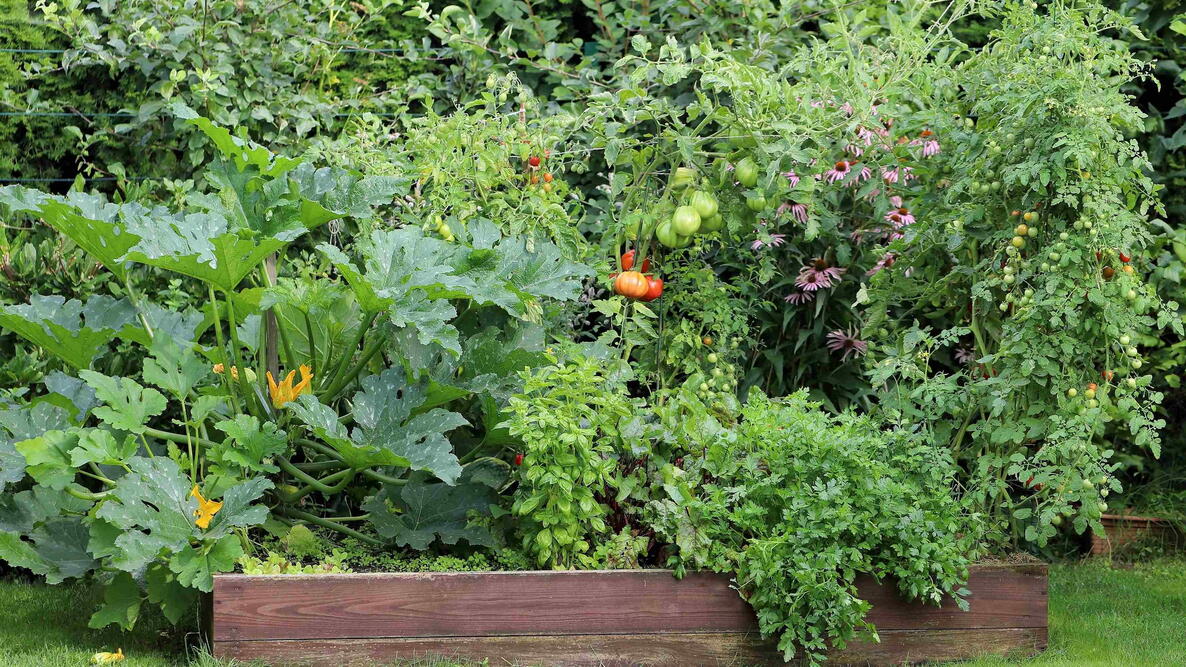

If you’ve been thinking about starting a vegetable garden but assumed your yard was too small, think again. From a plot as tiny as 5×5 feet—just 25 square feet—you can grow a surprising amount of food. Make it a bit bigger, say 10×10 feet (100 square feet), and your garden will really put a dent in your grocery bill.
With so much uncertainty in the world, having a reliable source of affordable food is on many people’s minds.
If you’re looking for small vegetable garden ideas, the key is choosing crops that produce well without taking up much room and making the most of every square foot. Here’s what to grow—and how to grow it—in a small garden.
Tips for Maximizing Space in Small Gardens

Gardening in a small area can be challenging, but there are several simple ways to make the most of your space and use it to its fullest.
- Grow up! Make use of vertical supports—trellises, fences, teepees, and cages—to guide vining plants upward instead of letting them sprawl.
- Try interplanting. Grow quick crops such as radishes or salad turnips around slower growers. They’ll be picked and eaten long before their later-maturing neighbors need the room.
- Practice succession planting. Avoid a glut of one vegetable, such as head lettuce, by planting a small amount every 2 weeks instead of sowing all at once. This gives you a steady, continuous harvest.
- Leave no bare spots. As soon as one crop is harvested, have another ready to go—either from seed or transplants—so your space is always producing.
- Use companion planting. Everyone feels better with a friend nearby, and plants do too. Some crops grow better when planted near compatible partners.
- Cut and come again. Instead of harvesting the whole plant, cut mature outer leaves and let the center continue growing. This works well for greens—and even broccoli, which will produce side shoots after the main head is cut.
- Plant a pocket. Your garden doesn’t have to be all in one spot. Tuck vegetables into unused sunny spaces—an extra corner, a flower bed, or along a path. Many, like colorful chard or dark-leaved eggplant, are as attractive as they are delicious.

How to Choose Vegetables for Small Gardens
When choosing vegetables for a small garden, start with varieties labeled compact, dwarf, or bush—but don’t stop there. Always read the seed packet or plant tag to see how much space the plant actually needs. In many cases, a full-sized climber will take up less room than a bush variety and produce more, giving you a higher yield per square foot.
Focus on plants that stay manageable in size but produce full-sized fruits. Mini or baby vegetables are fun, but they tend to produce less overall, so they’re better suited to containers where space is especially tight.
If your goal is to grow as much food as possible, look for crops with a long harvest window, such as beans, cucumbers, tomatoes, peppers, and summer squash. Avoid one-and-done crops like cabbage and cauliflower.
Greens are especially rewarding in small spaces—spinach and lettuce for spring and fall, and chard and kale for a longer season of harvest.

Don’t overlook your flower beds, either. Many vegetables are attractive enough to mix right in with ornamentals. Colorful Swiss chard, leafy lettuces, compact peppers, and herbs like basil or parsley can be tucked into open spots, adding both beauty and harvest to your landscape.
7 Best Vegetables for Small Gardens
Not every vegetable earns its space in a small garden. The crops below produce heavily, harvest over a long season, or make efficient use of vertical space, making them excellent choices for gardeners with limited room.
1. Snap Peas
Snap peas are plump and crispy. Instead of shelling them, you eat the whole pod—like a green bean, but much sweeter. They are easy to grow and one of the first crops I plant in my garden.
Direct sow seeds 1 inch deep and 2 inches apart before the last frost, once the soil has warmed to at least 45°F. An overnight soak will speed germination. Don’t fret if they get snowed on—it’s the “poor man’s fertilizer”!

They love to climb, clinging to a wire or mesh fence with curly tendrils, so be sure to give them support. Once they start producing, pick regularly to keep the plants productive. They’re delicious raw or cooked.
When hot weather arrives and the plants are finished, clip the vines and remove them from the trellis—but leave the roots in the soil. (Peas and beans are as good for your soil as they are for you. They take nitrogen from the air and add it to the soil through their roots.)
Replant with cucumbers or squash to make use of the empty trellis.

2. Leaf Lettuce
‘New Red Fire’ (bottom) and ‘Salad Bowl’ (top) are two excellent leaf lettuces. Row covers give them added protection in spring and fall, extending the growing season on both ends.
Leaf lettuce is a perfect cut-and-come-again crop. Direct sow seeds ¼ inch deep in evenly moist soil about 3 weeks before the last frost, or start them indoors 8 weeks ahead for a head start.
Sow every 2 to 3 weeks for a continuous harvest and thin plants to about 6 inches apart. Harvest the mature outer leaves and let the centers continue to grow.
To extend the season into summer, choose slow-bolting varieties, mulch to keep soil cool, and take advantage of shade from taller plants. Replant in late summer for a fall crop.

Cherry Tomatoes
My favorite cherry tomato is ‘Sun Gold’. Perhaps it’s my favorite tomato, period. The plant is extremely prolific, giving you hundreds of sweet, tasty fruits. Indeterminate varieties will produce over the entire season, until a killing frost finally brings them to an end.
They are rampant climbers, so be sure to support them with a sturdy fence, trellis, or cage. Heavy feeders, they appreciate well-draining soil amended with compost or rotted manure and a slow-release fertilizer rich in phosphorus and potash.
For an early crop, grow them from transplants. Plant them deeply, about 2 feet apart, where they will receive at least 8 hours of full sun each day. Consistent watering reduces the risk of cracking and blossom end rot.
However, it is hard to make a BLT using cherry tomatoes! If you prefer slicing tomatoes, all the above still applies, but you won’t get as high a yield as you would from the cherries. If you have room, grow some of each.

4. Zucchini and Summer Squashes
Known for producing copious amounts of fruit, most squash plants sprawl 2 to 4 feet wide. However, there are reliable bush varieties that offer high yields, so you won’t need many plants.
After the danger of frost has passed, sow seeds outdoors 1 inch deep and 12 to 24 inches apart. To jumpstart the season, start them indoors about 4 weeks before your last frost date. Transplant outside once the soil has warmed to at least 70°F.
Keep plants well watered and mulch around them to retain moisture and suppress weeds. Harvest often when fruits are small (6 to 8 inches long) to keep the plants productive. If your “bush” squash isn’t bushy enough and threatens its neighbors, use a trellis or cage to rein it in.

5. Pole Beans
Pole beans typically produce three times as many beans as bush varieties. Plan ahead to give them something to climb since most can grow 8 to 10 feet tall!
Plant seeds 1 inch deep and about 3 inches apart along a fence or trellis. If using a tripod of poles, plant 4 to 6 seeds at the base of each pole.
They love to climb, so they won’t need much persuading and will soon reach the top of their supports. Keep the beans picked to maintain production until frost eventually brings the growing season to an end. You’ll have plenty to eat fresh, with extra beans left over to can or freeze for later.

6. Cucumbers
Another space-saving climber, cucumbers are perfect for your pocket garden. Pickling varieties can yield as many as 50 fruits per plant.
Growing just 3 to 4 inches long, picklers are every bit as tasty in a salad as a regular slicing cucumber. Or grow your favorite burpless, seedless, or thin-skinned variety.
Once the soil has warmed to 70°F, plant seeds ½ inch deep and 12 inches apart along a trellis or fence. Keep harvesting them so they don’t stop pumping out the fruit. You can always make pickles!

7. Peppers
Compact and colorful, peppers come in a wide variety of heat levels and colors if you’re patient enough to allow the green fruits to mature. They will need 6 to 8 hours of sun, so save the sunniest spot for them.
Start with transplants for an early crop and plant them 12 to 16 inches apart after all danger of frost has passed. When loaded with fruit, the plants may need some support. A tomato cage works well.
Peppers are easy to save for winter, just chop them up and put in the freezer—no blanching necessary. Toss into whatever you are making to give it a taste of summer. Thin-skinned hots can be dried for later use.
Ready, Set, Grow
Plan ahead to get the best results from your pint-sized plot.
Test your soil, make the recommended improvements, and look for high-yielding varieties.
Make efficient use of your space by planting intensively without overcrowding.
Practice succession planting and intercropping, add herbs and companion plants when space allows, and think vertically by growing on trellises and supports whenever possible. You can get super-duper yields from a super-small space. Dig right in!
Ready, Set, Grow
Plan ahead to get the best results from your pint-sized plot:
- Test your soil and make the recommended improvements.
- Look for high-yielding varieties.
- Make efficient use of your space by planting intensively without overcrowding.
- Practice succession planting and intercropping.
- Add herbs and companion plants when space allows.
- Think vertically by growing on trellises and supports whenever possible.
You can get super-duper yields from a super-small space. Dig right in!
More Like This

Comments