Caption
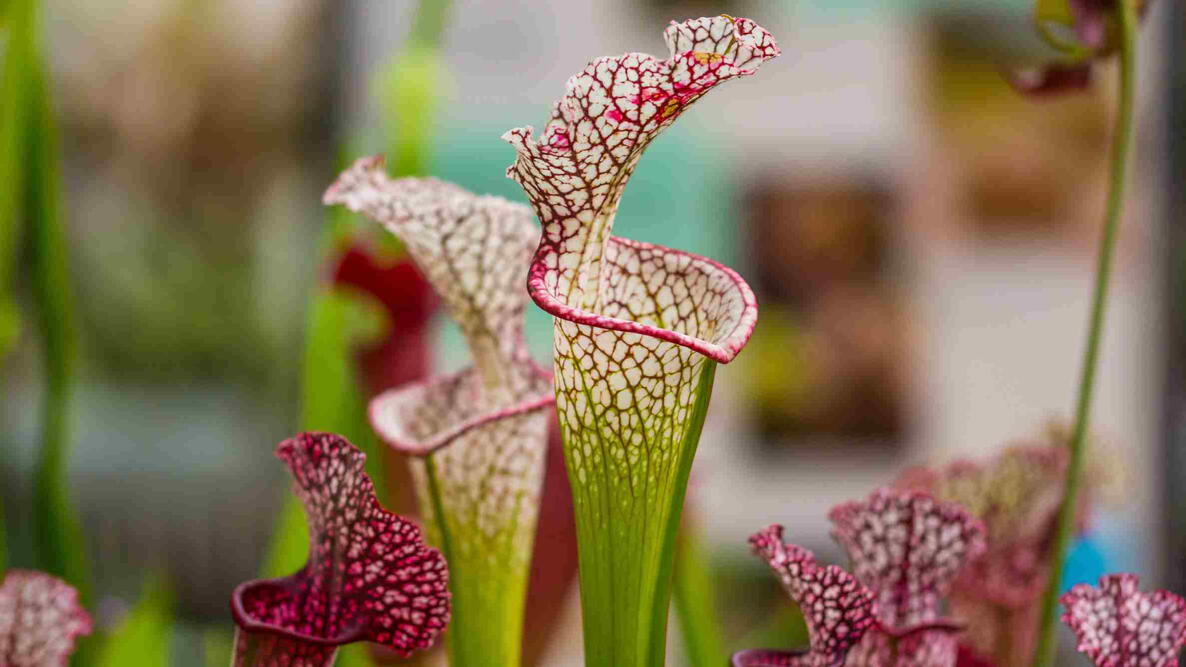
Pitcher plants are prized for their bold, trumpet-shaped leaves and striking colors.
Pitcher plants don’t have teeth, but they’ve definitely got main character energy—and a penchant for eating bugs! These carnivorous plants trap flies and other insects in their tube-shaped “pitchers,” and their bold colors and unusual forms make them hard to ignore.
Many people grow pitcher plants as houseplants, but some types can also be grown outdoors in gardens with the right conditions. Whether you’re new to carnivorous plants or looking to improve your care routine, this guide will walk you through everything you need to know to grow healthy, happy pitcher plants.

About Pitcher Plants
When people talk about pitcher plants, things can get confusing fast. That’s because the name “pitcher plant” is used for two different groups of carnivorous plants that look and grow quite differently.
Tropical Pitcher Plants (Nepenthes)
Often called “monkey cups,” tropical pitcher plants are native to Southeast Asia, Australia, Madagascar, and India. These plants are not cold-hardy and are most often grown indoors as houseplants.
There are around 100 species of Nepenthes. Many grow as epiphytes, meaning they cling to trees rather than growing in soil. Their pitchers hang down from the ends of leaves on thin tendrils and can be quite large and dramatic. In warm climates, they can grow outdoors year-round, but most gardeners enjoy them as striking indoor plants.

Native Pitcher Plants (Sarracenia)
Native pitcher plants are found naturally in North America and are cold-hardy, surviving winters in much of the U.S. These plants grow from the ground and produce tall, upright, trumpet-shaped pitchers on sturdy stems.
Unlike tropical pitcher plants, Sarracenia spread through underground stems called rhizomes and produce colorful, unusual flowers in spring. They grow best outdoors in containers, bog gardens, or consistently damp areas. Because they need a winter dormancy period, they are difficult to keep as houseplants.

Despite their differences, all pitcher plants share one important trait: they love eating bugs!
Pitcher plants grow naturally in nutrient-poor soil. Instead of relying on fertilizer, they trap and digest insects to get the nutrients they need. Because of this, they prefer low-nutrient growing media and can be harmed by standard fertilizers and chemicals.
They also need plenty of light, consistent moisture, and high humidity, which is why mimicking their natural environment is key to keeping them healthy.
When watering pitcher plants, use rainwater or distilled water if you can, as these plants can be sensitive to the chemicals in tap water, and avoid watering into the plant’s pitchers. If you’re growing potted pitcher plants outdoors, place the pots on a water-filled tray and simply refill it as the water level falls. Installing a drip irrigation line around outdoor plants can be helpful, too.
Potting and Repotting
Potted pitcher plants should be repotted regularly if their roots look rootbound or are emerging from the pot’s drainage holes, if pests are plaguing your plants, or once every 2 to 3 years even if your plants seem perfectly content. The best time to repot these plants is in spring or early summer when they’re actively growing. Whenever possible, avoid growing pitcher plants in terracotta containers as these porous pots wick water away from roots and can make pitcher plants dry out too fast.

Although native pitcher plants are hardy, plants grown in pots will need protection during their winter dormancy period. You can either provide this by moving potted plants into an unheated garage or basement and watering them just enough to keep the soil damp. Or you can sink the plant pots into your garden soil and just leave them be until you dig them up in spring.
Propagation
Tropical pitcher plants can technically be propagated via stem cuttings in spring, but this is tricky work. Native pitcher plants, on the other hand, are relatively easy to propagate by root division, and you can do just that by following these quick and simple steps!
- Wait until your plants mature and then dig up the rhizomes in late winter to early spring—just as the plants are beginning to emerge from winter dormancy.
- Use a shovel, spade, or a pair of gardening pruners to cut the rhizome into smaller sections, each with healthy roots and some stems.
- Replant the divisions as soon as you can and locate them at the same depth they were previously growing.
- Water the plants in when you’re done and space multiple plants 10 to 12 inches apart, or grow them in their own containers.

More Like This

Comments