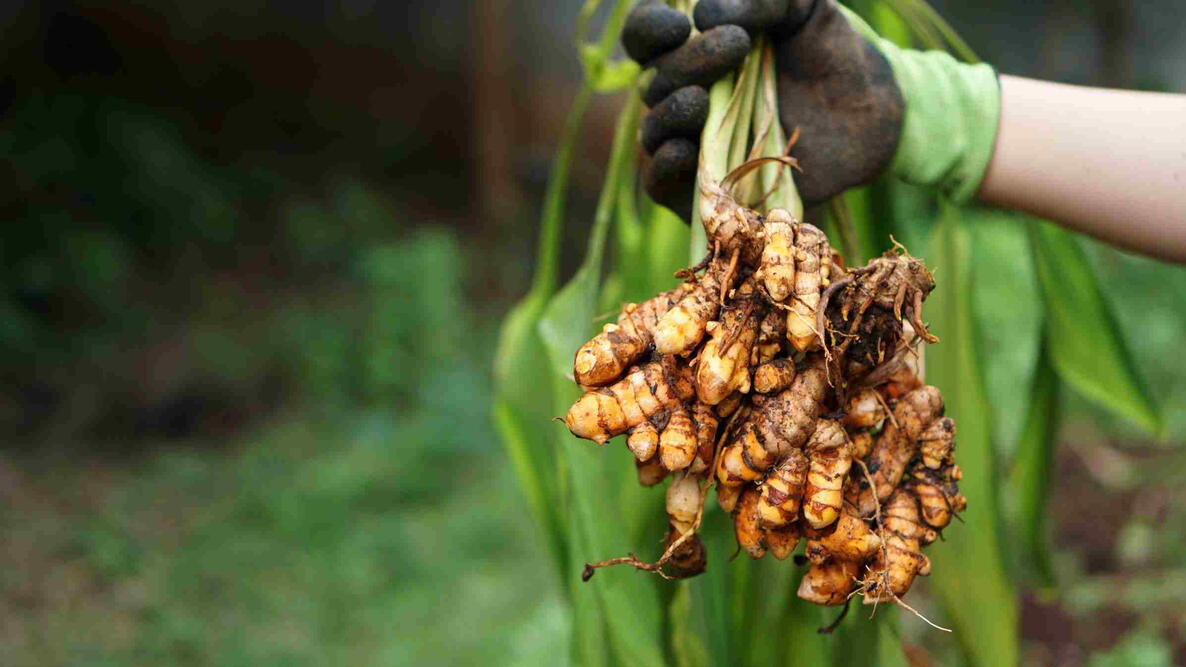
Caption
Freshly dug and harvested turmeric.

Want to grow “gold” in your garden? It may be time to plant some turmeric—a golden-hued root that’s commonly used in curries, packed with antioxidants and other nutrients, and surprisingly easy to grow in pots or raised beds.
Turmeric is technically grown for its underground “rhizomes,” but all parts of the plant are edible and add an earthy, slightly bitter flavor to a range of Indian dishes and beyond. Whether you dream of harvesting your own spices or simply want to expand your edible garden with something new, here’s how to plant, grow, and harvest turmeric at home.

About the Turmeric Plant
Native to India and Southeast Asia, turmeric (Curcuma longa) is a tropical plant in the ginger family. It naturally grows in the dappled light of humid climates.
Like ginger, turmeric requires a long growing season. The roots are ready for harvest 8 to 10 months after planting. While only winter-hardy in USDA Zones 8 and warmer, turmeric can be grown as an annual in cooler climates or cultivated in containers and moved indoors during winter.
Turmeric grows up to 3 feet tall and spreads as its rhizomes mature. It also produces lush, tropical-looking leaves and even surprise blooms—cone-like flowers in pale purple or white. Better yet, turmeric tolerates more shade than most vegetables and can be planted beneath taller crops to save space.

Once harvested, turmeric roots can be used fresh, frozen, or dried and ground into a spice that rivals anything from the store. Bonus: turmeric also works as a natural food coloring, fabric dye, or ingredient in homemade cosmetics.
Read Next
Planting
Turmeric is grown from rhizomes, not seeds. Look for plump, mold-free rhizomes in seed catalogs or nurseries. You can also try growing turmeric from organic grocery store roots—just make sure they haven’t been treated with growth inhibitors.
When to Plant Turmeric
- Warm climates (Zones 8–11): Plant turmeric outdoors in spring once soil temps reach at least 55°F and daytime temps are reliably 70°F+.
- Cool climates (Zones 7 and below): Pre-sprout rhizomes indoors in mid-spring. Transplant outside when the weather is warm and the plants are 8+ inches tall.

How to Plant Turmeric
- Select turmeric rhizomes that are firm, fresh, and free from visible mold.
- Prep rhizomes: Cut large rhizomes into 1- to 1.5-inch pieces with at least 1 to 2 eyes (buds). Let them dry and “callous over” for a few days before planting.
- Soak (optional): If the rhizomes appear shriveled, soak them in water the day before planting.
- If you’re pre-sprouting turmeric indoors: Plant the turmeric rhizomes 2 to 3 inches deep in pots filled with a well-draining potting mix. Keep pots warm (around 86°F, with a heating mat, if needed). Transplant the plants outdoors when the temperature is at least 68°F.
- If you’re planting turmeric outdoors: Mix compost into your planting site. Then plant the cut rhizomes 2 to 3 inches deep with their buds facing up. Each rhizome piece should be spaced about 15 inches from its neighbor in rows spaced about 15 inches apart.
- Container growing: Use pots at least 12 inches wide and 12 inches deep for each rhizome. Containers allow for easier harvesting and overwintering indoors.
Types
For home gardens, there’s no need to fuss over varieties. Most turmeric available for planting is Curcuma longa, the standard culinary type used in cooking.
Harvesting
You’ll know it’s time to harvest turmeric when:
- Leaves begin to yellow or brown and die back
- Temperatures drop at the end of the growing season
When this occurs, use a garden fork or hands to dig up the roots carefully. Bring them indoors to eat, store, or save for next year’s planting.
In warm regions, you can leave a few rhizomes in the soil. This will allow your plants to regrow in spring!

Storing Turmeric
After harvesting, rinse turmeric roots to remove dirt and dry them thoroughly.
- Fresh: Rinse and dry. Store in the fridge in a breathable plastic bag for 2–3 weeks.
- Dried: Slice and dehydrate the roots, grind them into a powder, and store the powder in an airtight container in your spice cabinet.
- Frozen: Whole turmeric can be frozen and grated straight into dishes—no defrosting required.
Gardening Products
Cooking Notes
Turmeric’s earthy, peppery flavor adds depth to many dishes. Here’s how to use it:
- Peel and grate into curries, soups, rice, or eggs.
- Simmer in milk with honey and spices for a cozy “golden latte.”
- Add to smoothies or homemade dressings for a nutrient boost.
Heads up: turmeric stains! Wear gloves, or embrace your inner spice warrior.
Health Benefits of Turmeric
Turmeric is rich in curcumin, a compound known for anti-inflammatory and antioxidant properties. People use it to support:
- Joint health and flexibility
- Digestion
- Immune function
Try this golden latte recipe:
- Warm 1 cup milk with ½ tsp turmeric, ¼ tsp cinnamon, ¼ tsp ginger, and a pinch of black pepper. Stir, sweeten with honey or maple syrup, and enjoy.
For more on turmeric’s wellness uses, see our Turmeric Health Benefits article.

More Like This



Comments