
If you’re curious about astrology but not sure where to start, you’re in the right place. This beginner-friendly guide explains what astrology is, how your birth chart works, what your zodiac sign reveals, and how the planets influence your personality, choices, and life path.
What Is Astrology?
In simple terms, astrology is the study of how the planets, stars, and asteroids affect our lives here on Earth. Astrologers look at the positions of these celestial bodies at specific times—like the moment you were born—to understand personality, relationships, and life events.
Dr. Stormie Grace, author of The Big Book of Planetary Aspects: A Comprehensive Guide to Natal and Transit Astrology, explains, “Astrology is a language of connection and a framework to study and understand the cycles, patterns, and energies that shape our lives. It helps us see meaning in movement and rhythm in change … astrology connects us to the world, to each other, and to ourselves.”
Astrologer Mecca Woods, author of Astrology for Happiness and Success, adds, “It’s a cosmic map for our life’s journey.” She also adds, “It means being reminded every day that I’m a part of something bigger, that time isn’t so linear.”

Origins of Astrology
Astrology is an ancient practice, with roots tracing back to the 2nd millennium BC.
- Mesopotamia: Based on records, the Babylonians developed early astrology to predict weather and future events.
- Egypt & Greece: It later spread, combining with local beliefs.
- Islamic world: Astrology was further refined by Islamic scholars through calculations and chart techniques. Over time, astrology evolved into the complex system used today.
Historically, astrology and astronomy were closely connected; only in the modern era did they become separate fields. While astronomy is a science and astrology is considered a belief system, millions still use astrology for guidance, insight, and self-understanding.

How Does Astrology Work?
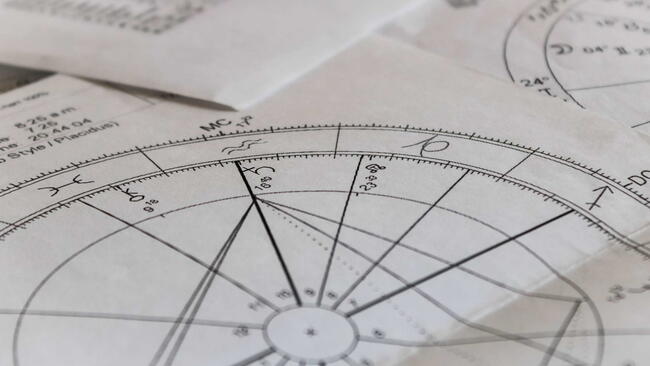
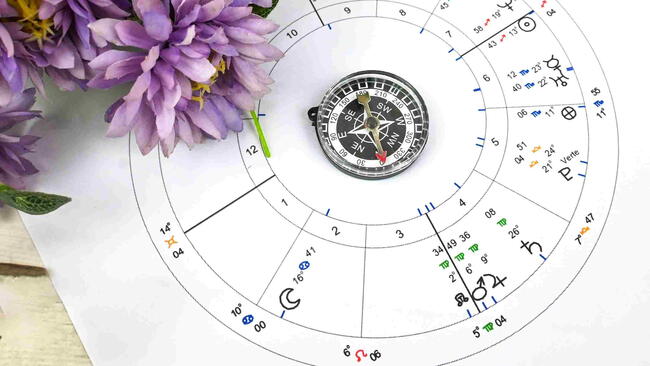
At the heart of astrology is the natal chart—a snapshot of the sky at the exact moment you were born.
The Birth Chart (Natal Chart)
A natal chart shows the positions of the Sun, Moon, and planets at your birth. Each placement represents a specific energetic influence that shapes your personality, strengths, challenges, and preferences.
The Twelve Houses
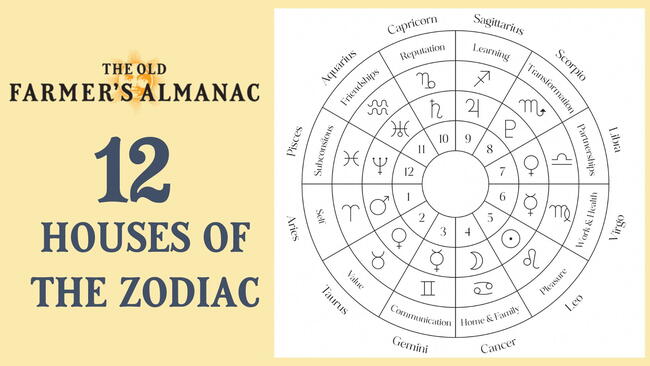
A birth chart is divided into twelve houses, each representing a life area—finances, family, career, relationships, creativity, and more.
For example:
- The Second House relates to earned income, possessions, and financial habits.
If you have the Moon in your Second House, your finances may fluctuate, or you may earn money through the public or emotional labor.
Planetary Aspects
Another key part of astrology is planetary aspects, which are the angles planets form with each other. These angles show how different energies interact.
- Harmonious aspects (like trines) create flow, ease, or opportunity.
- Challenging aspects (like squares) bring friction, growth, or important lessons.
Using the Moon-in-Second-House example:
If that Moon forms a positive aspect with Mars, the person may have strong ambition around money. They might be highly motivated, a hard worker, or even an aggressive salesperson.
Transits
Astrologers also analyze transits, the current movements of the planets relative to your birth chart. Transits can activate specific themes, opportunities, or challenges depending on the aspects they form.
- If transiting Saturn forms a harmonious aspect to the Moon, it may bring discipline, focus, and increased earning potential.
- If Saturn forms a difficult aspect, the person may feel discouraged or work hard with few immediate results.
Transits don’t control your life—but they highlight the cosmic “weather” you’re working with.
What is the Purpose of Astrology?
Astrology can be used for many things.
- Many people turn to the stars to understand personality traits and what makes them tick.
- A natal chart, also called a birth chart, highlights strengths, weaknesses, and opportunities.
- Astrology is also used for practical matters—choosing good dates for events, examining relationships, observing world events, and even supporting old traditions like gardening and fishing.
- It can also be used for spiritual growth and forecasting. Astrologers track planetary transits to make predictions, spot upcoming challenges, and stay alert to opportunities.
- Other purposes may include understanding historical events, forecasting business trends, choosing romantic partners, choosing the best days for specific tasks, or even locating lost items.
Keep in mind: astrology isn’t a perfect science. Human interpretation varies, and free will always plays a role.
Common Misconceptions About Astrology
Despite astrology’s popularity, some misconceptions persist. Here are a few of the most common.
Misconception 1: Your Sun sign explains everything.
While the Sun sign is important, it’s only one part of your chart. Two people with the same Sun sign can be very different.
For example, I’m a Gemini with a Scorpio Moon, while my friend is a Gemini with a Pisces Moon. We share classic Gemini traits—curiosity, quick wit—but our emotional responses differ. She is more prone to sadness, while I’m fiery and quick to anger.
Misconception 2: Astrology is always accurate.
One thing I always say is that astrology is a theory. You can study the stars and make a prediction, but the outcomes don’t always look exactly as predicted. Human interpretation is not perfect; it’s hard to be objective, and free will plays a role. Cosmic “weather” may set the tone, but you still choose how to respond.
Misconception 3: Mercury retrograde is always bad.
Mercury retrograde is bad—this one gets tossed around a lot. Mercury retrograde can create havoc, especially in communication, travel, and technology. However, it’s also an excellent time to review, revisit, rethink, rest, and edit! (Psst…this last Mercury retrograde revealed a major plumbing issue in my house, so I’m not too happy with it.)
Astronomy vs Astrology
Astrology and astronomy are not the same. Though often confused, the two serve different purposes:
Astronomy is the scientific study of celestial bodies, whereas astrology is a belief system based on the planets and their interactions.
- Astrology interprets planetary symbolism and how cosmic cycles relate to human experience.
Despite that difference, both involve extensive research. Don’t assume astrologers aren’t putting in actual work. There’s a lot of math involved! Plus, it takes years of study before you become proficient.
Key Astrology Terms to Know
When you begin to study astrology, you will need to learn some basic terms. Here are a few to know.
Natal Chart
Also referred to as a birth chart, this is a map of the sky at the exact time you are born. A map of the sky at your birth. It reveals personality characteristics, gifts, challenges, and life themes.
Zodiac Signs
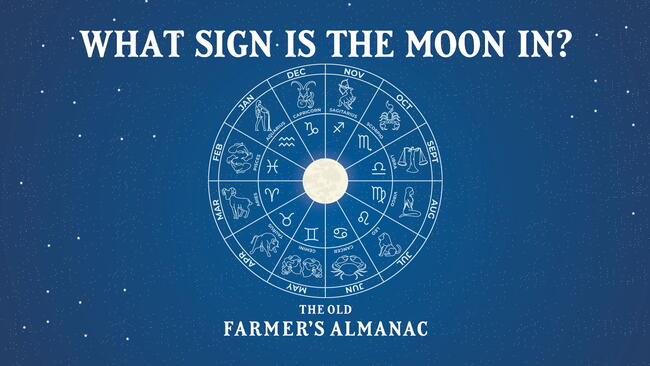
Also referred to as astrological signs, there are twelve constellations that the Sun travels through every year. The signs are: Aries, Taurus, Gemini, Cancer, Leo, Virgo, Libra, Scorpio, Sagittarius, Capricorn, Aquarius, and Pisces. Each zodiac sign is associated with an element: Fire, Earth, Air, and Water. Qualities are also assigned to each sign: Cardinal, Fixed, and Mutable. The elements and qualities determine how the sign behaves. Sticking with our Gemini example, this sign is the Air element and Mutable. This means Geminis tend to be intelligent, adaptable, and changeable. (Learn more about the zodiac signs.)
Rising Sign (Ascendant)
The sign on the eastern horizon when you were born. It reflects how you present yourself to the world. Because rising signs change every two hours, you could meet someone born on the same day as you, but they seem radically different.
For example:
I was born in the late afternoon, giving me a Libra Rising, so I appear friendly and social. My friend, born an hour later, has Scorpio Rising, making her more intense and mysterious. As Geminis, we share certain traits, but our Ascendants mean we are not identical Twins.
Degrees
The astrological chart is a circle of 360º. Each sign is 30°, dividing the chart into 12 sections. For example, my natal Mercury is at 20º Gemini. Planetary degrees matter because they determine the angles they make to each other (aspects). Planets at 0° or 29° are at “critical degrees.” It indicates a turning point or challenge.
Aspects
When an astrologer mentions aspects, they refer to the angles formed by the planets with other celestial bodies. Aspects determine the condition of the planets.
The main aspects are:
- Conjunction (0°): Intensifies energy
- Sextile (60°): Opportunities
- Square (90°): Challenges
- Trine (120°): Flow and ease
- Opposition (180°): Polarity and tension
Example: My natal Saturn trine Neptune suggests creative discipline.
Sextiles and trines are favorable, whereas squares and oppositions indicate challenge. Conjunctions intensify, which can be beneficial or detrimental.
Retrograde
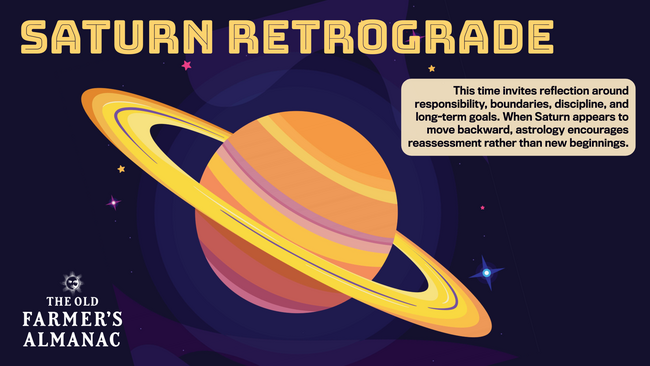
When a planet appears to move backward from our perspective on Earth. This happens when the planet’s orbit is slowed, creating an optical illusion.
Every planet, except the Sun and Moon, can be retrograde. Astrologically speaking, retrograde is like a cosmic speed bump, an opportunity to slow down and invite reflection. For example, Mercury retrograde is an excellent time to review your travel plans or revisit unfinished projects.
Final Thoughts
Astrology is vast, layered, and endlessly fascinating. It offers a symbolic language for understanding your inner world and the unfolding rhythms of your life. Dr. Grace describes it best:
“To me, astrology is a practice of grace. A reminder that, like a garden, our lives unfold in their own right timing … astrology invites you to give yourself every grace you’d give your garden: patience when growth feels slow, care when things are tender, and gratitude when life comes into full bloom.”
Whether you’re just beginning or deepening your study, astrology welcomes you into an ancient and timeless rhythm of budding, growing, blooming, harvesting, and beginning again.

More Like This


Comments