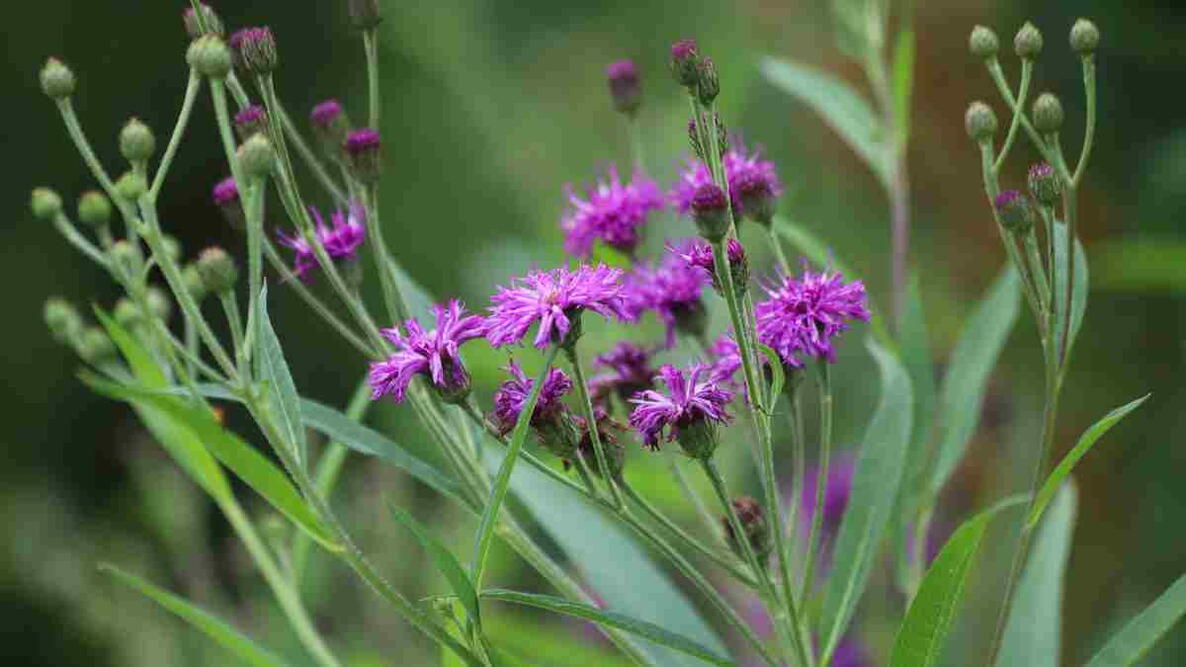
Caption
Vernonia crinita in full bloom, adding vibrant violet color and attracting pollinators to your garden

Ironweed (Vernonia noveboracensis) may be tough as nails, but growing it is surprisingly easy! This tall North American native plant bursts into vibrant purple flowers late in the season, drawing monarch butterflies, skippers, long-tongued bees, and a whole cast of other pollinators to your garden. Ironweed also impresses with its adaptable nature, thriving in poorly draining soil, wildflower meadows, cottage gardens, and just about any sunny spot you’d want to plant it. Over the years, I’ve kept ironweed in a range of spaces, and here are all the growing and design tips I find suit this plant best.
A member of the aster family, ironweed has a wide native range throughout much of the eastern United States. In the wild, it’s often found along streambanks, in marshes, and in damp meadows—places with plenty of sun and consistently moist soil. In gardens, ironweed thrives in similar conditions but is adaptable enough to grow in less-than-perfect soil or moderately damp spots.

Ironweed isn’t fussy about fertilizer, but it does best with full sun and regular watering. Its tolerance for damp conditions makes it an excellent choice for rain gardens, while it also shines in standard garden beds, cut flower gardens or pollinator-focused landscapes.
As with other pollinator-friendly plants, I always recommend growing ironweed organically and keeping pesticides far from its leaves and blooms. This is easy enough to accomplish, though, as ironweed is naturally resistant to most pests, and deer and rabbits rarely nibble on its bitter-tasting leaves. If you want your garden to stay colorful from spring through fall, pair ironweed with plants that bloom earlier in the season and grow it near other pollinator-friendly plants, such as liatris, goldenrod, coneflowers, asters, and Joe Pye weed. Growing ironweed organically and keeping pesticides away from its leaves and flowers ensures visiting butterflies, bees, and other wildlife stay safe.
Planting
Ironweed can be grown from potted plants or seeds, depending on your budget and patience. Unlike many native perennials, ironweed will usually bloom during its first year, even if you grow it from seed. However, first-year flowers are often on the sparse side, and you’ll need to wait until the second year of growth to enjoy a full flush of ironweed blooms.

When to Plant Ironweed
Potted ironweed plants grow best if they’re transplanted into gardens after the last spring frost. However, ironweed seeds germinate better when they’re exposed to a period of cold. This is why seeds are usually directly planted outdoors in late fall or started in milk jug greenhouses in late winter!
How to Plant Ironweed
- Planting ironweed plants. Remove ironweed from its nursery pot and plant it in a hole that’s just slightly larger than the plant’s root ball. Firm the soil around the base of your plant, add a 1 to 3-inch layer of mulch, and give your ironweed a deep drink of water to settle it in. If you’re growing multiple ironweed plants together, space them about 2-feet apart.
- Planting ironweed seeds in the fall. Prep your planting spot by removing weeds and raking the area flat before the ground freezes. Once the soil is frozen, sprinkle ironweed seeds over the planting area, cover the seeds with about 1/8-inch of compost, and water your ironweed only when the seeds sprout in spring.
- Planting ironweed seeds in winter. In late winter, plant ironweed seeds about 1/8-inch deep in milk jug greenhouses filled with seed starting mix. When the weather warms, cut ventilation holes in the greenhouse lid, water your ironweed enough to keep the soil evenly moist, and transplant the seedlings into your garden when they’re a few inches tall and have true leaves.
Propagation

Ironweed plants should be divided every 3 to 4 years to rejuvenate their growth and improve flowering. This is an easy way to get more free ironweed plants for your garden. However, ironweed will also readily self-sow if you leave its seedheads intact through winter.
- Time it right. The best time to divide ironweed is in early spring before the plant has its major growth spurt.
- Divide. To divide ironweed, use a shovel to dig a perimeter around the base of your ironweed plant and then gently lift the plant’s root ball from the soil. Cut the root ball into smaller pieces with a spade or two gardening forks back-to-back and make sure each plant division has a good clump of roots and healthy stems.
- Replant. Plant divided ironweed as soon as you can and water the plants in when you’re done. Replanting quickly and dividing ironweed on a cool, overcast day should help you avoid most transplanting issues.

More Like This


Comments