Money Tree Plant (Pachira Aquatica) Care Guide

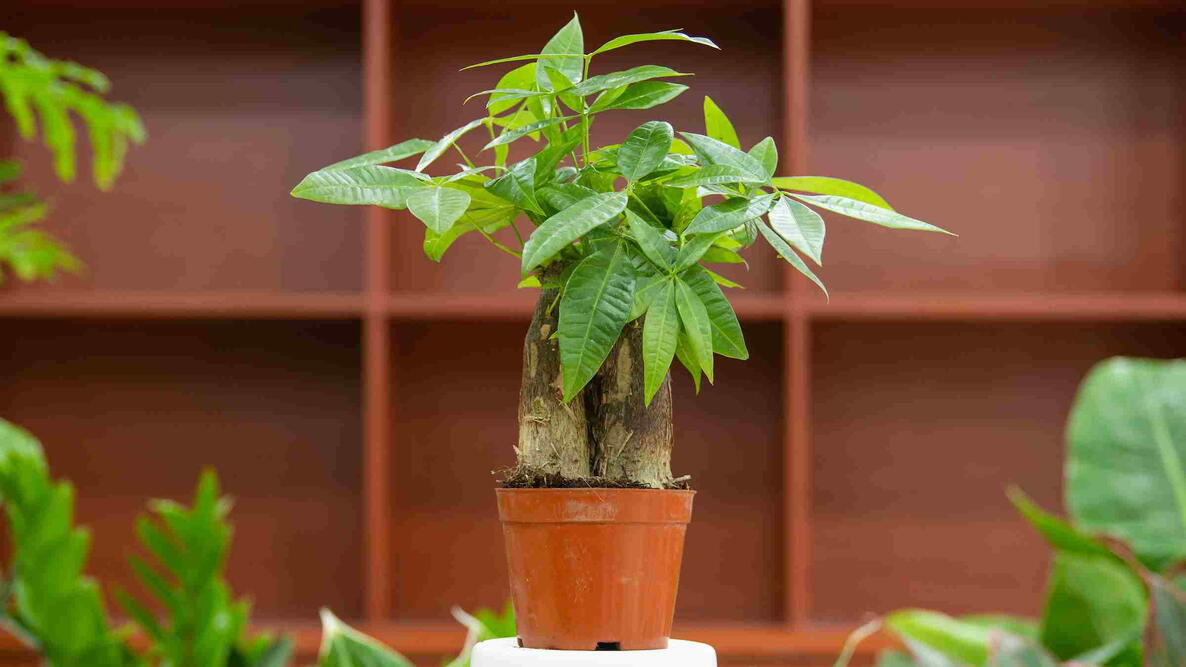
Guiana Chestnut (Pachira aquatica) plant in pot indoors

Caption

Money Tree (Pachira aquatica), perfect for bringing greenery and good luck into your home.

Photo Credit
Mid Photographer
Botanical Name
Pachira aquatica or Pachira glabra
Plant Type
Sun Exposure
Soil pH
Bloom Time
Flower Color
Hardiness Zone
Subhead

Essential Tips for Growing a Healthy Money Tree at Home

Written By: Lauren Landers Master Gardener and Contributing Writer

If you’ve ever wished money grew on trees, a Money Tree (Pachira aquatica) is about as close as it gets. This easy-care indoor plant is prized for its glossy leaves, braided trunk, and feng shui reputation for attracting luck and prosperity. While it won’t actually make cash appear, it makes cents for any home gardener—especially with simple care like proper watering, light, and soil.

About Money Tree Plants

Also called Pachira aquatica (or occasionally Pachira glabra), the Money Tree is the most common indoor variety sold with braided stems or single trunks. As indoor plants, Money Trees usually stay under six feet and rarely bloom, but their striking leaves and braided stems make them a favorite decorative houseplant. They thrive with consistent watering and are flexible about light, soil, and fertilizer requirements—making them a perfect choice for beginner gardeners.

In their native Central and South America, these trees grow along streambanks, bogs, and other damp areas. Here, they can reach up to 75 feet tall, with glossy, palmate leaves and fragrant yellow flowers pollinated by bats. 

In feng shui, Money Trees are considered symbols of luck. Their five leaflets represent the five elements—metal, wood, fire, water, and earth—while braided stems are thought to “lock in” prosperity. To use a Money Tree in feng shui, place it in the “money corner” of your home, located as far to the left and back from your front door as possible.

Money tree green leaves close up
The five leaflets of the Money Tree, symbolizing the five elements: metal, wood, fire, water, and earth. Credit: Ivanka Kunianska

Planting

While Money Trees love consistently damp soil, they must be kept in well-draining pots to prevent root rot. I always repot houseplant as soon as I bring them home to check for pests and replace plastic store pots, which often trap moisture. Here’s how to pot your Money Tree for success:

1. Choose the Right Pot
Terracotta pots are ideal because they let roots breathe. Pick a container just 1–2 inches wider than your plant’s current pot, and make sure it has drainage holes.

2. Select a Quality Potting Mix
Standard potting mix works fine. However, if you want to make your own potting mix, mix 3 parts coconut coir, 2 parts compost, and 1 part perlite or horticultural sand for optimal drainage and nutrient balance.

3. Repot Your Money Tree
Hold the stem firmly as you remove the plant from its old pot. Add some potting mix to the bottom of the new container, gently tease any circling roots apart, plant at the same depth as before, and water thoroughly.

Growing

Many Money Trees are sold with braided stems, which adds a decorative touch. If your plant has straight stems, you can braid them yourself—though this is optional. Only braid young, flexible stems that are at least 1 foot long.

Growing Your Money Tree: Braiding Stems (Optional)

Step-by-Step Braiding Instructions:

  1. Trim any leaves from the lower part of the stems that will get in the way.
  2. Fasten the base of the stems together with twine or a twist tie.
  3. Loosely braid the stems so they can still grow.
  4. Secure the top of the braid just below the leaves with twine or a twist tie.
  5. Attach a small stake to keep the braid upright.
  6. Leave the ties in place for a few months. Once the stems are firm enough, remove the ties and stake.

Braiding your Money Tree stems is purely aesthetic, but it’s a fun way to shape your Pachira aquatica and create a striking indoor plant display.

Water
In the wild, money trees grow in damp areas, so it make sense that they crave regular watering. For happy plants, water money trees when the top 1-inch of potting mix feels dry, and reduce watering in fall and winter.
Light
https://www.shutterstock.com/image-photo/tropical-ornamental-plants-potted-money-tree-2400162311

Money trees grow best in bright, indirect light. Direct sun, however, can damage their leaves, while low light conditions can lead to leggy growth. Rotating your plant a quarter turn every time you water will keep it from leaning!
Humidity
Money trees are content with standard indoor humidity levels, but you may want to add a humidifier to your setup if humidity levels in your home fall below 30%.
Temperature
Household temperatures around 65 to 75°F are perfect for money trees. Just be sure to keep these plants away from drafty windows and A/C or heating units. If you move your plants outdoors for the summer, bring money trees back inside when temperatures begin to dip below 50°F.

Fertilizer

Fertilizer is not needed in fall and winter, but money trees grow better if you feed them approximately once a month in spring and summer with an organic, liquid houseplant fertilizer diluted to half strength with water.
Toxicity
Money trees are non-toxic to pets.

Pests/Diseases

As long as money trees are watered regularly and provided with enough light, these plants usually don’t suffer from many problems. However, it’s still wise to be on the lookout for a few potential issues!

  • Pests, like scale, mealybugs, and spider mites, will sometimes invade money tree plants. The best solution is to spray your plants weekly with organic soap or neem oil spray until the pests are gone.
  • Yellow or brown leaves on money tree plants may indicate that your plants are receiving too much or too little water. If the soil feels soggy long after you’ve watered or your plant’s stems feel mushy, dial back on your watering schedule and repot your plant into fresh soil if it seems to be struggling.
Cutting pruning dead leaves from a Pachira Aquatica plant.
Pruning dead leaves from a Money Tree to keep it healthy and thriving indoors. Credit: Rigsby Photo

Potting and Repotting

How Often to Repot

Healthy money trees grow quickly and can grow up to a 1 to 2-feet per year. Repotting these plants every year or two will give them space to grow and make sure they don’t become rootbound.

When to Repot

You’ll know it’s time to repot money trees when their roots begin to show through the drainage holes in their pot.

How to Repot

  • Repot in spring: Money trees can be repotted in other seasons if needed, but they grow best if you repot them in spring.
  • Use fresh soil: Don’t be tempted to reuse old potting soil. It’s often deficient in nutrients and may harbor pests!
  • Select the proper pot size: You don’t need to go overboard with a giant pot. Just select a well-draining container that’s 1 to 2 inches wider than your existing pot and plant your money tree at the same depth it was growing in its old container.
     

Propagation

The easiest way to propagate money trees is to take healthy, 4 to 6-inch long stem cuttings from your plant in spring. You can then use these tips to root your cuttings in soil or water.

  • Water propagation: Place the cut stem end in a glass filled with an inch or two of water and refresh the water regularly to keep everything clean. Place your cutting in bright indirect light and make sure the water never dries up. Once the cutting sprouts roots that are a few inches long, plant the cutting in its own pot with fresh potting soil.
  • Soil propagation: Dip the cut stem end of your cutting in water and then rooting hormone, and plant the cutting 1 to 2-inches deep in a pot filled with potting or seed starting mix. Keep the cutting in bright indirect light and water enough to keep the soil evenly moist. You’ll know roots have sprouted when the cutting can’t be easily lifted from the soil with your fingers!
End of a Money Tree  stem that can be used for propagation through water or soil. Credit Brester Irina

Seasonal Care

Money trees can live for a decade or more as houseplants as long as they're provided with the growing conditions they crave. These plants should only be fertilized during spring and summer, and they need less water in winter. Throughout the year, you may also want to rinse your plant’s leaves from time to time to wash away dust and debris, and prune off wayward stems with sharp, sterilized pruners to maintain the look and shape of your plant.

Wit and Wisdom

  • Money trees belong to the Malvaceae or mallow family and are distantly related to mallows, okra, and cacao trees.
  • According to legend, a poor farmer once prayed for prosperity and soon discovered a money tree plant, which he decided to sell. This decision made the man a lot of money and is how the money tree allegedly got its name.
  • The number of money tree stems that are braided together have symbolic meaning in feng shui. Typically braids are made of 3, 5, or 7 stems, but you can vary the number depending on the symbolism you’re going for!
A "Money Tree" plant (Pachira Aquatica). Green pachira aquatica leaves on beige background.
Money Tree (Pachira aquatica) with vibrant green leaves, a perfect indoor plant to brighten your home. Credit: Lifesummerlin

About The Author
Lauren Landers

Lauren Landers

Master Gardener and Contributing Writer

Lauren is a gardener, writer, and public speaker with over a decade of experience helping others learn about gardening, homesteading, and sustainable living.She combines years of practical gardening a...