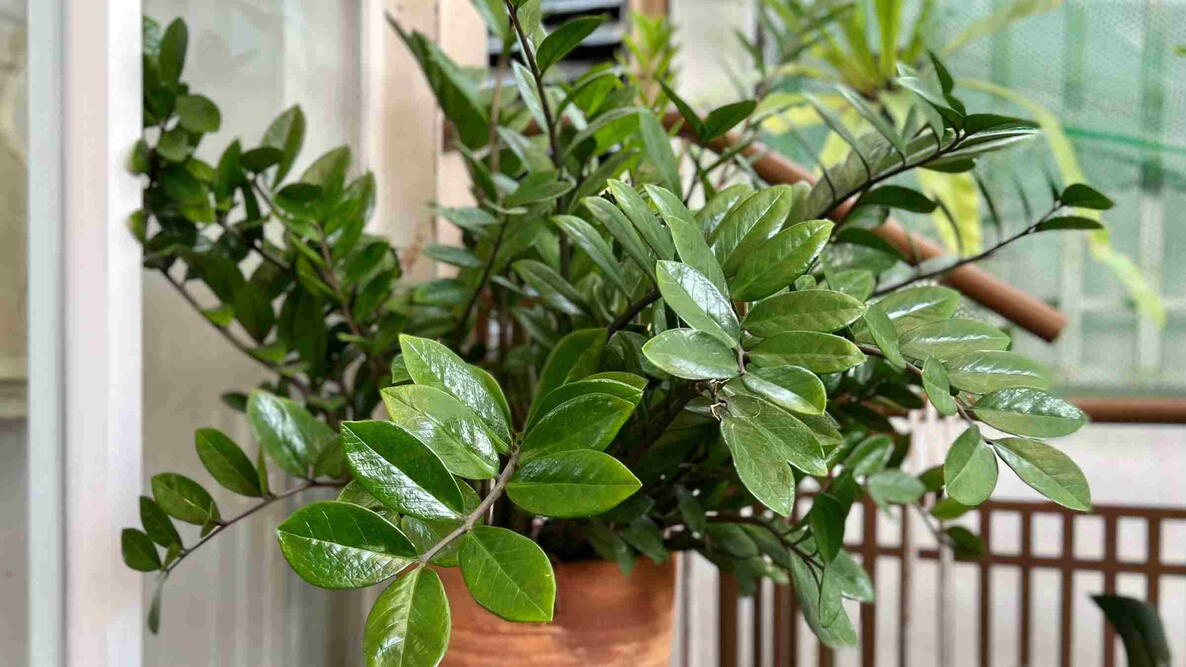
Caption
ZZ plant thriving in a terracotta pot—ideal for preventing overwatering and promoting healthy root growth.

There’s nothing snooze-worthy about ZZ plants! With their glossy green leaves and graceful arching stems, ZZ plants (also known as the Zanzibar gem) combine elegance with an easygoing nature, making them one of the best beginner-friendly houseplants. I’ve grown ZZ plants for years in my home, and they’ve never failed me—even in a bathroom with just one small window. In this guide, I’ll share all my best tips for watering, soil, repotting, and propagation so your ZZ plant can grow beautifully with minimal effort.
About ZZ Plants
ZZ plants (Zamioculcas zamiifolia), also called Zanzibar gem, eternity plant, aroid palm, or zuzu plant, are beloved for their glossy, deep-green leaves and nearly indestructible nature. Native to the dry forests and grasslands of eastern Africa, they’re prized as one of the easiest indoor plants to care for. Like peace lilies and monstera, ZZ plants belong to the Araceae family. They may occasionally produce small, peace-lily-like blooms indoors—though most growers keep them for their striking foliage.

Like other Araceae plants, ZZ plants are toxic to pets and humans if ingested, and their sap can sometimes irritate skin. Still, their incredible ability to thrive in low light, go weeks without watering, and tolerate neglect makes them a top choice for beginners and anyone who claims to have a “brown thumb.”
I personally grow my ZZ plant in a bathroom that has a single window that doesn’t let in enough light to keep most houseplants happy, but still, my ZZ plant thrives. These plants look great on tabletops and in mixed houseplant collections, too, and their no-fuss nature makes them perfect for desks and offices. Just keep in mind that ZZ plants can grow between 2 and 4 feet tall, so you’ll want a bit of space to display them in all their glory.
Read Next
Pests and Problems
ZZ plants may be hard to kill, but they can still experience a few common issues.
- Pests, like mealybugs and scale, may feed on ZZ plant leaves, while fungus gnats frequent these plants when they’re overwatered. Correcting watering issues should make gnats dissipate on their own, while organic soap sprays are the best treatment for more pesky pests.
- Overwatering can cause ZZ plants to develop yellow leaves or brown leaf spots with yellow halos, and it may result in plants wilting dramatically or developing smelly roots. Mild cases of overwatering and root rot can be corrected by adjusting your watering schedule and potentially repotting your plant; however, if rot is severe, you may want to propagate new plants from stem cuttings or start over with a new ZZ plant.

Types
Standard ZZ plants have deep green leaves, but these plants are also available in a few other options. If you can’t find these rarer varieties in stores, try purchasing them online from a reputable plant nursery.
- ‘Raven’: Highly sought after ‘Raven’ ZZ plants have a moody look with leaves so dark they look black in most lighting.

- ‘Variegated’: Variegated ZZ plants are even harder to find and their green or near-black leaves may feature splashes of white, cream, yellow, and even pink!
Potting and Repotting
How Often to Repot
Slow-growing ZZ plants rarely need repotting, but they should be moved into a larger container if their soil appears worn out or the plant’s rhizomes are pressing against the sides of the pot.
When to Repot
As with other houseplants, the best time to repot ZZ plants is in spring or summer.
How to Repot
- Wear gloves: Always wear gloves when working with ZZ plants to prevent the plant’s irritating sap from coming into contact with your skin.
- Remove the old pot: Hold the plant’s stems in one hand and wriggle the plant’s pot free with your opposite hand. If the pot sticks, run a butter knife around the outside of the soil to loosen it up.
- Use fresh soil: Plant your ZZ plant in its new pot at the same depth the plant was growing in its old container. Remember to use fresh potting mix that drains well, and water your plant deeply when you’re done.

Propagation
ZZ plants can be propagated either via root division or stem cuttings, but you’ll get results much faster by dividing your plant’s roots.
- Choose the best time: The best time to propagate ZZ plants is when you’re repotting your plants in spring or summer.
- Separate the roots: Wearing gloves, remove your plant from its pot and gently tease apart the roots to separate the rhizomes into smaller sections. For faster growth, divide your plant into sections that each have a healthy cluster of roots and stems.
- Pot them up: Repot each divided ZZ plant section into its own pot with well-draining soil, and then water them in.

More Like This




Comments