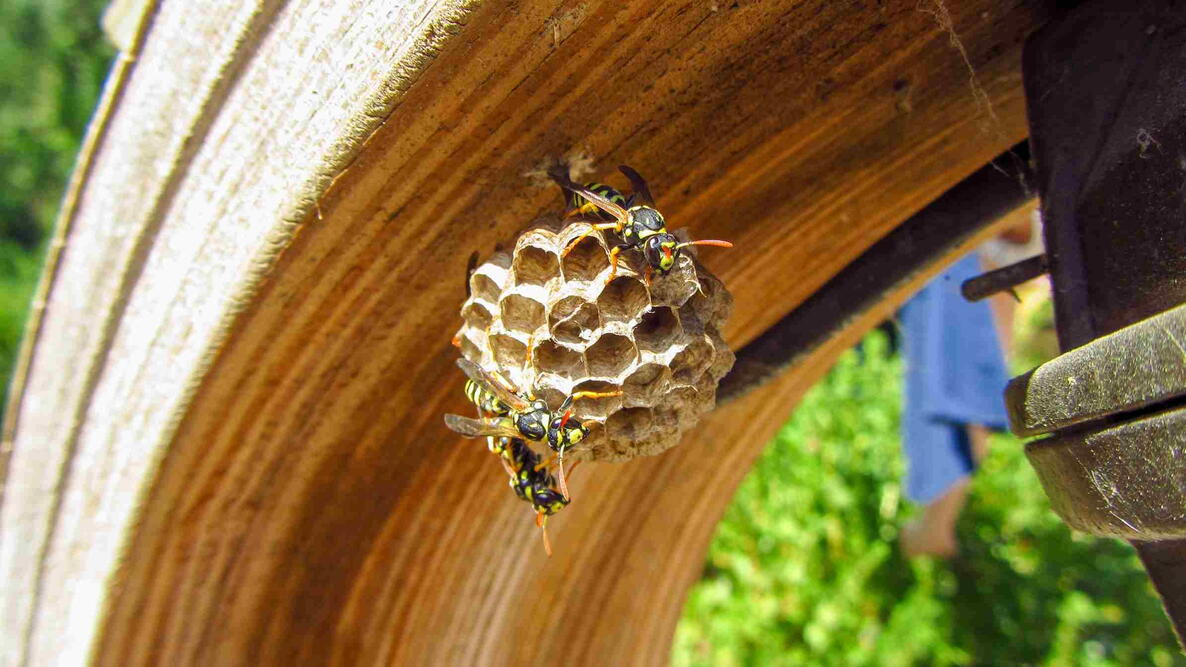
I was stepping into my garden when I spotted it: a wasp nest tucked under the eaves of the garage. Cue the inner panic. If you’ve ever noticed wasps near your garden and wondered how to manage them safely, this guide walks gardeners through spotting nests, taking action without getting stung, and understanding why these little stingers can actually help your garden thrive.
We’ll cover how to identify a wasp nest, when it’s safe to leave them alone, and how to remove them if you must—without turning your garden into a war zone. And yes, we’ll get to why you might want to just “leave them bee.” (Pun intended.)
Why Wasps Matter in Your Garden
Social wasp colonies don’t survive the winter like honeybee hives; only the queen makes it to spring. That’s why you rarely notice wasps in early summer—when gardeners are planting beans, tomatoes, and squash—their numbers are still low. By late summer, just as you’re harvesting cucumbers, corn, and apples, the colony has multiplied, and worker wasps are out looking for food, which is when most gardener-wasp encounters happen.
Late summer and early fall are the times to be most cautious. Wasps and hornets are at their most aggressive then because their nests have reached peak size and natural food sources are scarcer. This drives them to seek out ripe fruits, vegetables, and other human food, making them highly defensive of their colonies. Disturb a nest or get too close, and a sting—or multiple stings—can happen fast.

But wasps aren’t purely bad guys. Even social wasps are beneficial. They hunt flies, caterpillars, and insect pests that can harm your plants. Think of paper wasps cleaning up the cabbage worms on your broccoli, or yellow jackets carrying off beetle larvae from your zucchini patch. They also help pollinate flowers and fruit trees. While a nest in a high-traffic spot can be unwelcome, these insects do quietly help your garden thrive.
How to Tell If It’s a Wasp
Okay, some flying insect is buzzing around, making a nuisance of itself. But is it a wasp or a bee or a hornet?
All wasps have antennae, six legs, wings, and a characteristically narrow waist. The waist is the part where the thorax joins the abdomen. It’s fat on a bee but almost thread-thin on a wasp. Some wasps have hairs, but if they are fat from the head to the rump and fuzzy, they are probably bees, not wasps.
To summarize, here’s a quick ID guide for gardeners:
- Waist: Wasps have a thread-thin waist; bees are fuzzy from head to rump.
- Body shape: Sleek wasps vs. rounded, hairy bees.
- Behavior: Wasps hunt pests; bees focus on nectar and pollen.
- Colors and Patterns: Check out this guide for help identifying wasps.
Because wasps hunt pests in the garden, it means a wasp is more likely to be inspecting your kale leaves for caterpillars than visiting your zinnias. For most gardeners, knowing it’s a wasp is enough to decide whether action is needed—no need to get into species-level details unless you’re curious.

Signs You’ve Got a Nest
Of course, you’ll notice wasp activity. It’s normal to see a few wasps in the garden, but if you notice more in a specific spot in the yard or near a building, that’s a good hint you are nearing the nest—and to be cautious. Here are signs of a nest:
- Many wasps flying to the same location repeatedly
- A visible nest under eaves, in trees, or in old burrows
- Increased wasp activity in one area of the yard
Even social wasps are likely to leave you alone unless the nest is disturbed or an individual feels threatened (like when they’re stuck in your clothes or you sit on one). I learned about disturbing a nest the hard way after accidentally knocking down a paper wasp nest—I noticed the buzzing swarm about a second too late. For gardeners, stumbling on a nest usually happens when reaching into shrubs, staking tomatoes near a hidden nest, or pulling weeds along a fence line.

Where Wasps Build Nests
Like many birds, social wasps love sheltered spots:
- Under the eaves of a garage, shed, greenhouse, or barn
- Around garden beds such as in a cement-block raised bed
- In a tree cavity
- On a cooperative tree branch
- In ground burrows, compost piles, or old rodent tunnels
Ground-nesting wasps don’t dig their own holes but instead use an existing location.
In the yard or garden, watch for a pattern of traffic. Do you see all the wasps heading toward the same outbuilding, spot near the roof, or tree? Following their flight path from a safe distance helps you locate nests without putting yourself at risk. Observing patterns helps you decide whether action is needed or if you can leave them alone until winter.
How to Remove a Wasp Nest Safely
First, ask yourself: Does this nest actually need to be removed?
- If the nest is out of the way, it may be best to ignore it. Explain to kids (and maybe a few nervous adults) that freaking out is the fastest way to get stung—and that wasps will usually leave us alone if not threatened. Then, once winter arrives, you can safely remove the nest.
- If it’s nearing fall, remember: Social wasp colonies don’t survive the winter. Only the queen makes it to spring. That means if you can wait, the problem will solve itself when cold weather comes.
But if the nest is in a high-traffic area—say, under the gate arbor you walk through daily or right beside your raised beds—you’ll probably need to take action. After all, no gardener wants a swarm of yellow jackets between them and the tomatoes.
If a nest poses a risk, follow these steps for safe removal:
- Time it right: Wasps are far less active in the early morning or late evening. That’s when you should act—not in the heat of the afternoon when they’re busy and defensive.
- Protect yourself: Suit up. Wear long sleeves, long pants, and a hat. Tuck any long hair under the hat, flip up your collar, tuck pant legs into socks (with shoes on), and button every button. You may even want to tape your sleeve cuffs and wear leather gloves. Think of it like pruning roses—you armor up first. The goal: give wasps as few openings as possible. Plan for the worst, hope for the best.
- Be preventative and patient: For exposed nests, non-chemical methods such as physically knocking down a small starter nest early in the season or carefully bagging an abandoned winter nest are best. If the nest is large and active, the safest gardener-friendly option is patience—wait for winter die-off—or call in a professional rather than reaching for sprays.
- Use proper tools: If necessary, for exposed nests under your front door or in a high-risk area, use an aerosol spray specifically designed for wasps. These sprays shoot a strong stream so you can keep your distance. Always follow the label directions, which usually involve soaking both the entrance and the nest itself.
- Hidden or tricky nests: Yellow jackets, in particular, like to nest in hidden spots. Disturbing the soil or probing holes is not safe. In these cases, refer to this guide from the University of Minnesota Extension for treating concealed nests. And remember: If you’re allergic to stings, it’s never worth the risk—call in a professional. Otherwise, mark it off, give it space, and let cold weather take care of it.
Preventing Wasp Problems
The best way to deal with wasps? Stop them from becoming a problem in the first place. Like most critters, wasps hang around when they find easy food or a cozy spot to build. With a few simple habits, you can keep your yard and garden from becoming wasp central.
Cut down on attractants
- Cover harvest baskets and picnic food in the garden. Wasps love ripe fruit and juice as much as we do.
- You can also make a DIY wasp diversion: Fill a small container (like a margarine tub) with sugar water, poke a few tiny holes in the lid, and hang it in a tree away from your garden paths. This draws wasps to the trap instead of your ripening tomatoes or picnic table.
- Secure compost and garbage. Use tight-fitting lids on bins and keep compost piles turned and covered if possible.
- Clean up fallen fruit. Rake up apples, plums, or pears before wasps find them.
Stay ahead of nests
- Check sheds, trellises, and greenhouse eaves in spring. In late spring and early summer, look for small starter nests.
- Remove nests in problem areas as soon as they begin to be built. A paper nest the size of a walnut is much easier (and safer) to knock down than one buzzing with hundreds of wasps.
- If possible, wait until winter. For larger nests in out-of-the-way spots, patience pays off. When cold weather arrives, the colony dies out naturally, and removal is safe.
FAQs
What will get rid of wasps instantly?
The truth is, there isn’t a natural way to kill a wasp nest instantly. Commercial sprays can do it, but they’re chemical-based and not garden-friendly. If you’re facing an urgent safety issue—like a nest right by the door—your quickest non-chemical option is to call a professional with the right gear. Otherwise, the safest route is to wait until winter, when the colony naturally dies off and you can remove the nest without risk. Learn more about natural pest control.
Which garden plants repel wasps?
Some gardeners swear by herbs like peppermint, basil, lavender, and lemongrass. While there’s little science showing that simply planting them drives wasps away, their strong scents may discourage wasps from nesting nearby. At the very least, these herbs and flowers are useful (and pretty!) additions to the garden—and if allowed to bloom, they’ll also attract pollinators you do want.
Why shouldn’t you kill wasps?
Wasps are a vital part of the garden ecosystem. They pollinate flowers, vegetables, and fruit trees, and they’re also natural predators of pests like caterpillars, beetles, and flies. Killing them unnecessarily not only disrupts your garden’s balance but also removes an ally in keeping pests under control.
Are wasps any good for your garden?
Yes! Solitary wasps are some of the garden’s best little hunters, taking out pest insects before they damage your crops. Even social wasps like yellow jackets and hornets help pollinate plants and control pests. As long as they’re not nesting in a spot that puts you in danger, your garden is better off with them around.
Do wasps come back to old nests in the garden?
No. Unlike honeybees, wasps don’t reuse old nests. Each spring, a new queen builds from scratch. That means once winter hits and a nest is inactive, you can safely knock it down and compost it—or even keep it as a fascinating nature display for curious gardeners.

Why are wasps worse in the late summer harvest season?
By late summer, wasp colonies are at their peak. Worker wasps are out hunting constantly and are also drawn to ripe fruit and vegetable juices. If you’re harvesting peaches, grapes, or tomatoes, you’re more likely to bump into them during this busy season.

More Like This



Comments