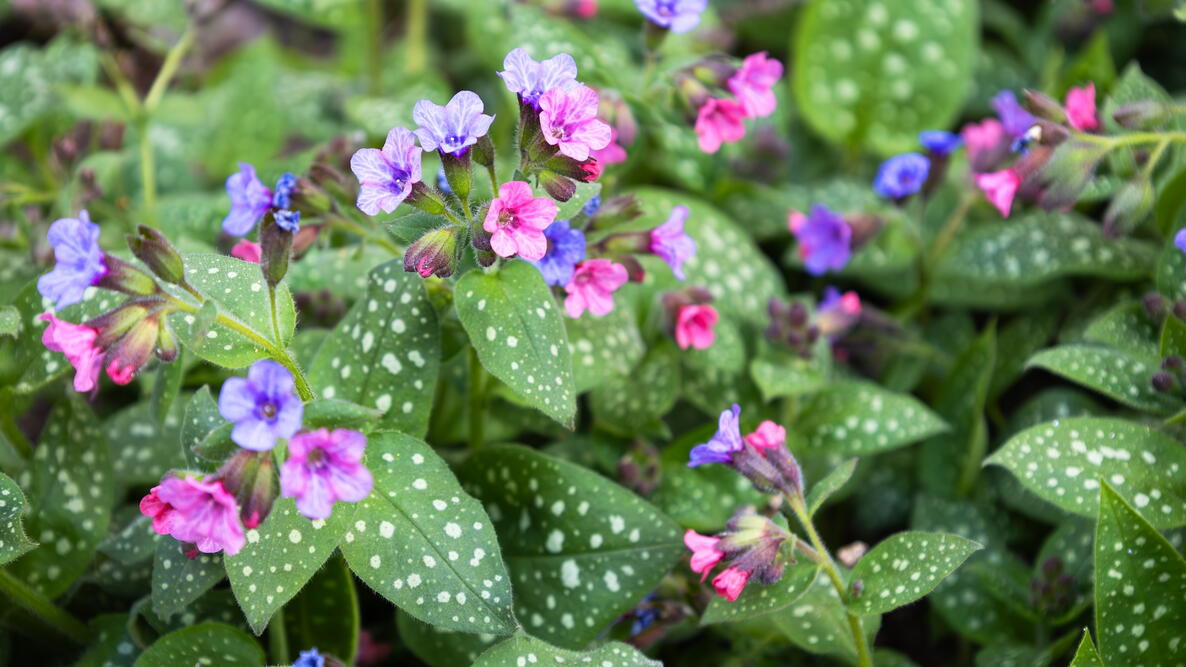

With lungwort in your garden, you can breathe easy—this shade-loving perennial asks little but gives plenty. Its speckled leaves and early blooms attract pollinators, shrug off deer and rabbits, and tolerate occasional dry spells. I love tucking a few between hellebores and hostas for a long season of color. Here’s everything you need to grow, divide, and care for this easygoing garden gem.

About Lungwort Plants
Native to Europe and western Asia, lungwort (Pulmonaria) is a member of the Boraginaceae family, which also includes garden favorites like heliotropes and borage. There are 18 recognized species of lungwort in the wild. But there are also countless hybrid varieties with varying amounts of silver on their leaves and slightly different flower colors.
In the garden, this flowering perennial is typically grown as a clumping groundcover or border plant in shady spots. As a shade plant, it’s ideal for planting beneath deciduous trees, in woodland borders, or tucked into mixed flower beds where it’s protected from harsh sunlight. Avoid planting in full sun or in containers.
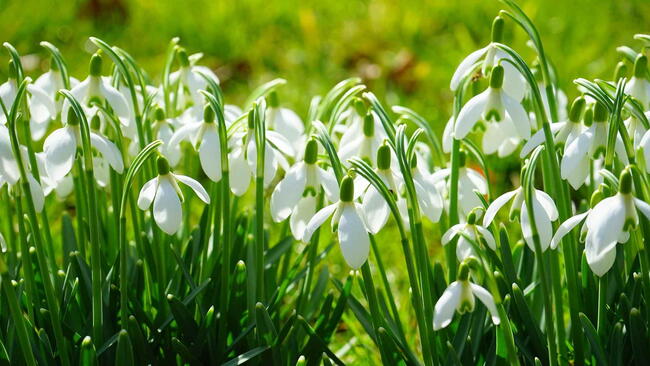
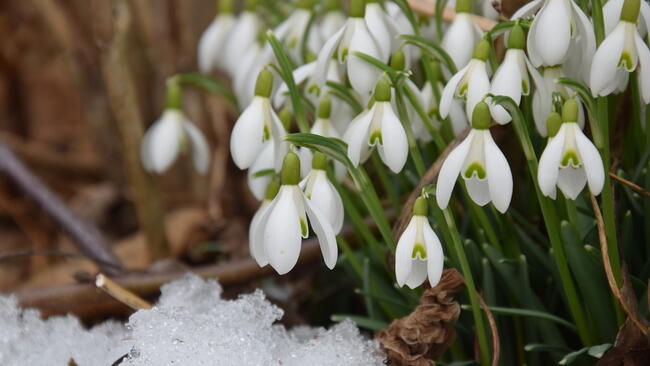
I like to grow lungwort beneath taller perennials that cast dappled light, such as rose of Sharon or daylilies—but it also works well when succession-planted with early or late bloomers. Pairing with plants like snowdrops, hellebores, spiderwort, ferns, columbines, and hostas keeps my shade garden colorful from spring through fall.

Compared to some perennials, lungwort grows relatively slowly, but it will eventually spread and naturalize if you let it. Mature plants typically grow to about 6 to 12 inches in height and may stretch up to 18 inches across, but it’s their spring flowers that really draw the eye. They start off pink when they emerge and shift to shades of blue as they age, but you can find varieties with purple, red, or white flowers too!
Planting
Lungwort (Pulmonaria) may be drought-tolerant once established, but it grows best when planted in humus-rich, consistently moist soil with a neutral to slightly alkaline pH (7.0–8.0). Direct sun can scorch its delicate leaves, so choose a location with dappled shade or morning light.
When to Plant Lungwort
For the healthiest plants and the best chance of spring blooms, plant in late summer or early fall—at least 4 weeks before your region’s first frost. Fall planting allows it to settle in before winter dormancy. Spring planting is also possible, especially if nursery starts are available, but expect slower establishment.
How to Plant Lungwort: Step-by-Step
- Prepare the Site
Dig a hole slightly wider than the plant’s root ball. Mix compost into the excavated soil to improve drainage and fertility. - Remove the Plant from Its Pot
Gently grasp the base of the stem and wiggle the pot free. If it’s stuck, slide a butter knife around the rim to loosen the soil. - Set the Plant in Place
Position the lungwort at the same depth it was growing in its nursery container—backfill with amended soil around the roots. - Firm and Water
Press the soil gently around the base, water thoroughly, and apply mulch to retain moisture and suppress weeds. - Spacing Matters
Space lungwort plants at least 18 inches apart from each other and from nearby walls or fencing to allow room for growth and airflow.

Growing

Compared to many perennials, lungwort is refreshingly low-maintenance. It doesn’t require much pruning, but you’ll encourage more blooms and tidier foliage if you pinch off faded flowers and remove dead leaves throughout the growing season. With just a bit of attention, this plant produces charming blossoms year after year.
Light
Lungwort thrives in partial shade, though it can tolerate full shade as well. Avoid planting in direct sunlight, especially in hot climates—too much sun can scorch the leaves and stress the plant.
Water
- New plants: Keep soil evenly moist with regular watering.
- Established plants: Water during dry spells or when rainfall is scarce.
- Bloom boost: Aim for about 1 inch of water per week, and apply mulch to retain moisture and suppress weeds.
Fertilizer
Lungwort isn’t a heavy feeder, but it benefits from a little extra nutrition:
- Apply a slow-release, balanced fertilizer in early spring.
- Alternatively, top-dress with compost to enrich the soil naturally.
Seasonal Care
- Winter: No special care needed in most zones. In zones 3–4, apply a layer of loose mulch after the ground freezes to protect roots.
- Summer: If plants look tired, prune away damaged leaves and keep them hydrated. They’ll perk up again when cooler weather returns.
Propagation
Most lungwort plants are hybrids that can’t be propagated from seed. But these plants can and should be divided every 3 to 5 years to rejuvenate their growth and keep them in bloom. This will also allow you to create more lungwort plants for free!
How to Divide Lungwort
- Dig up the plant after flowering, using a wide circle around the root zone.
- Lift the root ball carefully, keeping it as intact as possible.
- Rinse the roots to expose natural divisions.
- Separate by hand, ensuring each section has healthy roots and leafy stems.
- Replant immediately, spacing divisions 18 inches apart, and water thoroughly.
Types
Some lungwort plants have fully green leaves, while others’ leaves are so spotted with silver they shimmer in the light. Flower color and leaf shape can also vary between cultivars, but all have the same basic care needs.
‘Blue Ensign’: Is a cultivar that produces solid green leaves and flowers that are darker blue than most types of lungwort. It also blooms earlier in spring!
‘Majeste’: This lungwort has bright pink flowers that turn purple as they age and long, pointed leaves with silver margins.
‘Raspberry Splash’: From its silver-speckled leaves to its pale pink and purple flowers, there’s much to love about ‘Raspberry Splash!’


More Like This

Comments