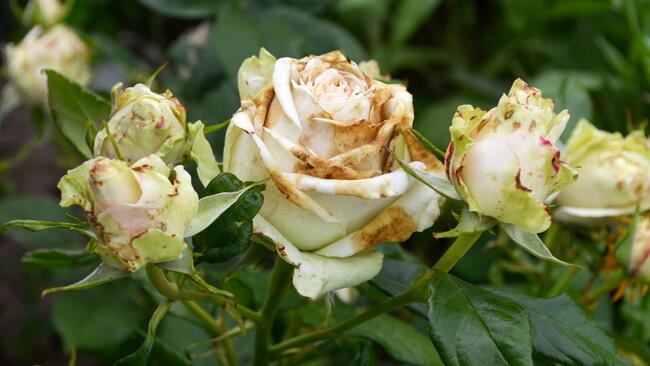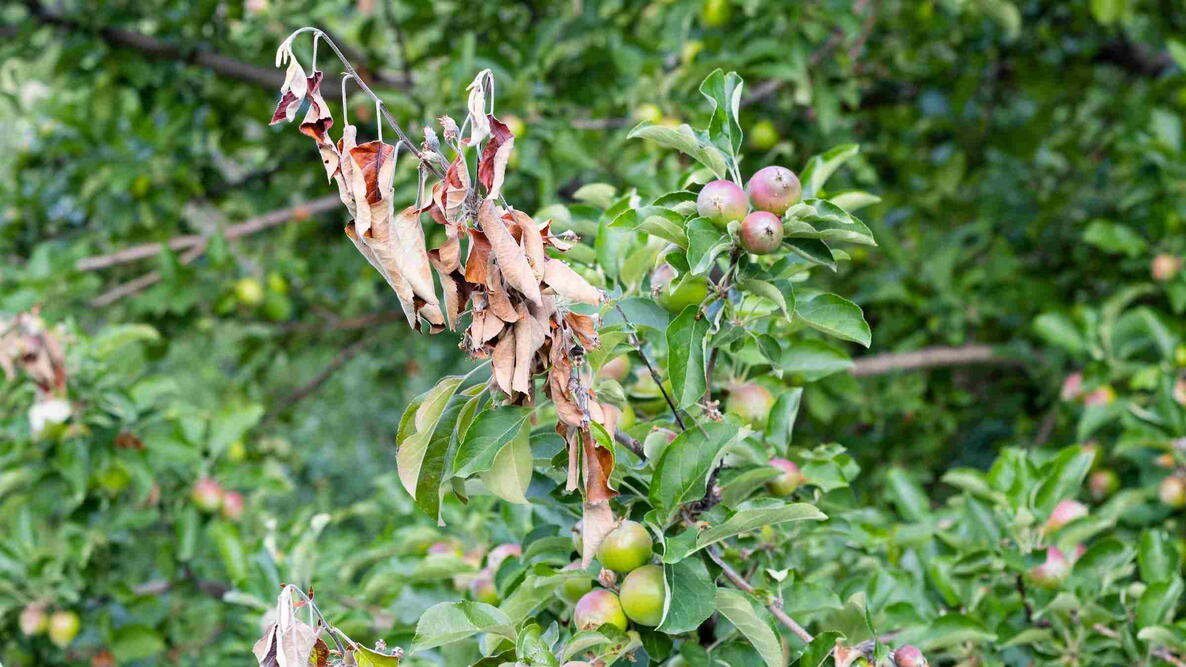
Bacterial burn on young apple tree branches—a classic sign of fire blight, with scorched, wilted tips and brown leaves that remain attached.
Photo Credit
Sergey Dudikov
Subhead
This disease needs action before it claims your apples, pears, and favorite shrubs.
Written By:Andy WilcoxMaster Gardener and Gardening Contributor
Sign up for daily gardening advice and tips
Something is wrong with your apple tree—and your mountain ash doesn’t look so hot, either. Some branches appear scorched or burned. What now? You might be dealing with fire blight, a destructive bacterial disease. Learn how to spot the symptoms early, prevent their spread, and take the right steps to protect your trees and shrubs.
What is Fire Blight?
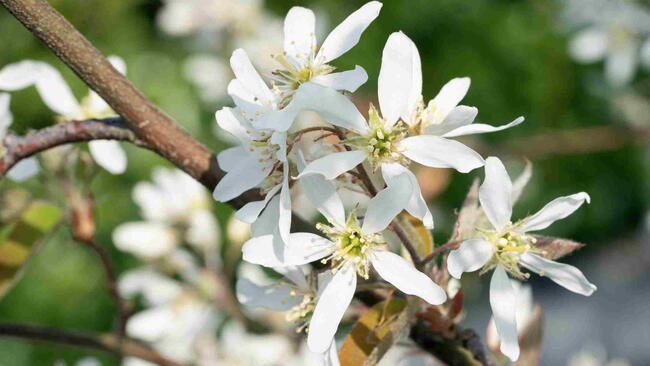
Fire blight is a bacterial disease caused by Erwinia amylovora that affects over 100 species in the Rosaceae family. It’s especially common on some of our favorite ornamental and fruiting trees and shrubs—including:
If your plant belongs to the genus Malus, Prunus, Rosa, Crataegus, Amelanchier, or Pyrus (along with several others), it’s likely susceptible to fire blight.
What Causes Fire Blight?
Fire blight is a bacterial infection that enters the tree through a wound or opening. It requires a living host—like my favorite crab apple tree—to thrive. Spring bloom time is a common entry point for the pathogen, which then migrates into tender new growth.
Here’s how it spreads:
In spring, the organism overwinters in cankers on trunks, stems, and major branches, as well as in shriveled old fruit.
As temperatures rise, it becomes active and begins to multiply.
Insects such as bees and flies are drawn to the sticky ooze leaking from cankers and carry the infection to blossoms.
Rain splash, contaminated tools, and even careless yard work—like using unsanitized pruning shears or accidentally wounding a tree—can also contribute to its spread.
Once inside a vulnerable tree or shrub via a blossom or injury, the pathogen moves slowly through the plant’s vascular system, which transports water and nutrients.
Upon entering a new susceptible tree or shrub through a blossom or wound, the bacteria spread slowly through the vascular system of the tree (the cells that carry water and nutrients), and can move into the main stems and other branches. Frequently, fire blight can kill the entire tree or shrub.
This disease isn’t diagnosed by identifying the organism, as with an insect, but by examining the damage. Many factors can cause a brown leaf or a dead shoot on an apple tree. My crab apple loses seemingly half of its young shoots each year to breakage from wind, fat birds thinking the branch is big enough, or even chipmunks scurrying up to check this year’s crab apple crop. But those are easy enough to identify once you follow the branch back to the break.
To scout for fire blight in susceptible trees and shrubs, start by walking around and noting any young growth that appears to be struggling. Since this bacteria needs an entry point to the plant, it’s common for one branch to look ill while all its neighbors look green and lush. That one stem with browning and curling leaves is your clue.
When looking at new growth, browned leaves, and the telltale J-hook or shepherd’s crook shape of the younger, softer portion of the stem are very indicative of fire blight. Cankers on the trunk, especially on younger bark which would not usually have developed ridges yet, are a sign of a more established (and likely fatal) fire blight infection. Dead leaves and fruit typically are withered and browned but remain on the branches and look scorched or rusty brown in color.
The browned fire-scorched appearance of this quince tree’s leaves indicate a fire blight infection. Credit: Dan Gabriel Atanasie
If you grew bacteria on a petri dish in high school, you know they multiply rapidly in the right conditions. Droplets of bacterial ooze can start to appear in as little as a few days, furthering the spread. Fortunately, as the new flush of growth in spring and early summer transitions from soft and green to mature and more woody, those tissues become much less susceptible to fire blight infection. It’s one of the reasons to be careful with fertilizer, which we’ll discuss later.
Here are a few more identifying characteristics:
Look at the blossoms
For many of our fruiting trees and ornamentals, the blossom is the entry point, and where you may see the first signs.
Infected blossoms appear water-soaked, then wilt and brown. The bacteria move down the flower cluster and into the stem or spur, which will turn brown or black.
Cool climates can reduce the problem in many plants, because flowering happens before the warm weather needed by the bacteria to grow and spread. But, even in Vermont, it still occurs regularly.
The browned flowers will remain attached instead of being discarded as the fruit grows.
Fireblight often enters the plant through the blossoms causing flowers to die. Credit: Olya Maximenko
Checking shoots and stems
Infected young shoots are the easiest characteristic of fire blight to spot. A wilted blossom could be many things, but the “J” hook wilted young shoot tip sticks out like a sore thumb. (Do sore thumbs stick out? If I’ve already banged my thumb on something, I’m usually careful to tuck it away to avoid smacking it again.)
Fire blight bacteria can enter young, new growth through a wound small enough that we don’t notice it, and move quickly into the mature portion of the twig. As the disease progresses, the new shoot will wilt, the leaves will brown and shrivel, and the shoot will bend in a fishhook shape. You may see droplets of white bacterial ooze, although I’ve not noticed that as much.
Another telltale sign is that the wilted leaves will stay attached to the twig throughout the summer. It makes it easier to find as you walk around, but of course, we’d like to find it earlier rather than later.
Look for spots on the stem, branch, or trunk where the bark is puckered and cracked. They’re easy to see on smooth-stemmed larger branches, but can also appear on those smaller than a pencil, making them difficult to spot. Look for rough, broken bark, as well as staining in dark purple, brown, or black. The bark may also peel, and the sapwood underneath can become stained a reddish-brown.

Gardening Products
Control and Prevention
Fire blight can’t be “cured,” but you can prevent it from spreading and protect your trees using these steps:
Choose Resistant Varieties
For the home gardener or home orchardist, fire blight is best managed by planting resistant varieties and, secondly, by pruning it out regularly as it occurs. While a resistant variety may still be infected, the disease spreads more slowly, giving you time to nip it out before it reaches the main trunk of the tree. You’ll also see fewer infection sites in disease-resistant selections.
Remove Infected Growth
Regular and careful trimming is essential for managing fire blight:
Perform cuts during the dormant season (late winter) to eliminate infected twigs and cankers. For a helpful demonstration, check out The University of Vermont Fruit Program.
If you need to remove diseased branches in summer, proceed with caution—while it can help slow the spread, improper timing or technique may actually accelerate it.
Always work in dry conditions, and wait until the morning dew has evaporated before making any cuts.
Make your incision at least 6 to 8 inches below the visible infection. If the branch isn’t critical to the tree’s structure, going even farther down is safer.
Between each cut, disinfect your tools with 70% isopropyl alcohol to prevent cross-contamination.
Alternatively, a 10% bleach solution can be used, though it may corrode metal tools more quickly..
Dispose of infected material by burning or burying it—never compost.
Avoid trimming healthy branches during the same session. Each cut creates a potential entry point for fire blight bacteria.
If you must prune out newly blighted shoots in summer, take extreme care:
Improper summer pruning can actually spread fire blight faster.
Always follow the same rules: cut well below the infection and disinfect your tools between every cut.
Avoid if the weather is wet or humid.
Watch Your Fertilizer Use
Take it easy on the nitrogen. Heavy summer fertilizing encourages a flush of soft, new growth—which is especially vulnerable to fire blight.
Instead, apply fertilizer in early spring, and opt for a slow-release product to support steady, healthy growth without overdoing it.
Remove Severely Infected Trees
If fire blight has spread into the main trunk or roots, the tree is unlikely to recover.
Remove the entire tree, including the below-ground stump. You’ll remove a huge source of bacteria.
This removes a major source of bacterial infection from your yard.
Don’t just toss it in the woods. Bury or burn the wood and cover the stump with soil.
Cover the remaining stump with soil to help seal off any remaining bacteria.
Pro Tip: Don’t mix this job with other routine pruning. I know it’s tempting while you are there to snip off that twisting or crossing branch or nip off a piece for shaping purposes, but doing so can spread fire blight to other branches as well as leave an extra wound for a new infection to take hold. Focus only on fire blight removal to avoid spreading the disease further.
What About Chemical Sprays?
Chemical treatments exist, but they’re not a magic cure—and are often impractical for home gardeners.
Copper-based sprays and antibiotics can reduce blossom infections if applied at just the right time.
These are mainly used in commercial orchards under strict timing and application guidelines.
Overuse of antibiotics can also lead to resistant strains of bacteria.
If fire blight is commonly a problem in your area, pruning and choosing a resistant variety are your best defenses.
About The Author
Andy Wilcox
Master Gardener and Gardening Contributor
Andy Wilcox is a freelance writer, flower farmer, and master gardener with over 25 years of experience in gardening, horticulture, and forestry. He is the co-owner of Stone’s Throw Flowers, a business...
Comments