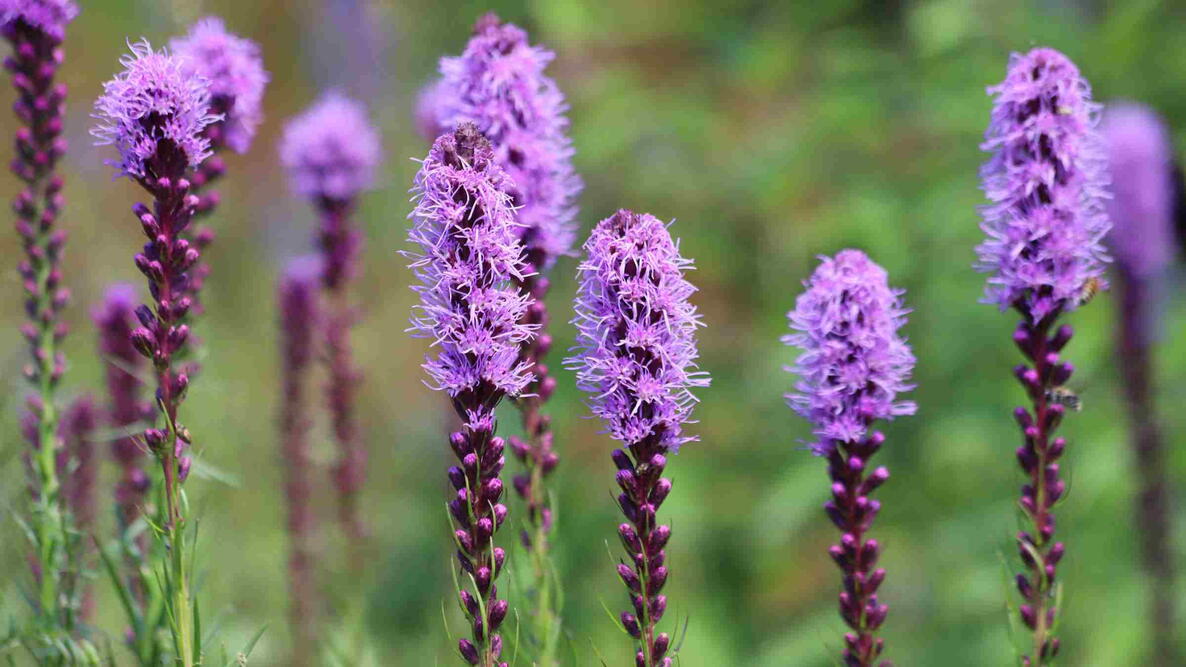

Liatris, or blazing star, always shines bright with its uniquely shaped, magenta-colored blooms that light up any garden. But I especially love these stalwart native perennials for their pollinator power, drought- and heat-resistance, and no-fuss nature. If you’re hoping to grow liatris to attract more butterflies and bees—or just want low-maintenance flowers that thrive in tough conditions—here’s a simple guide on how to plant and care for blazing star!
While liatris plants can vary slightly in appearance, they usually produce frothy pinkish-purple or white blooms that are loaded with nectar and adored by pollinators of all kinds. Their slender, grass-like leaves turn bronze in fall, and, happily, these plants are mostly ignored by deer and other pests.

Like many summer-blooming flowers, liatris belongs to the Aster family, alongside asters, daisies, and goldenrod. Most varieties bloom from summer into fall and work wonderfully in succession with spring flowers like bleeding heart or creeping phlox. Beyond the garden, blazing star flowers are also a favorite for fresh bouquets!

Planting
Growers have a few options when it comes to planting blazing star and can grow their plants from seeds, corms, or nursery starts. Potted blazing star plants will produce flowers a lot earlier, but they’re usually pricier. Seeds and corms, on the other hand, are more budget-friendly, but you’ll need to wait a year or two after planting for your blazing stars to bloom.
When to Plant Blazing Star
Potted blazing stars and their corms should be planted outdoors in spring after the risk of frost has past. Blazing star seeds, however, need to be cold stratified to germinate well. To achieve this, either plant your seeds outdoors once the ground freezes in fall, or cold stratify the seeds in your fridge for 4 to 6 weeks before spring planting.
Where to Plant Blazing Star
In the garden, blazing star flowers thrive in full sun and well-draining, nutrient-poor soil. I love pairing them with other pollinator favorites like coneflowers, black-eyed Susan, and yarrow. With a height range of 2 to 5 feet, they’re just as useful in the back or front of a flower bed—and mix beautifully with perennials, annuals, shrubs, or ornamental grasses.
How to Plant Blazing Star
Whether you’re growing blazing star from seeds, corms, or potted plants, keep at least 12 to 15 inches of space between your plants and follow these simple planting steps.
- Potted plants. Dig a planting hole that’s twice as big as your plant’s root ball and amend the excavated soil with compost and (optional) bone meal. Locate the plant in the hole at the same depth it was growing in its nursery pot. Fill the hole, add mulch, and water thoroughly.
- Corms. Dig the soil in your planting spot to a depth of 5 inches, blend in some compost and bone meal, and plant the corms 2 to 3 inches deep. Water the corms in, and only water them again once they sprout!
- Seeds. If you’re planting seeds outdoors in fall, prep the soil by removing weeds and raking the area flat. Then scatter blazing star seeds when the ground freezes solid. If you’re planting seeds indoors, cold-stratify the seeds for a few weeks in spring, then plant the seeds ¼ inch deep in pots; harden off and transplant the seedlings outdoors when the risk of frost has passed.

Growing
Blazing star plants grow well in most gardens and don’t need rich soil, so avoid adding too much compost when planting. They also dislike heavy, clayey soils that stay waterlogged. Be careful not to over-mulch, as thick mulch can trap moisture and increase the risk of root rot.
Light
Blazing stars require full sun to bloom and should be grown in locations that receive at least 6 to 8 hours of direct light per day. Lower light levels can cause these plants to develop floppy stems and stop blooming!
Water
New plantings of blazing stars should be provided with about 1 inch of water per week, but you can taper off watering when your plants are established. These plants are also prone to powdery mildew, so it’s best to keep their leaves dry by watering only at the soil line.
Fertilizer
Too much fertilizer or overly rich soil can also turn blazing stars floppy. To avoid this, skip the fertilizer entirely, or only lightly fertilize your plants once in spring if they look like they need it.
Humidity and Temperature
Blazing stars are unfazed by humidity and can handle a range of temperatures. However, winters that are especially cold and wet may cause blazing star corms to rot.

Seasonal Care
The care requirements of blazing star plants don’t change much throughout the year. In general, these plants don’t need much pruning, but you may want to remove their dead stems when the plants produce new growth in spring and add stakes or cages if your plants get too floppy. Deadheading spent flowers can also make blazing stars bloom a bit more, but leaving the old flower heads in place is recommended if you want to feed wild birds or allow your plants to self-sow.
Propagation
Like many other perennials, blazing stars should be divided every few years to improve their growth and flowering. This will also allow you to propagate a few new blazing star plants for your garden!
- When new growth begins in spring, dig around the perimeter of your blazing stars with a shovel or spade and gently lift a clump of your plants from the soil.
- Use a knife of shovel to separate individual corms from the plant and make sure each corm has at least one eye.
- Replant the corms and parent plant as soon as possible and space multiple plants at least 12 inches apart.
Blazing stars can also be propagated from seed. Just allow the flower heads to dry on the plant and then shake the dried seeds off the old blooms and into a paper bag.
Types
There are around 50 native species of blazing star (liatris) found across North America, though most grow naturally in the dry, sunny prairies of the eastern and central United States.
If you want to attract the most pollinators, growing blazing star varieties that are native to your region is the way to go. But you may also want to explore other popular types of blazing star plants, such as:
- ‘Kobold’: A good choice for cut flowers, ‘Kobold’ stays more compact than many other Liatris varieties and rarely needs staking.
- ‘Floristan White’: Most Liatris produce pinkish-purple flowers, but ‘Floristan White’ wows with creamy-white blooms!
- ‘Rocky Mountain’: Native to the Rockies, this Liatris variety produces smaller, pom-pom-shaped flowers that pollinators can’t resist.


More Like This

Comments