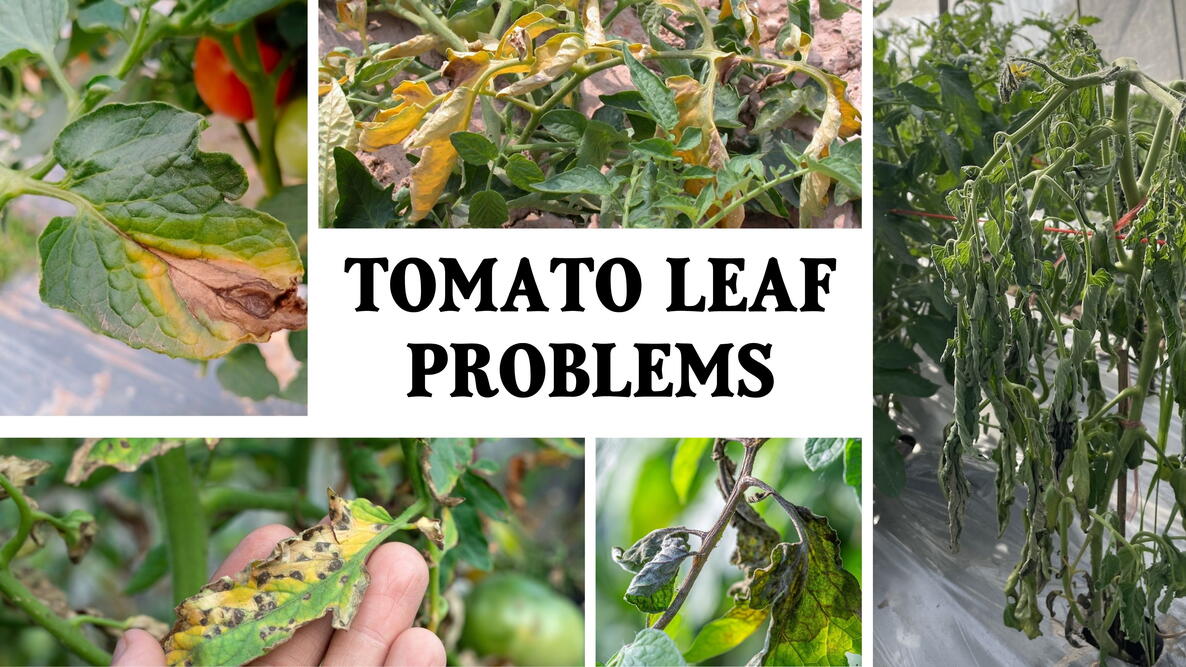

Tomatoes might be our favorite garden crop, but they often come with a host of leaf problems—yellowing, spotting, curling, wilting—that can look very similar and be tricky to diagnose. Diseases can spread quickly once they take hold, making prevention key.
One of the smartest ways to protect your crop is to choose tomato varieties bred for resistance to common diseases in your area. Whether you prefer slicers, paste, or cherry tomatoes, many disease-resistant options—hybrids, heirlooms, and open-pollinated types—are available. Pairing the right variety with good care brings you closer to that perfect summer sauce.
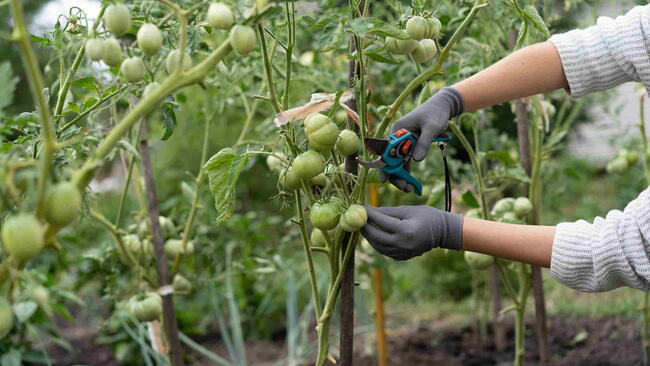
Beyond choosing the right plants, simple practices like mulching to block soil splash, pruning for airflow, and watering at the base can help manage or even prevent most tomato leaf problems. Gardeners have battled these challenges for generations—long before modern fungicides—and time-tested habits still go a long way.
Common Tomato Leaf Problems
We’ve explained some common tomato leaf problems below. Diagnosing them in the garden can be tricky—look closely at the patterns of disease, including which part of the plant shows signs first, how leaf spots develop, the size and location of spots or yellowing, fruit infection, and stem lesions.
Yellowing Tomato Leaves

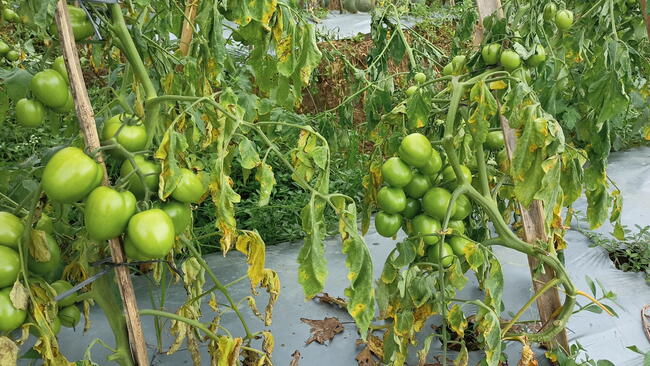
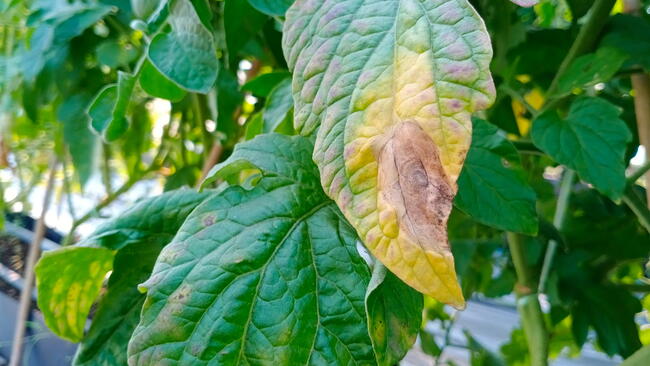
Tomato leaves turning yellow are a general indicator that something is wrong, similar to when humans have a fever. Poor nutrition can be a cause, but when discussing tomato diseases, there are typically additional signs, such as wilting or spots on the stems and leaves.
If entire leaves are turning yellow, a likely culprit is Fusarium wilt, generally caused by the fungal organism Fusarium oxysporum. Warmer summer soil temperatures bring on this problem, allowing the fungus to gain a foothold in the plant through injuries to the roots caused by cultivation, nematodes, moles, or even vigorous weeding. Once in the plant, the fungus clogs the water-conducting tissue (xylem) and inhibits water transport, causing the plant to wilt. Check out our article on Fusarium wilt for more information.
Yellowing leaves, especially without other symptoms, are a good indicator. Remove infected plants, choose resistant varieties, and sanitize your garden tools. If you have continuing problems, try soil solarization.
Resistant varieties: ‘Celebrity Plus’, ‘Supersweet 100’, ‘Early Girl’, ‘Jolene’, ‘Plum Regal’
Leaf Curl

Leaves curling up like scrolls? That may just be your tomato trying to conserve moisture in hot, dry weather. When tomatoes curl their leaves, they’re usually stressed from a hot spell—not sick. Think heat, wind, or water woes.
But watch for yellowing or stunted growth. Leaves curling upward as if rolling in toward their center can be caused by the tomato yellow leaf curl virus. The disease is transmitted by whiteflies, which can bring it from nearby weeds or other infected crops. Symptoms include yellowing leaf margins (the edges) and curling leaves, stunted growth, and dropped flowers. Because this disease is insect-transmitted, you may find it on one plant but not its neighbor, which is a good indicator that it isn’t a soil-borne fungal issue.
There isn’t much to do but remove the infected plants and dispose of them to prevent whiteflies from continuing to feed on them. Keep weeds controlled around the garden, as some of them may be hosts for whiteflies.
Resistant varieties: ‘Jolene’, ‘Black Angel’, ‘Skyway’, ‘TY Yellow Mimi’
Brown Spots on Leaves

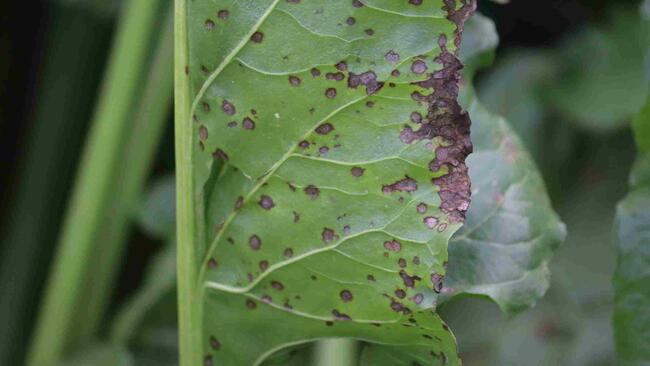
Many diseases can cause spots on tomato leaves, and early blight is a likely culprit. We have an entire article about early blight, because it’s a common problem. It’s a fungal disease caused by two different species of Alternaria.
Early blight typically first appears in midsummer and initially presents as small, dark brown spots on older leaves near the soil line. The spots are round, but are larger than other diseases, ranging from the size of a pencil eraser to as big as your thumbnail. They may develop concentric rings, similar to a bullseye or rings on a tree, and the leaf tissue surrounding the spots will begin to turn yellow. Eventually, the leaves wither and drop. Fruit can also be affected, developing dark, leathery spots.

To combat early blight, trim off and dispose of infected foliage, and keep the leaves dry. Avoid watering in the evening, and water at the base of the plants if possible. Mulch plants to prevent soil from splashing onto the leaves, and fertilize them to keep them growing vigorously. Planting disease-resistant cultivars will give you a good head start.
Resistant varieties: ‘Juliet’, ‘Mountain Magic’, ‘Plum Regal’, ‘Galahad’
Tomato Leaves Turning Black
Black tomato leaves are typically a later stage of one of the fungal diseases or wilts, such as late blight, bacterial leaf spot, or Septoria leaf spot. Black leaves can also be a result of frost damage or herbicide drift.

A black tomato leaf won’t recover, and you’ll likely find less severe signs higher on the plant since many tomato diseases progress from the ground level. Look for other signs on less distressed leaves, like brown or yellow spotting, curling, and wilting. If you find those areas, troubleshoot from there.
If you can’t figure out what is causing the leaves to turn black, it’s best to remove and dispose of the plant, sanitize your tools, and keep a close eye on other tomato plants and those in the Solanaceae family, like peppers, potatoes, and eggplants.
Black Spots on Tomato Leaves

Black spots on tomato leaves are a common sign of Septoria leaf spot. It’s caused by the fungus Septoria lycopersici. It overwinters on old plant material left in the garden.
Septoria leaf spot loves wet weather and usually shows first on the lower leaves as small, dark brown or black spots with a gray center. Eventually, the spots can merge together and take over, causing the leaf to wither and drop off. The characteristic lighter center is a good identifier, and Septoria leaf spot won’t affect the fruit like bacterial spot (Xanthomonas) or early blight.
Like all fungal diseases, Septoria leaf spot is controlled by mulching underneath, adequate plant spacing, avoiding overhead watering, irrigating in the morning, cleaning up and removing dead vegetation, and planting resistant varieties. Prune off the lower set of branches that might be in contact with the ground to increase airflow and reduce the likelihood of infection.
Resistant varieties: Most tomato varieties are susceptible.
White Spots

White spots on tomato leaves can be caused by sunscald or insect problems. Insects with piercing, sucking mouthparts often leave small white dots behind as they go—they’ve slurped all the good stuff out of the leaf cells, leaving them pale and white. This pattern could signal thrips or leaf miners.
However, if it’s a tomato disease-related issue, it may be powdery mildew. This fungal disease isn’t usually a huge problem in tomatoes, but it can slow them down and reduce yields by interfering with photosynthesis. Powdery mildew makes the plant leaves look like they’ve been dusted with flour. There may be white spots at the beginning of the infection.
To combat powdery mildew, space plants adequately and prune to maintain good air circulation. It’s okay to remove the infected leaves, but it usually isn’t necessary. Check out our article on powdery mildew for more control techniques.
Resistant varieties: ‘Rebelski’ and ‘Geronimo’
Wilting Tomato Leaves

Tomatoes wilt in extreme heat and weather due to dehydration, but if adequate soil moisture is present, it could be a sign of bacterial wilt.
Bacterial wilt is caused by an organism called Ralstonia solanacearum. It lives in the soil for years and enters the plant through wounds caused by insects, transplanting damage, or other factors. Once in the plant, it fills the portions of the stem that conduct water with slime, choking off the plant and causing the wilt. The wilt, after all, is merely a symptom of the leaves not getting enough water.
Bacterial wilt is characterized by wilting leaves that stay green. If you cut an infected stem, you may see a brown or yellow slime inside.
Controlling bacterial wilt is best done with cultural methods. Remove and dispose of all infected plant material (don’t compost it) and switch to growing a non-tomato-family crop at that site, such as corn, beans, or squash. While crop rotation often doesn’t help gardeners much with insect pests, it can be beneficial in managing bacterial wilt. Wait at least 3 years before growing tomatoes, peppers, or eggplants in that location.
Resistant varieties: Invincible, possibly Supremo
Frequently Asked Questions About Tomato Leaf Problems
Q: Why are my tomato leaves turning yellow?
A: Yellowing can be caused by nutrient deficiency, overwatering, or disease. If wilting or spots accompany the yellowing, check for Fusarium wilt or early blight.
Q: What’s the white powder on my tomato leaves?
A: That’s likely powdery mildew, a fungal disease. Improve air circulation, avoid overhead watering, and prune infected leaves.
Q: Why are my tomato leaves curling?
A: Leaf curl can be a natural stress response to heat or drought. If accompanied by yellowing or stunted growth, it may be a viral disease spread by whiteflies.
Q: How can I prevent tomato leaf diseases?
A: Practice crop rotation, mulch to prevent soil splash, water at the base of the plant, prune for airflow, and grow disease-resistant varieties. Learn more about crop rotation.
Q: What tomato varieties are disease-resistant?
A: It depends on the disease! For example, ‘Plum Regal’ resists early blight and Fusarium wilt, while ‘Rebelski’ is powdery mildew–resistant. Read more about different tomato varieties.
Keeping Your Tomatoes Healthy
Tomato leaf problems can be frustrating, but they’re not the end of your harvest. With a little observation, a few preventive steps, and the right variety, most issues can be managed before they take hold.
As always, healthy soil and attentive gardening are your best defense. Keep a journal, note what worked (and what didn’t), and don’t be afraid to try new varieties next season. After all, every great tomato gardener learns a little more each year.
Check out our Tomato Growing Guide for everything you need to know about planting and caring for tomatoes.
Have you battled any of these tomato leaf problems? Got questions or success stories about tomato leaf diseases? Drop a comment below—we’d love to hear from you!

More Like This

Comments