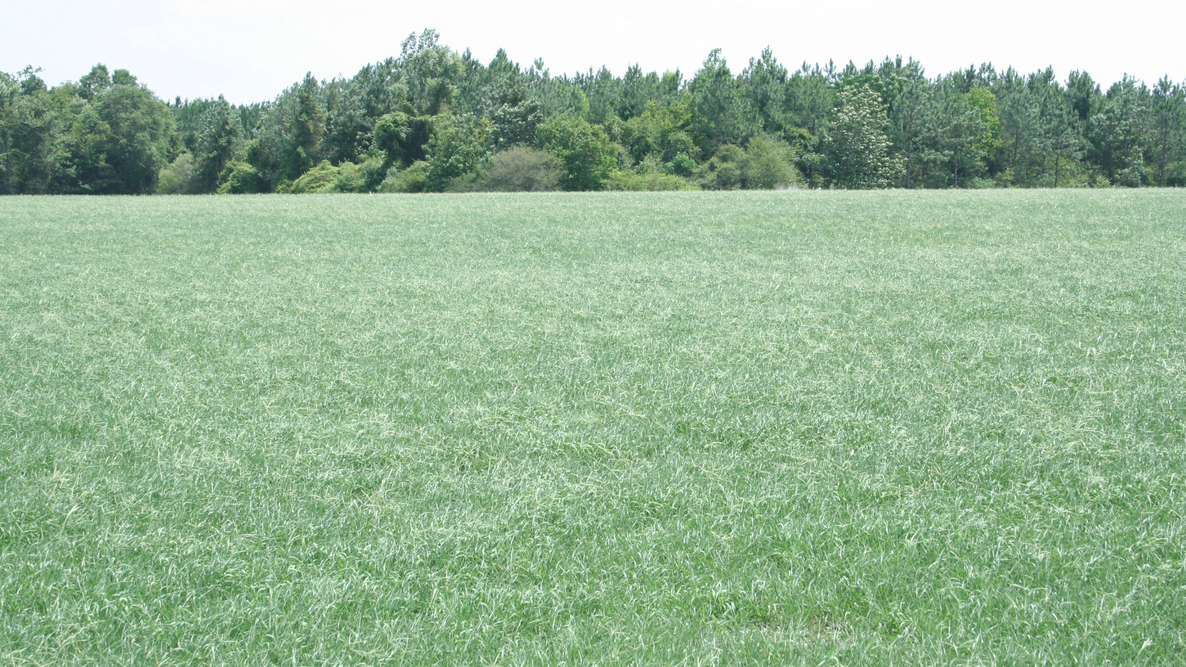
Bahiagrass: How to Grow and Care for This Drought-Tolerant Lawn Grass

Bahiagrass mowed
Photo Credit
Extension.uga.edu
Botanical Name
Paspalum notatum
Plant Type
Sun Exposure
Soil pH
Bloom Time
Flower Color
Hardiness Zone
Subhead

A hardy Southern grass with pros and cons

Written By: Samantha Johnson Author and Gardening Contributor

Thinking about planting bahiagrass? This tough, drought-tolerant grass is a popular choice for Southern lawns—particularly in sandy or low-fertility soils where many other grasses struggle. However, it’s not suited for everyone. This guide will help you determine if bahiagrass is right for your yard and provide tips on planting, growing, and care.

Getting to Know Bahiagrass

Bahiagrass (Paspalum notatum) is a warm-season perennial native to the Southern U.S., thriving in USDA Zones 7 through 11. Commonly found in home lawns, roadsides, and pastures, this deep-rooted, sod-forming grass grows 6 to 24 inches tall if left unmowed. It is highly adaptable, tolerating drought, poor or sandy soils, and partial shade.

Known for its low-maintenance requirements, bahiagrass performs best in hot, dry climates with minimal input. While some homeowners find its texture coarser and appearance patchier compared to finer turfgrasses, it excels as a dense, drought-resistant lawn that withstands heavy foot traffic. However, bahiagrass produces a prolific number of seedheads, which can create a messy, uneven look if the lawn is allowed to go to seed without regular mowing.

To maintain a healthy, tidy lawn, regular mowing is essential—without it, bahiagrass can become coarse, patchy, and overrun with seedheads. If you prefer a manicured, carpet-like lawn, bahiagrass may not be the best fit. But for water-wise, resilient yards that demand less care, it remains an excellent choice. Learn about other types of lawn grass.

Why is it Called Bahiagrass?

Bahiagrass is native to South America and is said to be named for the state of Bahia in Brazil. The word bahia is Spanish for bay

What Does Bahiagrass Look Like?

  • Bahiagrass forms a thick, somewhat coarse lawn by spreading through underground rhizomes and, to a lesser extent, stolons. Over time, this growth habit creates a dense mat that helps crowd out weeds.
  • Its blades are smooth on both sides, about ¼ inch wide, and taper to a blunt point—giving them a thick, stocky appearance. The grass typically appears light green, though some varieties are darker.
  • If left unmoved, bahiagrass produces distinctive Y-shaped seed heads with dark purple, feathery anthers. To keep your lawn neat and help minimize reseeding, it’s important to mow regularly—ideally before the seed heads appear—and maintain a mowing height of 2.5 to 3 inches. This simple care step can make a big difference in managing bahiagrass growth. Learn more about controlling bahia grass.
Bahiagrass or Paspalum notatum lawn with seedheads
Bahiagrass displaying its characteristic seedheads. Regular mowing prevents excessive seeding. Credit: Doikanoy

Planting

Bahiagrass is typically planted from seed. Sod is another option when it can be found locally, but that is somewhat uncommon. Seed is most often used. Bahiagrass is thought to be more reliable than Bermudagrass.

When to Plant

  • Plant in the spring. Aim for early spring in higher elevations where moisture may drain quickly, and late spring for lower areas that collect water.
  • Waiting too long to plant can mean your bahiagrass seedlings will struggle to compete with other plants.
  • In some regions of Georgia it’s possible to plant in the fall.
  • Germination for bahiagrass tends to be a slow process; it can take several weeks. Germination speed and germination rates vary by cultivar, but some have a germination rate of only 50 to 60 percent, according to the University of Georgia

How to Plant

  • You can use a lawn seed driller, which actually pushes the seeds into the ground to the desired depth (sow seeds ¼- to ½-inch deep), or you can broadcast the seeds and lightly cover them with soil.
  • The University of Georgia Extension recommends about 12 pounds of seed per acre when drilled, and about 15 pounds per acre when broadcasted. Follow the directions for your specific variety.
  • You can try a no-till method for planting, but you may need to increase your seeding rate.
  • More controlled planting surfaces can be obtained by killing all the weeds in the area and creating the grade you want for your lawn; this can be helpful for new home builds to direct water away from the building.
  • Try to keep competition from weeds and other grasses under control while your bahiagrass germinates.
  • Water well during the seed’s initial growth, but even still, it doesn’t have to be excessive; aim for an inch a week or so.
  • Because of its deep roots, bahiagrass excels at erosion control! People use it around the banks of ponds or on farm fields for these purposes.

Growing

Bahiagrass is popular for lawns specifically because it’s easy to grow and low maintenance.

  • Plan on a mowing schedule of once every one to two weeks.
  • Bahiagrass can be kept slightly long, +/- 3 inches.
  • Its excellent root system ensures that bahiagrass has good drought tolerance.
  • Because of this, the watering needs of an established bahiagrass lawn are minimal. Figure on half an inch of water or so if the blades start to look tired. Otherwise, they’re probably good.
  • That said—bahiagrass will actually grow in poorly draining soils, too!
  • It’s okay with sandy soils, too, thanks to those terrific deep roots.
  • Bahiagrass prefers acidic soil with a pH of approximately 5.5 to 6.5.
  • Full sun is best for bahiagrass, but a small amount of shade will be okay.
  • Bahiagrass is generally pretty low maintenance, although it certainly responds well to nitrogen fertilizer; you can very occasionally apply this if you’d like more vigorous growth.
  • Bahiagrass isn’t the most durable lawn out there, but it’s quite adequate—don’t feel shy about getting out there and using it. Foot traffic is no big deal for bahiagrass.
  • Established bahiagrass likes it warm—in the 80s and beyond with high humidity is just fine.

Pests/Diseases

Bahiagrass is known to be remarkably free of issues with pests or diseases.

Wit and Wisdom

  • The “Florida Agricultural Experiment Station” first imported bahiagrass into the U.S. in 1913.
  • Brazil is the grass’s native home, where it’s primarily a pasture grass.
  • No one seems to agree if the bahiagrass seed heads look more like a ‘Y’ or a ‘V’!
  • You’ll find bahiagrass used in Alabama, Florida, Georgia, Louisiana, Mississippi, South Carolina, and Texas. According to the Alabama Cooperative Extension System, about 1 million acres of land in Alabama are planted in bahiagrass.

About The Author
Samantha Johnson

Samantha Johnson

Author and Gardening Contributor

Samantha Johnson is an award-winning author and gardening expert with over 20 years of experience cultivating heirloom vegetables and sharing her passion for rural living.She combines her deep knowled...