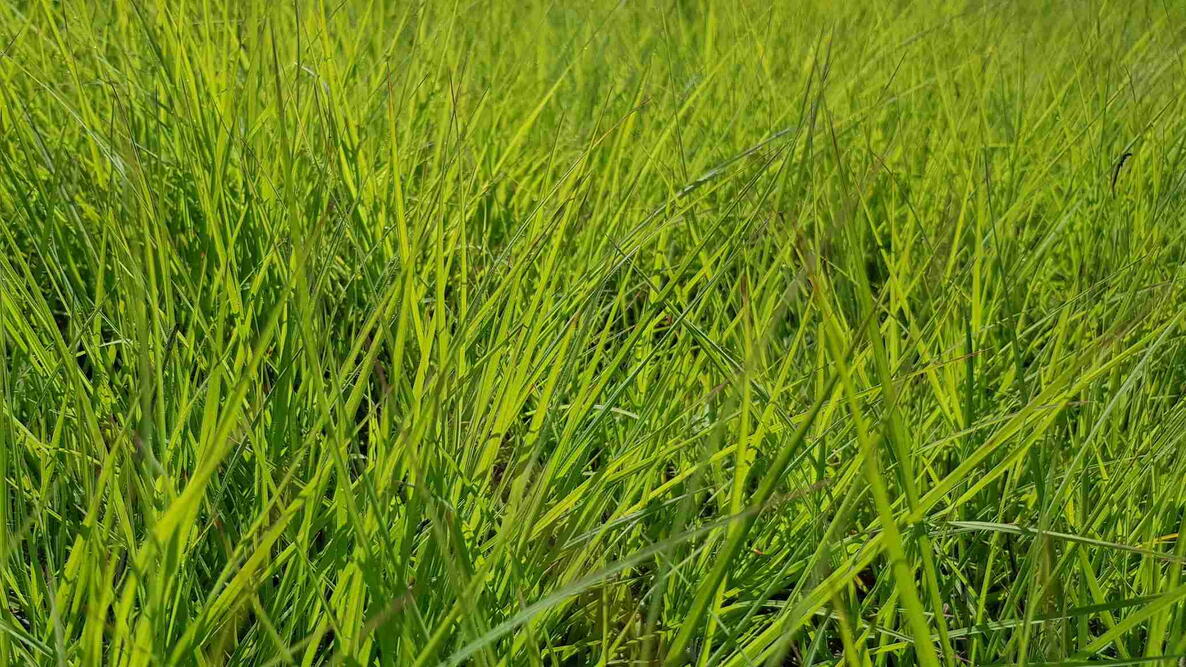
Caption
It’s easy to see why people love the beauty and vibrant color of perennial ryegrass.

Growing
Once your lawn is established and thriving, proper care will keep it lush and resilient all season long. Here’s what you need to know:
Mowing
Maintain a mowing height between 1½ to 3 inches. Because it grows in clumps, leaving it taller helps conceal bare spots and encourages thicker growth.
Frequent mowing promotes a denser, healthier turf, but avoid cutting more than one-third of the leaf blade at a time to reduce stress.
Thatch buildup is rare, so dethatching is generally unnecessary.
Fertilizing
- Regular fertilization is key. Nitrogen-rich applications during the growing season help keep the grass green and vigorous.
- Depending on your lawn’s needs, fertilize anywhere from twice a year (spring and fall) to monthly during peak growth.
- Without sufficient nutrients, it may enter dormancy—even when conditions are favorable.
Watering
- Perennial ryegrass requires consistent moisture due to its relatively shallow root system and lack of drought tolerance.
- Aim for about 1 inch of water per week, adjusting for climate and rainfall.
- Water deeply and infrequently once established to encourage root growth.
- Keep the topsoil moist during germination.
Its durability makes it a favorite for high-traffic areas like golf courses and athletic fields.

Types
Perennial ryegrass comes in many cultivars, each bred for specific traits like color, disease resistance, and climate adaptability. With so many options available, it’s a good idea to check with your local Extension office for recommendations tailored to your region.
Here are a few popular perennial ryegrass varieties to get you started:
- ‘Elite’ — Known for its deep, dark green color and rapid germination, making it a favorite for quick lawn establishment.
- ‘Fireball’ — Valued for excellent cold tolerance, ideal for northern regions or areas with harsh winters.
- ‘Hattrick’ — A dense, disease-resistant variety often sold in a 50/50 blend with ‘Fireball,’ combining durability with winter hardiness.
Choosing the right cultivar can improve your lawn’s performance and longevity, especially when matched to your local climate and soil conditions.

More Like This




Comments