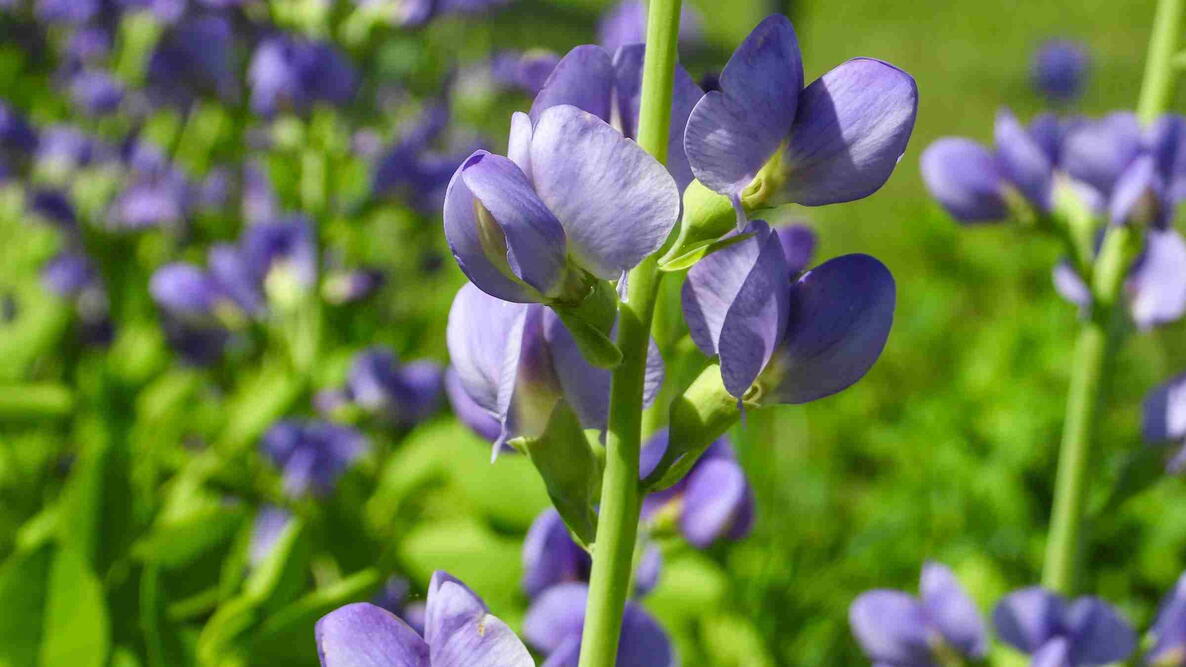
Caption
Baptisia australis (Blue Wild Indigo), native North American wildflower

It may be called “false” indigo, but Baptisia australis is the real deal when it comes to pollinator appeal, drought tolerance, and showstopping flowers. This ultra-low-maintenance perennial is a top pick for pollinator and native plant gardens, but it blends into ornamental flower beds and can be used in mass plantings too. Here are the basics on how and when to plant blue false indigo, plus care tips and related plants that you may want to grow as well!

Also known as wild blue indigo, blue false indigo produces brilliant blue flowers from spring through early summer and silvery-green leaves that keep gardens colorful even when its flowers fade. Other varieties of false indigo are equally eye-catching but may bloom in different shades of yellow, purple, or white. That said, you’ll need to be patient with false indigo as it’s a slow grower and can take 3 to 4 years to bloom when grown from seed or 1 to 2 years from nursery-started plants.
Once established in the garden, false indigo is drought-tolerant and resilient; it usually reaches around 4 to 6 feet in height. Beyond its pollinator-friendly flowers, false indigo also serves as a host plant for butterflies such as the wild indigo duskywing, the orange sulphur, and the frosted elfin—and its seed pods feed wild birds too. Just keep in mind that baptisia plants are toxic to pets and should be kept well away from livestock grazing areas!
Growing
Baptisia plants grow well with many other perennials that love sun and well-draining soil. For starters, try pairing baptisia with black-eyed Susan, coneflowers, alliums, lady’s mantle, salvia, yarrow, goldenrod, or ornamental grasses. Then, follow these simple care tips to make sure your baptisia blooms bountifully for many seasons to come!

Light
False indigo loves sun—and lots of it! Growing these plants in locations that receive at least 6 to 8 hours of direct light per day will boost blooming and make sure baptisia stems don’t get floppy. It can also reduce the likelihood of mildew issues.
Water
New plantings of baptisia should be watered regularly with about 1 inch of water per week. However, these plants are drought-tolerant and should be content with rainfall alone once established.
Fertilizer
In general, false indigo does not need fertilizer. In fact, these plants thrive in poor soil and can develop weak or floppy stems if they’re grown in rich earth or fertilized too much.
Humidity
Dry or humid air is equally fine for baptisia as long as these plants are properly spaced out. Growing baptisia too close together can increase the chances of mildew issues.
Seasonal Care
Cold hardy and resilient, baptisia does not need special winter care and should overwinter with ease in growing zones 3 and up. To keep your plants looking trim, prune old stems low to the ground in spring before your plants start to produce new lush growth. Autumn pruning works too; however, pruning baptisia in spring will allow you to enjoy its attractive seed pods through winter and help pollinators that may overwinter in baptisia stems.
Baptisia plants don’t need deadheading, but you can prune their stems back immediately after the plants finish flowering if the plants start to droop. Installing a hoop or tomato cage around floppy plants can help keep stems upright too.

How to Propagate False Indigo
Propagating false indigo from stem cuttings is the easiest and fastest way to create new baptisia plants. If you don’t mind waiting a few years for your plants to flower, you can also collect false indigo seed pods in fall and grow new plants from seeds instead. Root division, however, is not recommended with these plants, as their long taproot makes them hard to divide!
Stem Cutting Propagation
- From April to early May, take 6-inch-long cuttings from healthy baptisia stems. Each cutting should have a leaf bud or node at the base and at least two leaves sprouting from the top.
- Dip the cut stem end in rooting hormone and then plant the cutting in pots filled with pre-moistened seed starting mix or potting soil. Make sure the bottom leaf node is completely buried and the leaves are above the soil line.
- Cover the cuttings and pots with a clear plastic baggie, and move them into a spot that receives bright, indirect light.
- Water the cuttings just enough to keep the soil evenly moist.
- After 8 weeks, the cuttings should root and produce new growth. When this occurs, remove the clear baggy and continue to water and care for the plants until they’re large enough to go in your garden.
- Make sure to space seedlings out properly when moving them outside!
Seed Propagation
- Collect seed pods from baptisia plants in fall. Allow them to dry indoors for several days, crack the pods open, collect the seeds, and discard the pods.
- For fall plantings, simply sow the seeds outdoors into a prepared planting spot in late fall. Lightly cover the seeds with no more than ¼-inch of compost or garden soil.
- For spring plantings, lightly scarify the seeds by rubbing them on sandpaper and cold stratify the seeds in your fridge for 30 days. Then, soak the seeds in water for 24 hours and plant them ¼-inch deep in pots filled with seed starting mix. Move the seeds under a grow light, water regularly, and harden off and transplant your seedlings outdoors after your last frost date of spring.
Bonus: If you don’t remove seed pods in fall, baptisia plants will slowly self-sow, too!
Types
True blue false indigo plants produce indigo-colored flowers. However, there are some attractive hybrid varieties of false indigo that produce purple or yellow blooms, such as ‘Carolina Moonlight’ and ‘Twilite Prairieblues’. Beyond these hybrids, there are also several closely related species of false indigo that are worth growing—especially if you’re looking for native, pollinator-friendly plants!
- Baptisia tinctoria: Known as yellow wild indigo, this false indigo variety is native to the East Coast and Midwest and produces bright yellow flowers in late spring through early summer. It’s also a host plant for a number of butterfly species, like the Pearl Crescent.
- Baptisia bracteata: Also called false cream indigo, this compact baptisia is native to the East Coast, produces buttery-yellow flowers, and stays under 2 feet high.

More Like This

Comments