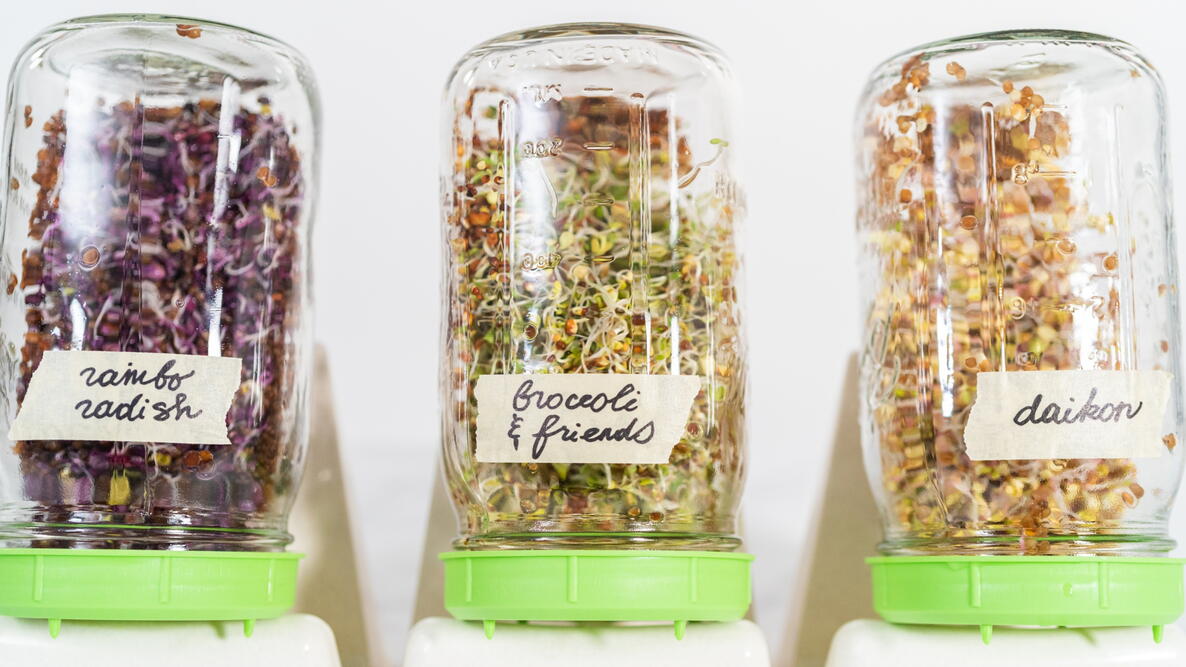
Caption
Day 5. Growing organic sprouts in a mason jar on the kitchen counter.

Fresh, crunchy, and ready to eat in just a week, sprouts are one of the easiest and healthiest foods you can grow at home. With nothing more than a mason jar, water, and seeds, you can enjoy nutrient-packed sprouts year-round. Here’s a simple, beginner-friendly guide to growing sprouts in a jar—no garden required.
What Are Sprouts?
Sprouts are young seedlings harvested just days after germination, when they are packed with nutrients and easy to digest.
Before a plant “grows up,” it starts as a sprout. Eating 5- to 7-day-old seed sprouts of beans, broccoli, and other vegetables is incredibly good for you—even more nutritious than the full-grown plant.
Bean sprouts (also called mung bean and soybean sprouts) have long been popular in many Asian cuisines or as a filling. They are full of health-giving nutrients, protein, and fiber. Extra crunchy, they taste great stir-fried with finely chopped garlic, ginger, a little soy sauce, and a splash of sesame seed oil.
Broccoli, cauliflower, radish, cabbage, and other cruciferous vegetables are also great as sprouted vegetables; in fact, many people who don’t like to eat these as full-grown vegetables do enjoy the sprouts, as they don’t have a bitter taste and are slightly sweet.
Microgreens are different from sprouts. They are also tiny, but they are the immature greens of arugula, radish, basil, and other plant seeds; their tiny leaves emerge within 10 to 20 days. Our colleague Robin did a test growing both microgreens and sprouts!
| Feature | Sprouts | Microgreens |
|---|---|---|
| Grow time | 5–7 days | 10–20 days |
| Light needed | Minimal | Moderate |
| Growing medium | None | Soil or mat |
| Harvested | Seed + shoot | Stem + leaves |
| Beginner-friendly | Very | Moderate |
Sprouts grow much faster, making them the ultimate convenience food! Just follow these directions for the easiest way to grow sprouts at home.
How to Grow Sprouts in a Jar in 7 Simple Steps
- Gather your materials. Aside from the seeds, there’s a good chance you’ve already got most of the materials somewhere in your home. Seeds can be ordered online or purchased at your favorite local garden shop.
- Seeds (popular choices include alfalfa, broccoli, radish, soy, mung bean, and lentil)
- Quart-size mason jar
- Muslin, cheesecloth, or other fine mesh
- Rubber band
- Water
- Soak your seeds. Add a tablespoon of seeds to the jar and cover with a couple of inches of cool water. Cover the jar with a piece of muslin or cheesecloth and secure it with the rubber band. Let the seeds soak overnight.
- Drain and rinse. In the morning, turn the jar over to drain the water through the cloth. Remove the cloth, rinse the seeds with fresh, cool water, and drain one more time.
- Pick a good place. Give the jar a little shake to spread the seeds out, then set it on its side in a cool, dark place. Tip the jar to allow excess water to drain out and air to flow in. (Try propping it up in a bowl or dish drainer on a folded towel to keep it in place.)
- Keep the seeds moist. Each morning and evening, rinse and drain the seeds to keep them moist, then return the jar to its spot.
- Add sunlight. In 2 to 3 days or so, you’ll notice tiny light yellow leaves beginning to sprout. Move the jar to a place that gets indirect sunlight (direct sunlight will heat up the jar too much), and continue to rinse the sprouting seeds a couple of times a day.
- Harvest and enjoy. Your sprouts are ready to eat when the leaves turn green and grow to the size you want—this usually takes around a week, give or take a couple of days, depending on the kind you’re growing. Rinse them one final time and either pat them dry with a clean towel and store them in a container in the fridge…or go ahead and eat them!

If you are a true sprout-eating fan, consider gathering some additional jars and starting a new crop every few days. That way, you’ll always have fresh sprouts on hand.
Here’s another way one of our colleagues grows bean sprouts—using a juice carton.
And if growing sprouts has whetted your appetite (literally!) for indoor gardening, check out How to Grow an Indoor Vegetable Garden.
Frequently Asked Questions
How long do sprouts take to grow?
Most sprouts are ready to eat in 5 to 7 days.
Do sprouts need sunlight?
Only indirect light is needed near the end of growth to green the leaves.
Are homegrown sprouts safe to eat?
Yes, when grown with clean equipment and rinsed regularly using sprouting-safe seeds.
What seeds sprout best for beginners?
Alfalfa, mung bean, lentil, radish, and broccoli are easy and reliable.
How long do sprouts last in the fridge?
Properly stored sprouts last 3 to 5 days in the refrigerator.
Once you try growing sprouts, you’ll never go back to store-bought. Start a new jar every few days and enjoy fresh, homegrown crunch year-round!

More Like This

Comments