
Planting
Where to Plant Bougainvilleas
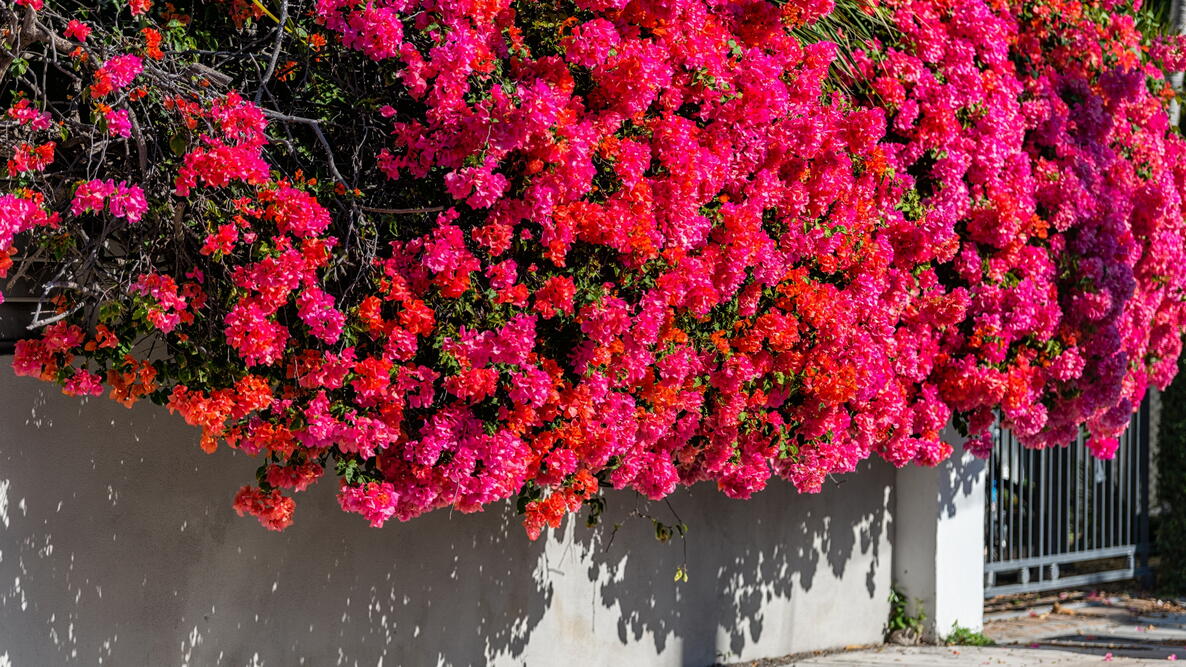
Bougainvilleas like sunlight and lots of it. This plant also likes it dry, so the planting location must drain well. Overwatering can actually inhibit blooming. Bougainvillea are not picky about soil pH.
Bougainvilleas have long, narrow thorns used to climb, so avoid planting bougainvillea in places where the vines and pedestrians or small children might tangle. Wear thick leather gloves and handle the vines with care.
Also, plant bougainvillea 6 to 9 feet apart from each other and other plants to allow them the room they need to grow.

When to Plant Bougainvilleas
Plant in spring, well after all danger of frost has passed. Anything below about 30°F will likely cause damage or even kill it. If you are planting it in a garden bed, spring planting will let it settle in before the high summer heat.
Remember: If you live in USDA Zone 8 or cooler, you’ll need to grow bougainvillea in a container. Place outside in spring well after the last spring frost. You’ll need to bring it inside for the winter, so choose a container that can be moved come fall.
How to Plant Bougainvilleas
- Bring your bougainvillea home and water it well while still in the container. Not only will the plant get a drink, but it’ll be easier to remove it.
- Take care when removing them from their original container. The roots are thin and easily damaged. Transfer it straight from the nursery pot to its final home.
- To plant in the ground, dig a hole about 12 inches deep. Mix in compost. Set the plant at the same depth as it was in its original container. After planting, add an inch or two of organic mulch, such as pine straw, keeping it away from the plant stems to avoid rot.
Container Planting
Bougainvilleas planted in containers need a well-draining potting mix that won’t hold on to water very long. Try using potting soil intended for palms or cacti.
Terra cotta is an excellent material for bougainvillea pots, as it dries more quickly than plastic pots, helping to keep the soil from remaining too damp for this arid-loving vine.
Growing
Besides a sunny spot with good drainage, your bougainvillea won’t need much else from you to cover itself with bright blooms every year. Note that the first season may not produce many blooms, but watch for blossoms from season two onwards.
- In the first growing season, water only to keep the soil slightly moist but not saturated. Once established, water deeply every 3 weeks or so; this plant would rather imbibe a few long drinks than many short ones.
- Each spring, apply an inch or two of compost (or a granular fertilizer) to the plant’s soil to keep up flowering—but no more than that, as excess nitrogen causes more leaf growth than bloom production.
- If your bougainvillea isn’t blooming, it could be either a lack of sunlight or overwatering. Check both.
- While able to climb up fences and arbors, or anything else, bougainvillea vines don’t have tendrils. You’ll need to help it and use soft but strong plant ties or strips of fabric to train the vine.
Pruning Bougainvillea
- Prune bougainvillea in the late fall or very early spring or when blooming is done. If you don’t prune, the vines will become unruly.
- Remove any rambling vines that have strayed too far. The plant will flower on new growth after it comes out of dormancy, so fall pruning eliminates removing future blooms.
- Remove dead or weak vines at any time of the year.
- Remember the thorns! Wear tough gloves.
Container Planting
- Bougainvilleas in containers may be fertilized twice per month during the growing season with a diluted general-purpose fertilizer when watering.
- Bougainvilleas in a container or basket need to be brought inside to overwinter if you live in an area where it freezes.
- Overwinter your bougainvillea in a sunny window, and keep it occasionally watered. It’s okay to prune it back before bringing it inside.
- In spring, gradually reintroduce it to the outdoors, provide some fertilizer, and reattach it to whatever structure you’d like it to climb, or treat it as a containerized shrub.

Types
- ‘James Walker’ will bloom nearly year-round in areas that don’t receive a frost. Blooms are pink-purple. Hardy to Zone 10 to 11.
- ‘California Gold’ is one of the most reliable yellow bougainvilleas.
- ‘Sundown Orange’ is hugely popular for its deep orange blooms that morph into coral hues as they age.
- ‘Barbara Karst’ is a red stunner that can get huge, with vines climbing as high as 40 feet.
- ‘Helen Johnson’ and ‘Pixie’ are dwarf varieties that will take on more of a shrub shape. They can be maintained under 3 feet tall and are sometimes trained as bonsai.

More Like This

Comments