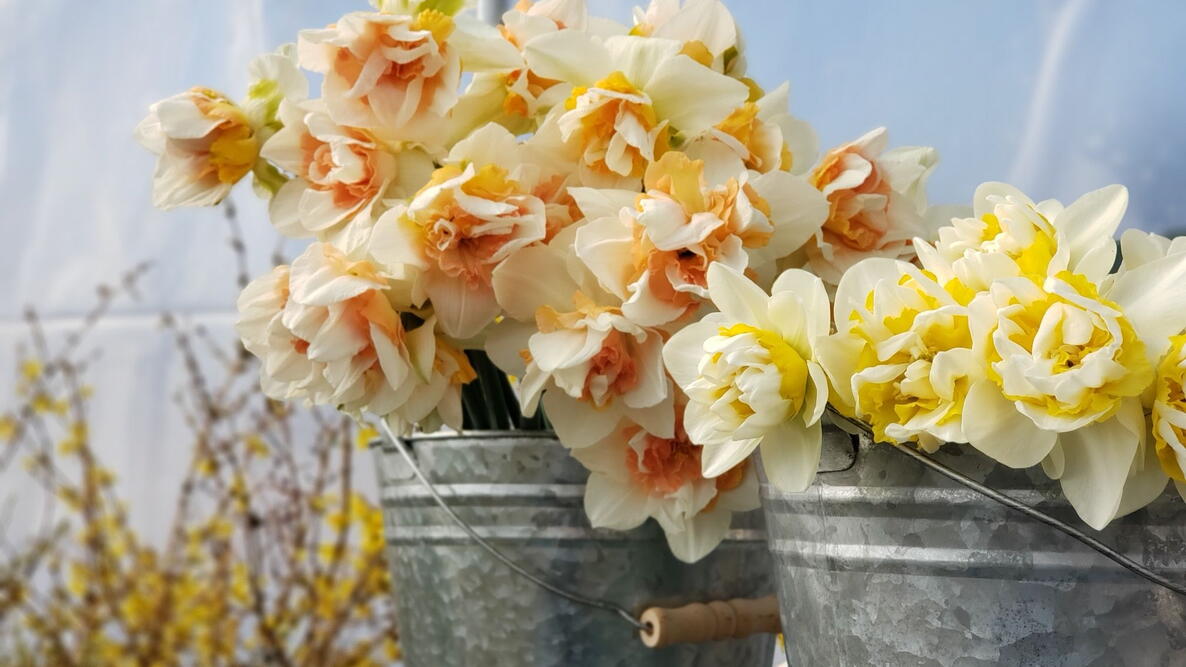
Caption
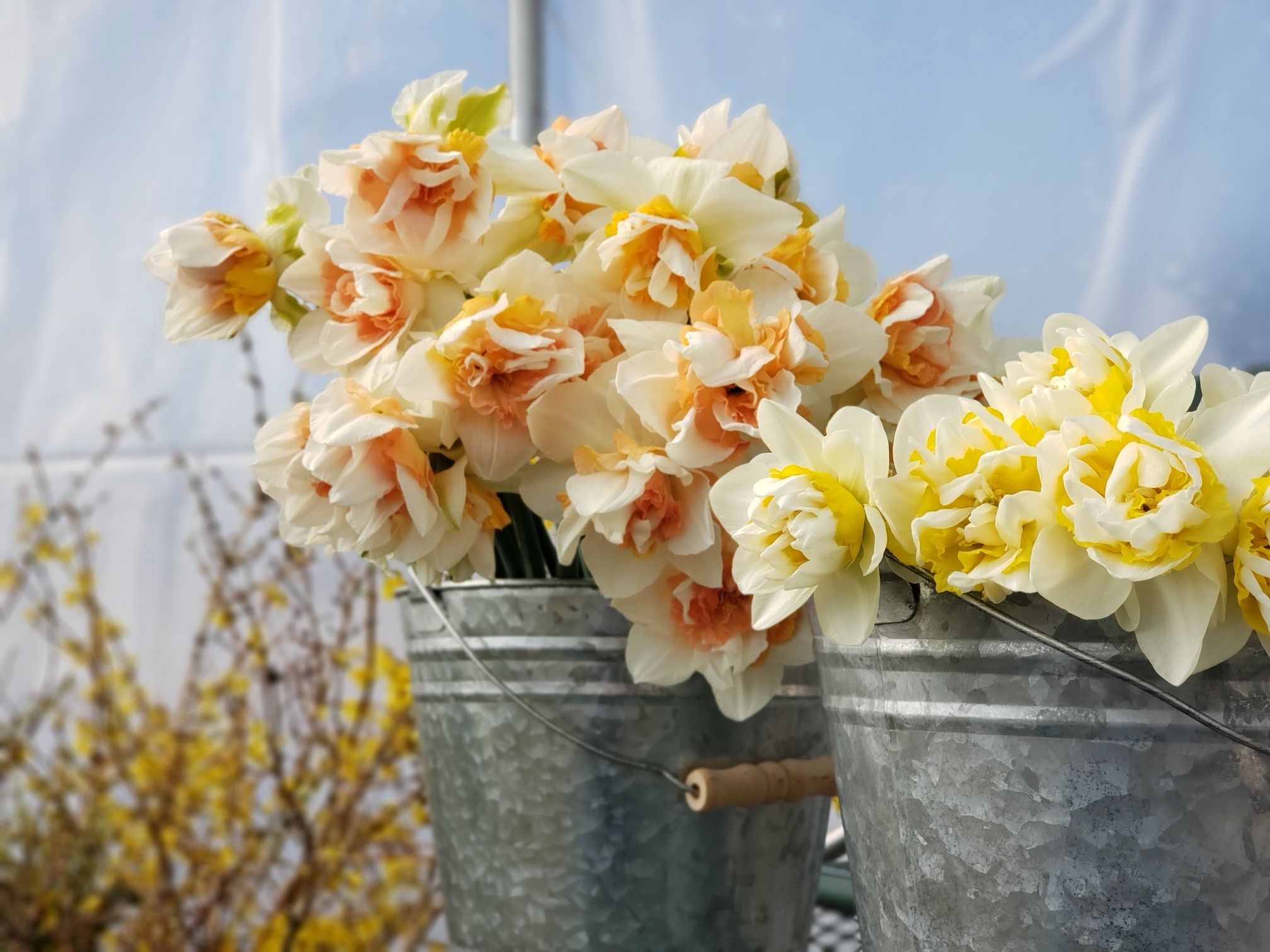
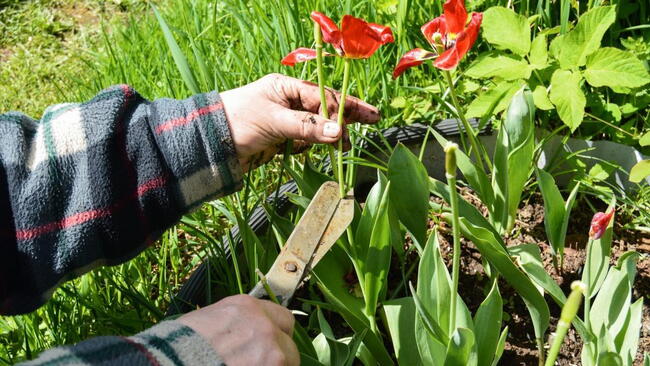
Narcissus flowers

Imagine a riot of colors, scents, and shapes bursting from every patio pot and garden bed—spring has arrived! Flowers aren’t just pretty faces; they’re tiny therapists, mood boosters, and hope-givers all rolled into one. From the first daffodil cracking through winter’s frost to a lavender-scented afternoon in your backyard, flowers remind us that life is full of beauty, renewal, and a little magic waiting to bloom.
Flowers Mark the Milestones of Our Lives
Special birthdays, anniversaries, births, and deaths or transitions into parenthood and marriage are all occasions marked with special flowers. A walk down the aisle is incomplete without a beautiful bouquet of flowers in hand. They become a fragrant talisman held close to bring good luck as we traverse over the thresholds in our lives. It doesn’t always require a major life transition either to experience or appreciate the value that a posy of fragrant flowers can provide. They can simply just make any moment that much brighter and memorable. Flowers are infused with such power that we keep them close during the vulnerable moments in our live.
Flowers As A Symbol of Unity
The “Power of Flowers” isn’t just a throwback to the tie-dye era of peace and love and nonviolence. Though I won’t discount the relevance of those values today or the need for them in our lives. What it reflects is that flowers can provide an important symbol of unity that helps gather a group of people and weave them together around a shared sense of purpose.
Each state, for example, has its own state flower, and a sense of pride is often associated with that flower. Often, the flower is chosen to represent the people or a meaningful value that relates to their combined history, such as resilience or longevity. A flower that has evolved to thrive within a particular landscape and weather pattern is a good symbol to claim as representation. New Hampshire’s state flower is Syringa vulgaris, Purple Lilac. After much debate, it was chosen for its beauty and its hardiness, and served as an appropriate reflection of a people who endure the harsh winters of the Northeast.
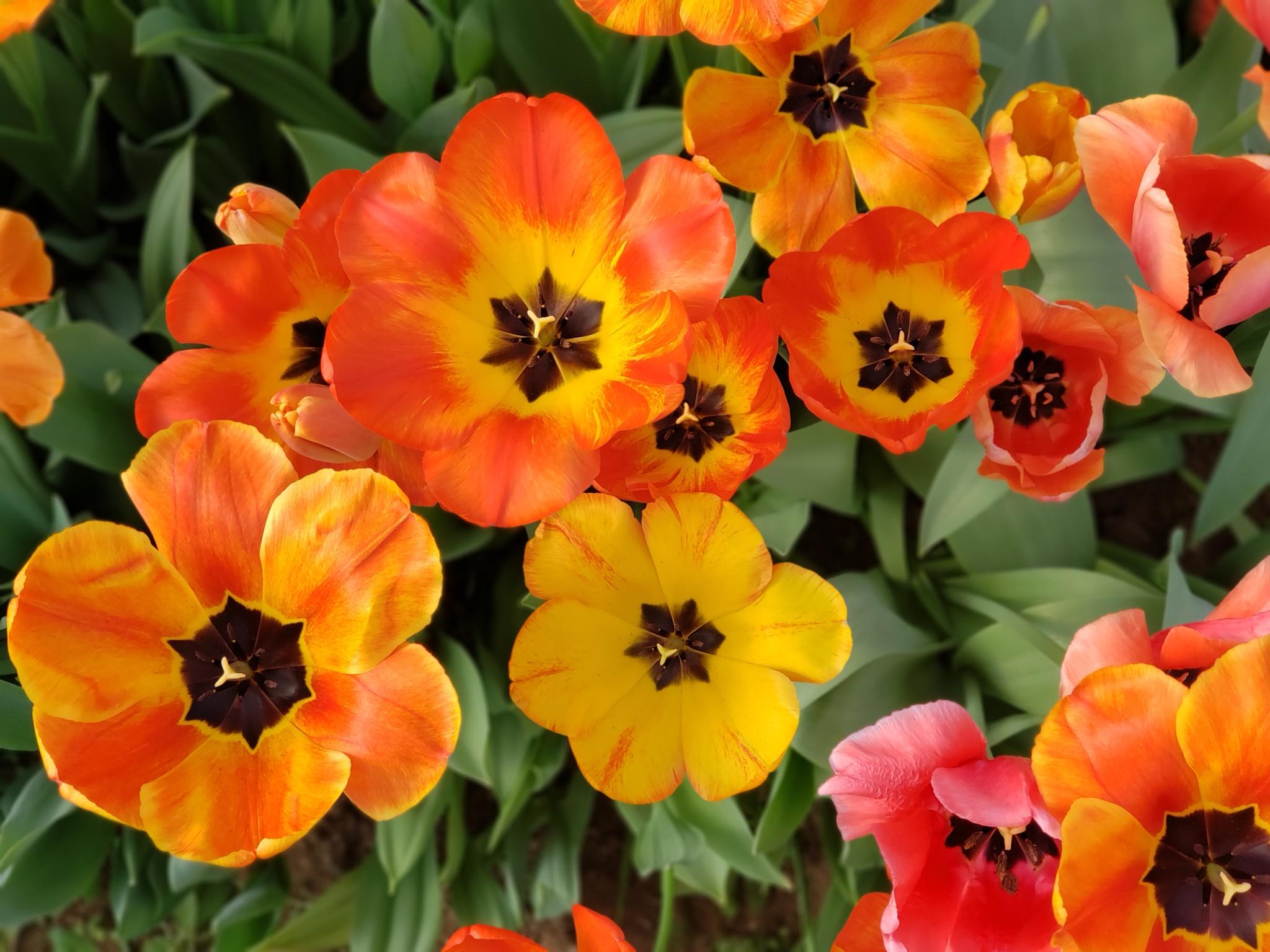
Flowers as symbols can convey a language all their own and sometimes it’s quite valuable. In fact, it was the humble Tulip, in the early 17th century, that stirred passions and created a buzz of buying and selling the heavily sought-after bulbs that eventually became known as “Tulipomania.” According to Mike Dash in his book by that name, the height of the mania united various Turks, Dutch, French, and others vying for relevance in the exotic-flower frenzy surrounding what would later become the first futures market in history.
Planting Flower Seeds Grows Hope
Winters can be very long, especially in northern climates. For months, the white and gray-covered landscape offers a beauty all its own, and colorful it is not. Green growth is at a standstill while Mother Nature takes a much-needed rest. The first flowering signs of spring to show in the landscape here can include yellow forsythia, fragrant daffodils, and tri-petaled trillium. After almost 6 months of whiteness, anything yellow, pink, purple, peach, or green is a very welcome sight. To watch a daffodil bud crack through the thawing earth and make daily progress towards blossoming into a fragrant bloom can be thrilling. Planting a small handful of seeds into the soil and awaiting their emergence and growth fills us with anticipation and a sense of hope.
”Though I do not believe that a plant will spring up where no seed has been, I have great faith in a seed. Convince me that you have a seed there, and I am prepared to expect wonders.”
–Henry David Thoreau
Flower Fragrance Roots Us in Relaxation
Scent is the most direct of all of our senses. When we pick up a daffodil, violet, or a sprig of lavender and take a whiff, the fragrance molecules enter our nasal cavity and are carried from the olfactory bulb directly to the limbic system, that mysterious and primal section of our brain where memory, emotion, and feelings live. It completely skips the chatty part of our minds.
In this way, the fragrance of a flower can immediately transport us back to childhood memories of being in the garden with grandma or walking along a border of lilac bushes. With each breath we take, we inhale and each inhalation becomes a scent carrier. Working outdoors amongst fragrant flowers or simply strolling past flowers set upon the kitchen table can provide an opportunity to use the carrying power of scent to root feelings of calm, relaxation, joy and peace deep within. In her book, A Natural History of the Senses, Diane Ackerman describes this,
”Unlike other senses, smell needs no interpreter. The effect is immediate and undiluted by language, thought, or translation. A smell can be overwhelmingly nostalgic because it triggers powerful images and emotions before we have time to edit them. What you see and hear may quickly fade into the compost heap of short-term memory, but, as Edwin T. Morris points out in Fragrance, “there is almost no short-term memory with odors. It’s all long-term.”
Each spring, I look forward to sitting next to the patch of daffodils, the flower of renewal and new beginnings, just to take in their airy, jasmine- and vanilla-tinged, sweet scent. I encourage you to try this and, as you breathe them in, give yourself a few quiet moments to breathe deeply and calmly, trusting that as you do, you are making future memories via scent that will root future you in relaxation.
Flower Beauty is a Revolution
Flowers stir our sense of beauty, and oh, how we desperately need more beauty in our lives. It doesn’t take a scientific study to show that fresh flowers around the home and workplace greatly improve our moods and soothe our anxiety and stress.
Flowers can increase levels of positive feelings with the same visual features that attract a bee to the healthiest bloom for its nectar or pollen. Seeking out beauty is an act of evolution and is based on survival. According to Michael Pollan in his book, The Botany of Desire, “Through their colors and symmetries, through their most elemental principles of beauty (that is, contrast and pattern), flowers alert other species to their presence and significance. Walk among them, and you see faces turned toward you (though not only you), beckoning, greeting, informing, promising—meaning.” To spend even the briefest moments appreciating the colors, shapes, fragrance, and often imperfect beauty of a bloom is to see for a moment a reflection of the beauty of life.
Everything that slows us down and forces patience, everything that sets us back into the slow circles of nature, is a help. Gardening is an instrument of grace. –May Sarton
More Flowers, More Food
A flower power garden that helps out the butterflies, birds, and bees whenever possible is being a good steward of nature. Different pollinators prefer different plants, and having a variety that blooms throughout the length of the season can offer them the variation they need to thrive. These little buzzing dynamos become the carriers of pollen from one plant to the next, and this work of diligence is what helps our fruit and nut trees, flowers, and vegetables to reproduce and produce. According to the Pollinator Partnership, one out of every three bites of food we take is thanks to the industriousness of these small yet mighty flower lovers.
Learn more about plants that attract pollinators in your zone.
And, adding flowers amongst your vegetables has the added benefit of attracting the predators that will feed off the pests attacking your garden. It is a more-is-less type of situation. More of the good guys and fewer of the pests. Providing flowers ultimately helps the pollinators, which in turn helps to ensure that we have food to eat.
So what are you waiting for? Grab a packet of seeds and sow a flower-power garden full of fragrant peace, colorful beauty, and inspiring hope!
Getting Started with Flower Gardening
Building a Raised Flower Bed Garden
Choosing Flowers
Types of Flower Gardens
Growing Flowers in Containers
Spring and Fall Bulbs
Caring for Flowers
More Like This
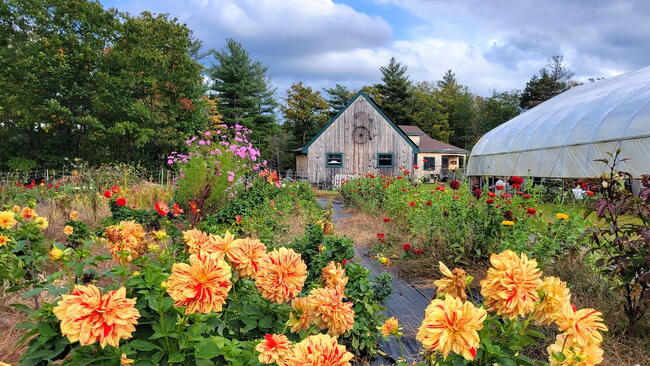

The double daffodil varieties in the picture are Erlicheer and Replete. I love that you have shared all of your extra bulbs and their beauty with you neighbors. Its a gift that keeps on giving. Happy Planting to you!

Comments