

Animal manure is one of the oldest and most effective natural fertilizers, helping gardeners build nutrient-rich, moisture-retaining soil. From backyard gardens to large farm fields, manure improves soil structure while adding essential nutrients plants need to thrive.
However, not all manure is the same. Different animals produce manure with varying nutrient levels, and factors like composting, age, and storage can significantly affect its benefits. Understanding the best types of manure—and when and how to use them—can make a big difference in your garden’s health and productivity.
Types of Animal Manure
The most common sources of manure are cows, horses, sheep, pigs, goats, and poultry. (Other animal waste is not recommended for use as manure or fertilizer today.)
Here are some values commonly assigned to different animal manures:
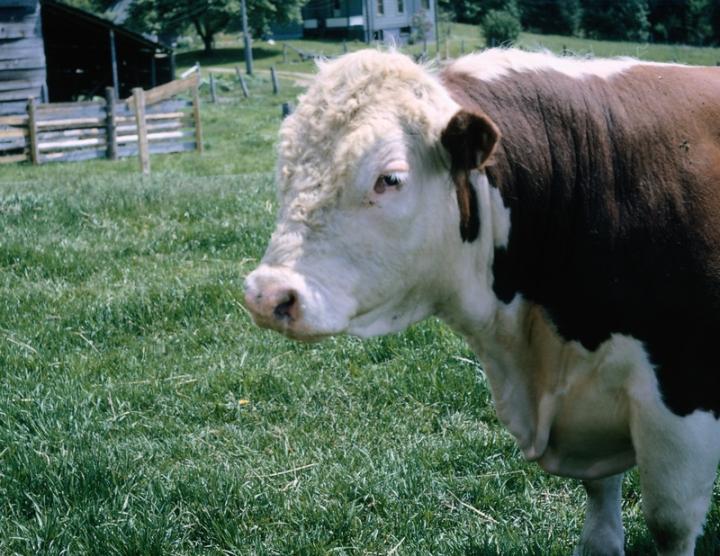
Cow Manure
Fresh cow manure, sometimes called moo doo, is about 17% organic matter, offers 0.3% nitrogen, 0.2% phosphorus, 0.4% potassium, and is 83% moisture. To add 0.2 pounds of nitrogen to a 100-square-foot garden patch, you would need to add 75 pounds of cow manure without bedding or about three 5-gallon bucketfuls. Composted manure has even less nitrogen, so you would need to add 200 pounds of it to have the same effect! Dried cow manure has much higher nutrient levels—2% nitrogen, 2% phosphorus, and 2.4% potassium—so you could use much less, roughly 10 pounds per 100 square feet.
Sheep Manure
Fresh sheep manure is about 32% organic matter, has 0.7% nitrogen, 0.3% phosphorus, and 0.9% potassium, and is 66% moisture. To add 0.2 pounds of nitrogen to our 100-square-foot garden, we would need to add 40 pounds of manure with no bedding or 50 pounds with bedding included. Dried sheep manure is 4% nitrogen, 1.4% phosphorus, and 3.5% potassium, so we’d need only 10 pounds per 100 square feet.
Chicken Manure
Fresh chicken manure, sometimes called hen dressing, is 25–45% organic matter. It has 1.1% nitrogen, 0.8% phosphorus, and 0.5% potassium and has a moisture content of 55–75%. Add 30 pounds of it, including bedding, to a 100-square-foot bed to get 0.2 pounds of nitrogen. Composted, it would have less nitrogen, so you’d need 70 pounds. Because it tends towards alkalinity, poultry manure is unsuitable for lime-hating (ericaceous) plants, such as rhododendrons, azaleas, camellias, blueberries, and heathers.
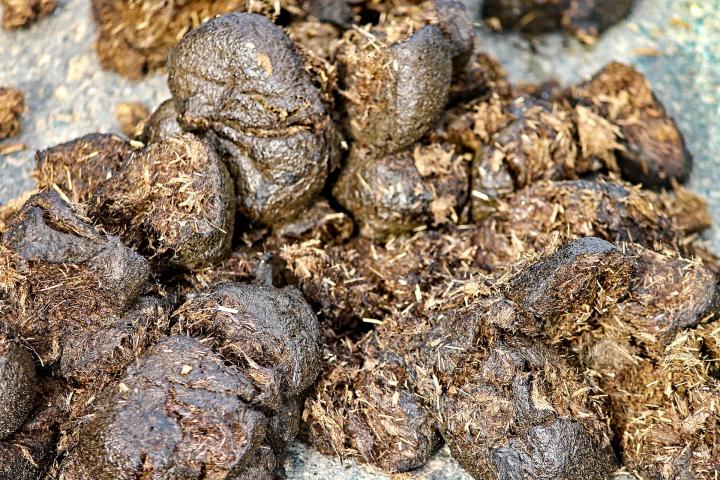
Horse Manure
Fresh horse manure, sometimes called road apples, is 24% organic matter, has 0.7% nitrogen, 0.3% phosphorus, and 0.6% potassium, and is about 75% moisture. To add 0.2 pounds of nitrogen to the 100-square-foot bed, we’d need to incorporate 65 pounds with bedding included.
Rabbit Manure
Fresh rabbit droppings, also known as bunny honey, are 33% organic matter, offer 2.4% nitrogen, 1.4% phosphorus, 0.6% potassium, and only 43% moisture. As little as 10 pounds would add 0.2 pounds of nitrogen to the garden.
Llama Manure
Fresh llama manure, also called llama beans, offers 1.5% nitrogen, 0.2% phosphorus, and 1.1% potassium. It would take 20 pounds to add 0.2 pounds of nitrogen to the 100-square-foot patch.
Nutrient Values of Common Manures
| Manure Type | Organic Matter (%) | Nitrogen (N %) | Phosphorus (P %) | Potassium (K %) | Moisture (%) | Amount per 100 sq ft |
|---|---|---|---|---|---|---|
| Cow (Fresh) | 17% | 0.3% | 0.2% | 0.4% | 83% | 75 lbs |
| Cow (Dried) | 60% | 2% | 2% | 2.4% | 10% | 10 lbs |
| Sheep (Fresh) | 32% | 0.7% | 0.3% | 0.9% | 66% | 40–50 lbs |
| Sheep (Dried) | 65% | 4% | 1.4% | 3.5% | 10% | 10 lbs |
| Chicken (Fresh) | 35% | 1.1% | 0.8% | 0.5% | 65% | 30 lbs |
| Chicken (Composted) | 50% | 0.6% | 0.5% | 0.4% | 30% | 70 lbs |
| Horse (Fresh) | 24% | 0.7% | 0.3% | 0.6% | 75% | 65 lbs |
| Rabbit (Fresh) | 33% | 2.4% | 1.4% | 0.6% | 43% | 10 lbs |
| Llama (Fresh) | 30% | 1.5% | 0.2% | 1.1% | 55% | 20 lbs |
Fresh vs. Composted Manure
Fresh manure is less than 6 months old and has not been composted. Never use it to side-dress your plants! It has high enough nitrogen and ammonia content to burn them. The plants are not able to make use of all of the nitrogen, and along with it potentially damaging them, it is also a waste, as most of it will be lost and can contaminate groundwater.
The USDA’s National Organic Program (NOP) has specific rules about the use of manure in organic gardening. Raw manure must be applied no less than 120 days prior to harvesting leafy crops or those that come in contact with the soil, such as lettuce, beets, carrots, and potatoes. For those that do not touch the soil, such as peppers or tomatoes, raw manure must not be spread less than 90 days before harvest.
For those like me who have a short growing season, this means fresh manure must be spread in the fall. Fresh manure also can contain harmful pathogens, including E. coli, salmonella, and listeria, along with lots of undigested weed seeds.
Bottom line: Either till raw manure into the soil at least a season before planting, or the manure must be composted fully and aged before you add it to the soil.
How to Compost Manure Safely
Composting manure will greatly reduce the risk of illness and can render the weed seeds incapable of germinating. If it doesn’t have a lot of bedding, such as straw, wood shavings, or sawdust mixed with it, add leaves, grass clippings, food waste, or newsprint to increase the ratio of carbon to nitrogen to between 25:1 and 40:1 for the best results. Make sure your pile reaches high temperatures (131° to 170°F) for at least a week, then add limestone, turn and aerate the pile, and let it cure for 2 to 4 months before using it to cut bacteria risks.
The nutrient values in the composted manure will be lower than in the fresh manure, but it will still supply your soils with organic matter, beneficial micro-organisms, and trace minerals, including calcium, boron, magnesium, copper, sulfur, zinc, and iron. To learn more about the safe use of manure in your garden, check out this tipsheet.
Frequently Asked Questions
What is the best manure for gardens?
The “best” manure depends on your needs. Chicken manure is the richest in nutrients, while cow manure is gentler and great for improving soil structure. Rabbit manure is also very nutrient-dense and easy to use.
Can I use fresh manure in my garden?
Fresh manure should not be applied directly to plants. It can burn roots and may contain harmful pathogens. It should either be composted or applied months before planting according to organic gardening guidelines.
When should I apply manure?
The best time to apply manure is in the fall or early spring before planting. This gives it time to break down and safely integrate into the soil.
What is the difference between fresh and composted manure?
Fresh manure is high in nitrogen but can be too strong for plants. Composted manure is safer, more stable, and improves soil without the risk of burning plants or spreading pathogens.
Is chicken manure safe for all plants?
No. Chicken manure is very high in nitrogen and can be too strong for sensitive plants, especially acid-loving plants like blueberries and azaleas if not properly composted.
How long does manure need to compost?
Manure typically needs 2–4 months to fully compost, depending on temperature, moisture, and how often it is turned.
Does manure improve soil quality?
Yes. Manure adds organic matter, nutrients, and beneficial microbes, improving soil structure, drainage, and moisture retention over time.
Can manure spread disease?
Yes, if it is fresh or improperly handled. Proper composting reduces harmful pathogens like E. coli and salmonella, making it safe for garden use.
See our guide about preparing your garden soil for planting!
And here’s a post specifically about preparing the soil in the fall for next year’s garden. Fall is the best time to improve your soil!
More Like This


Emu poop can indeed be safely added to your composting. In fact, emu manure tends to be lower in nitrogen than other bird manures, making it one of the few that can be added directly to the soil in many cases. I'd still get a sample tested before adding directly, but for composting, the emu's contributions will be a fine addition.

As long as they are well composted there should be no problem mixing them together. Just remember that too much of a good thing can be just as bad, if not worse, than too little. Be aware of what you plan to plant in that potting mix and make sure it needs all that goodness.
That is the theory Roger. The operative word here is properly. The pile needs to heat up enough to render those seeds incapable of germinating. Many gardeners, myself included, don't build a pile that gets hot enough.
- « Previous
- 1
- 2
- …
- 10
- Next »

Comments