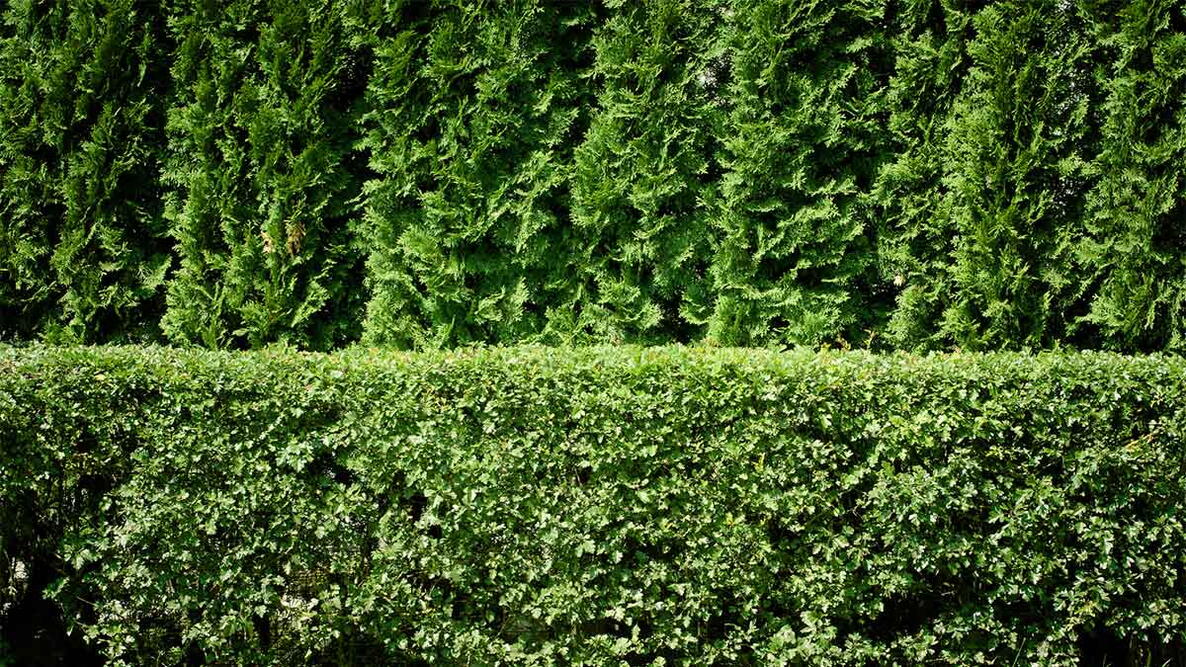

If an ugly view ruins the ambience of your outdoor space or noisy neighbors are spoiling your backyard, consider growing a living fence with fast-growing shrubs for privacy. A privacy hedge can block unwanted views, reduce noise, and create a beautiful natural barrier while improving your garden’s appearance.
A privacy hedge can be used to frame a nice view or mark a boundary, and it can be an effective windbreak or winter snow fence. There are many plants to choose from to form a natural-looking barrier that can not only block an unsightly view but also filter air pollution and absorb sound, reducing street noise.
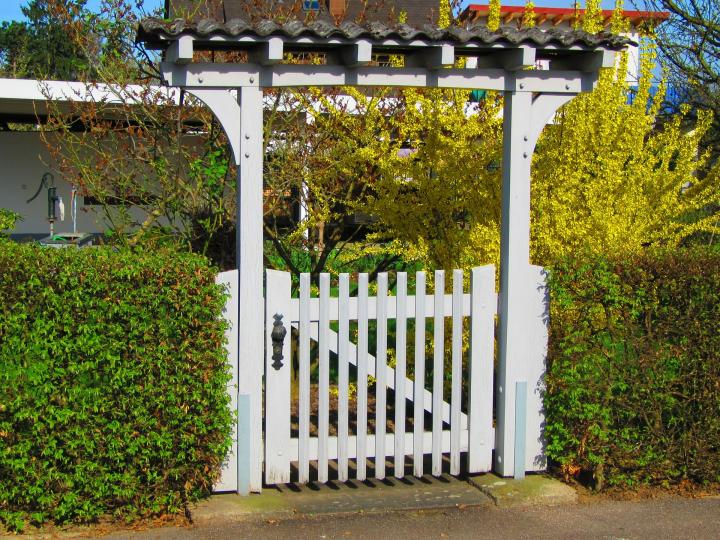
How to Choose Fast-Growing Privacy Shrubs
Before planting, think about your needs and the care each plant requires. For an effective hedge:
- Choose shrubs with dense foliage for full coverage.
- Consider the mature height and width to avoid gaps.
- Check that the plant is suitable for your USDA zone.
- Research invasive species in your region to avoid planting something you may regret.
Some plants once popular for hedges—Japanese barberry, burning bush, autumn olive, and privet—are now considered invasive in many parts of North America. Avoid these for a safer, low-maintenance hedge.
Evergreen Hedges for Year-Round Privacy
Evergreen hedges are the go-to for continuous coverage, noise reduction, and wind protection. They can be trimmed into formal shapes or left to grow naturally. Popular choices for general North America include:
- Arborvitae ‘Emerald Green’ (Thuja occidentalis) – Grows 15 ft tall and 4 ft wide. Perfect for tall, narrow privacy screens.
- Boxwood ‘Green Gem’ (Buxus) – Slow-growing but low maintenance, 3–4 ft tall and wide, resistant to winter burn. Thrives in well-draining soil with full sun to partial shade.
- Juniper ‘Blue Arrow’ (Juniperus scopulorum) – Tall and narrow (15 ft high, 2 ft wide), ideal for smaller spaces needing a vertical screen.
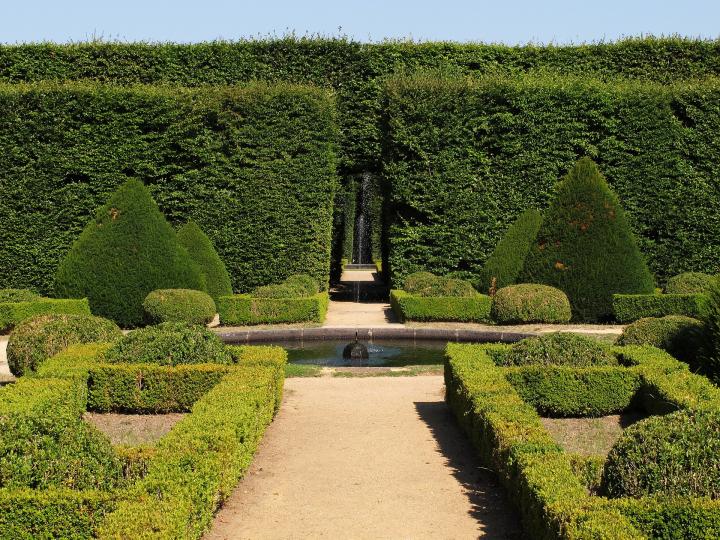
Deer tip: While no plant is completely deer-proof, boxwood, juniper, and hemlock resist deer browsing better than yews, arborvitae, or holly.
Deciduous Hedges for Seasonal Interest
Deciduous hedges lose their leaves in winter but can still provide dense screening when planted thickly. They also bring flowers, fragrance, and fall color. Recommended options:
- Forsythia – Bright yellow flowers in early spring; forms an impenetrable hedge when planted closely. Thrives in full sun to part shade.
- Weigela – Pink trumpet-shaped flowers, 4 ft tall and 5 ft wide; best in full sun to part shade.
- Lilacs (‘Miss Kim’ and ‘Palibin’) – Smaller, compact, and easy to clip. Prune after flowering to preserve next year’s blooms.
- Rose of Sharon – Plant 2–3 ft apart in a double row for a thick, late-summer-blooming hedge.
- Rosa rugosa – Thorny, dense, and generally deer-resistant. Perfect for keeping out intruders. (It is also edible!)
- Quince – Thick and thorny; produces fiery pink spring flowers whether trimmed or left natural.
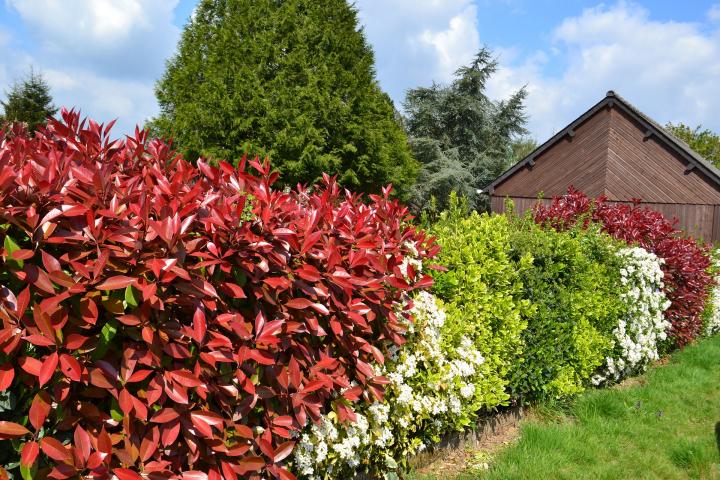
Edible Hedges
Who wouldn’t want a hedge that produces fruit too? These plants add edible benefits while functioning as a living fence:
- Highbush Blueberries – 3-season interest: flowers in spring, berries in summer, and fall color. Plant 3 ft apart for a 6-ft-tall dense hedge.
- Gooseberries & Currants (Ribes) – Resistant varieties are available. Plant 2–4 ft apart for a thorny, thick hedge in just a few years.
- Jostaberries – Cross between gooseberries and currants; thornless with larger fruit. Excellent for jam-making and backyard harvesting.
Fast-Growing Privacy Shrubs at a Glance
| Plant | Type | Height | Zones | Feature |
|---|---|---|---|---|
| Arborvitae | Evergreen | 15 ft | 4–9 | Tall, narrow screen |
| Boxwood | Evergreen | 3–4 ft | 4–9 | Low maintenance |
| Juniper | Evergreen | 15 ft | 4–9 | Narrow vertical privacy |
| Forsythia | Deciduous | 8–10 ft | 5–8 | Bright spring flowers |
| Lilac | Deciduous | 5–8 ft | 3–7 | Fragrance and blooms |
| Rose of Sharon | Deciduous | 8–12 ft | 5–9 | Late summer blooms |
| Highbush Blueberry | Edible | 6 ft | 3–7 | Fruit + fall color |
| Gooseberry / Currant | Edible | 4–6 ft | 2–7 | Thorny, edible hedge |
A Cut Above: Pruning and Maintenance
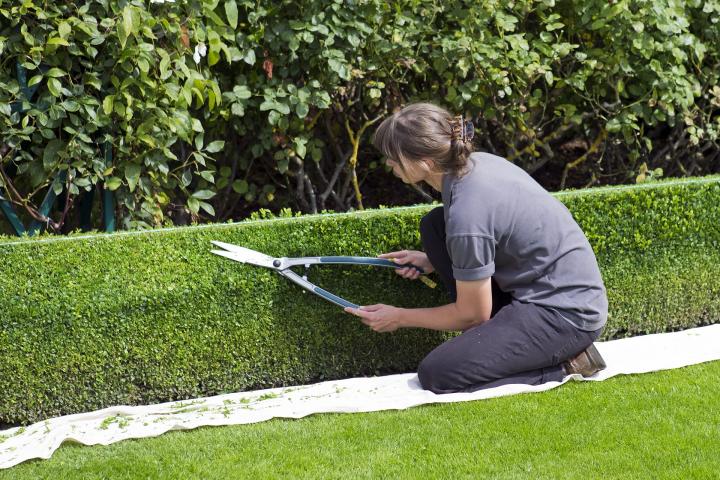
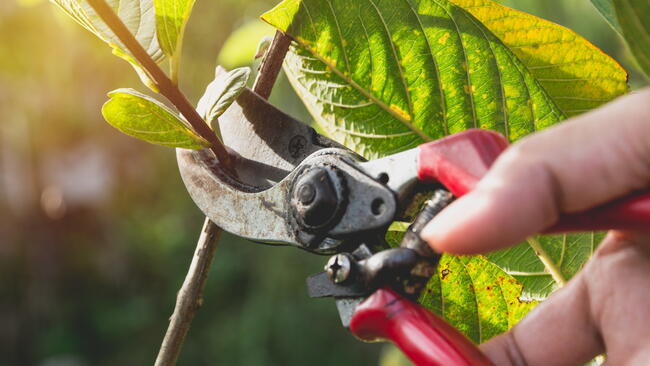
If you want a full, formal-looking hedge, you will have to do some pruning at least once each summer to encourage branching. When trimming, taper toward the top. Making the base wider than the top allows lower branches to get sunlight. Get creative with your pruning! I have seen several hedges pruned to a wave shape across the top that is quite eye-catching.

But don’t get too crazy or your yard could end up looking like this!
Frequently Asked Questions
What shrubs grow fastest for privacy?
Arborvitae, Forsythia, Juniper, and Rose of Sharon are among the fastest-growing options.
How long before a privacy hedge fills in?
Most fast-growing shrubs form a dense hedge in 3–5 years, depending on planting spacing and care.
Can edible plants work as a hedge?
Yes! Blueberries, currants, gooseberries, and jostaberries make excellent living fences while producing fruit.
Are evergreen or deciduous hedges better?
Evergreens provide year-round coverage and noise reduction, while deciduous hedges offer flowers, fragrance, and seasonal color.
A living fence made from fast-growing shrubs for privacy can transform your backyard into a peaceful, beautiful retreat while blocking noise, wind, and unsightly views. With the right plants and proper pruning, your hedge will provide years of natural protection and visual interest.
More Like This

Comments