
Peppers rarely have serious issues in the vegetable garden. However, recently, we had some pepper growing problems. I thought I’d share our experiences so that you may also benefit if your peppers run into trouble.
We have grown 10 to 20 different types of hot peppers every spring for many years with no problems whatsoever. Our plant customers appreciate the variety, ranging from mildly hot ‘Anaheim’ to super-hot ‘Trinidad Moruga Scorpion’. Then there are the “Russian roulette” peppers like ‘Shishito’ and ‘Padrón’ that like to surprise you with one in ten being hot while the rest are not.
Why Are the Leaves on My Peppers Curling?
Recently, I noticed some leaf curling on a few of the pepper plants—only the hot ones. Naturally I assumed it meant they needed more water. The next day they were worse, and more plants were affected. It was time to take a closer look.
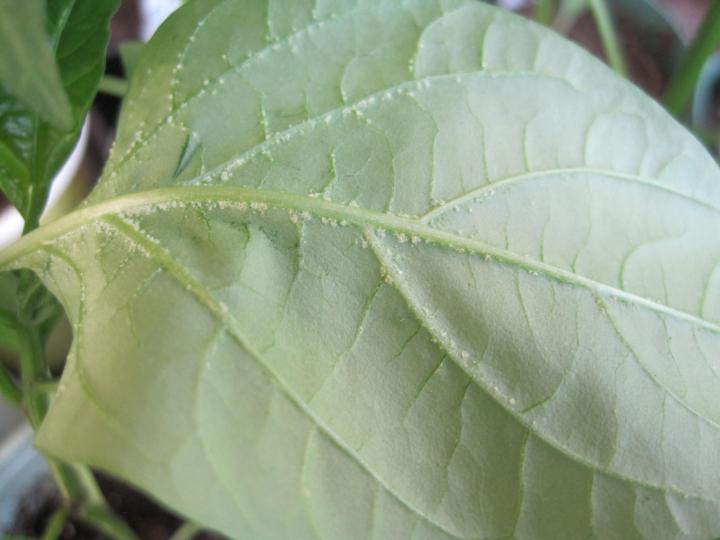
On the underside of the leaves were little white fuzzy blobs along the veins. They were easily squished, which led me to think it must be some sort of tiny insect. To get a proper ID of what critter this might be (spider mite? thrip? mealybug?), we sent a picture to our cooperative extension entomologist. Since I thought that it could take days to get an answer, I charged ahead and sprayed the affected plants with a mixture of dish soap and alcohol diluted with water.
To my surprise, we got an answer right away! They were not insects at all but water crystals. The plants had edema, also called water blistering, from too much water. Our extension source advised us to let the plants dry out to the point of starting to wilt before watering again. Warm wet soil and high humidity cause the roots to absorb water faster than the leaves can either use it or expel it through transpiration, so the plant pushes it out through cell walls.
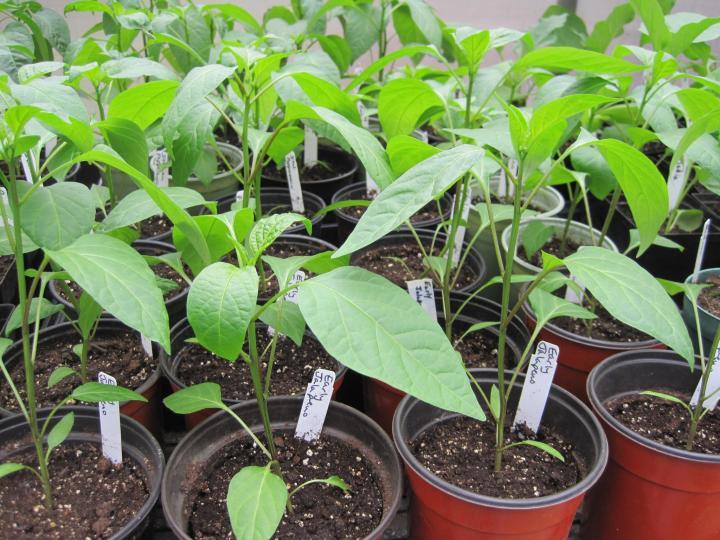
Since space in our greenhouse was at a premium, the plants were packed tightly together. Even though we have a fan blowing on them, air circulation just wasn’t adequate to dispel the humidity. Since the leaves with edema are already damaged, we had to keep an eye on new leaves to see if they would be affected as well, but so far only the ‘Inferno Hot Banana’ plants seem to be still suffering. Another lesson learned the hard way!
Edema isn’t the only issue peppers can face. Here are a few other common pepper problems and their causes.
Why Do Peppers Drop Blossoms?
Hot peppers like heat more than bell peppers do, but when it gets to be over 90° to 100°F, they can drop their blossoms. Hot peppers grow best when days are between 65° and 85°F, and nights are 60° to 70°F.
In extremely hot sun, peppers can also get sunscald. The fruit won’t fully develop or may get tannish spots. This is similar to sunburn on humans. It’s best to protect the fruit with a sun shade or move the peppers if they are in containers.
Why Aren’t My Peppers Fruiting?
Fruit doesn’t set when the temperatures are below 55°F or over 95°F. Flowers can also drop when nights are over 75°F. When the plants start to blossom, you can side-dress them with compost or well-rotted manure or give them a drink of fish fertilizer. Don’t feed them with a high nitrogen fertilizer or you will grow a lush and leafy plant with little or no fruit.
Don’t overwater like I did! Let the top inch or two of soil dry out before watering. Many people claim that depriving the plants of water makes the fruits even hotter, but uneven watering can cause problems such as blossom-end rot.
Why Do My Peppers Have Black Spots?
Blossom-end rot (BER) shows up as dark, sunken spots at the ends of your peppers. The most common cause is a calcium deficiency due to uneven watering or too much nitrogen. You can eat peppers with BER—just cut off the affected parts. For a quick fix, treat plants with a calcium spray for BER. Keep soil consistently moist; using mulch helps. Test soil when pepper season ends. Amend as needed.
Tricks I Have Not Tried
Many people swear by placing match heads in the planting hole to add sulfur (others worry about other chemicals in match heads). Some people believe that stressed plants produce the hottest peppers.
A gardener in England has claimed to stress his plants by yelling at them, depriving them of water, and ripping pieces off the leaves to scare them. Maybe there is something to his extreme efforts. He has held hottest-pepper records!
To learn more about growing peppers and pepper problems, visit the Almanac’s Pepper Growing Guide.
More Like This

Comments