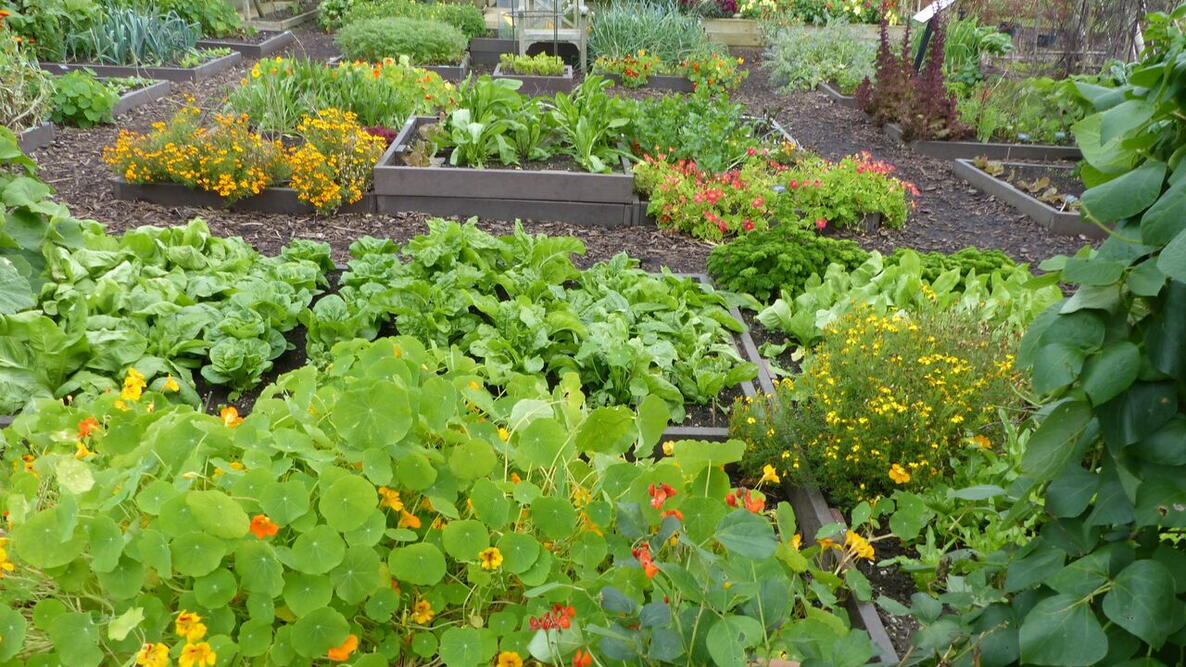

This year, don’t just plan a vegetable garden—plan a “companion” vegetable garden that pairs up plants that work best together! Learn more about planning a companion garden.
What is Companion Planting?
Based on scientific research, we know that there are certain vegetable crops that make “good” companions when paired together. In many cases, there is a beneficial effect such as protection from pests.
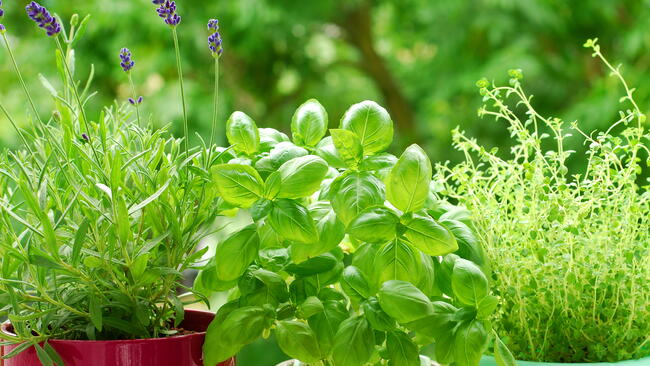
- For example, basil is a classic companion for tomatoes because it’s proven to repel whiteflies, mosquitoes, spider mites, and aphids.
- For example, sage is a useful herb that repels carrot fly. Also plant it around a cabbage patch to reduce injury from cabbage moths.
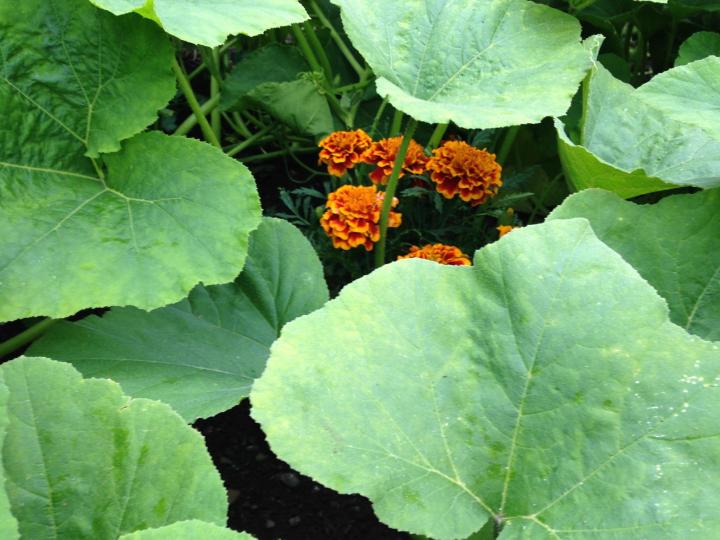
Larger vegetables may also be used to protect smaller plants and seedlings from harsh winds or as a climbing support, while sprawling crops such as squashes can be used to suppress weeds around tall crops like corn.
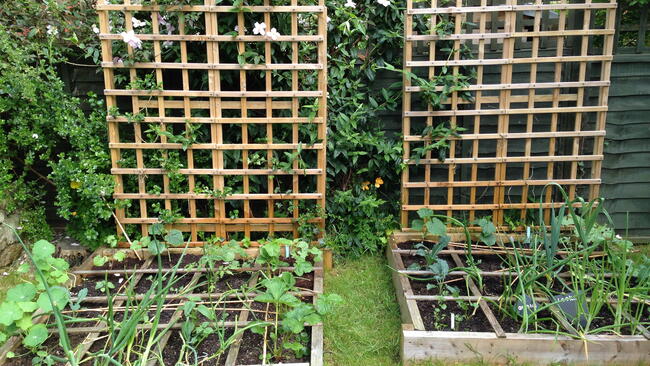
- For example, corn will benefit from the beans’ nitrogen-fixing capabilities. Pole beans provide structural support.
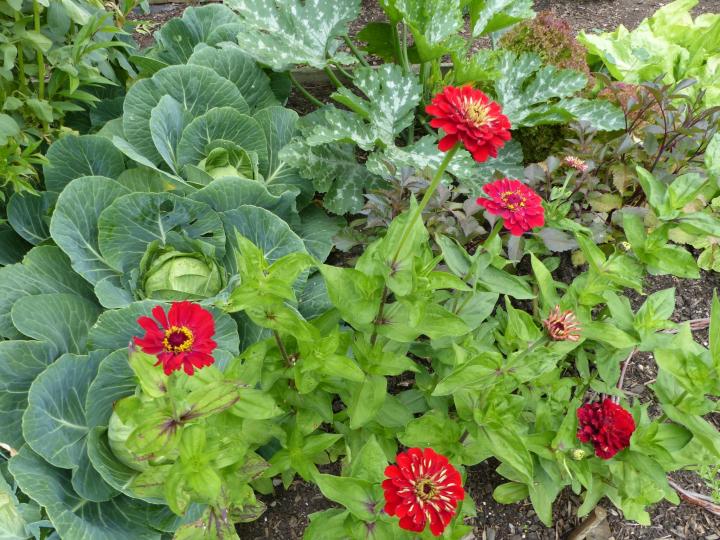
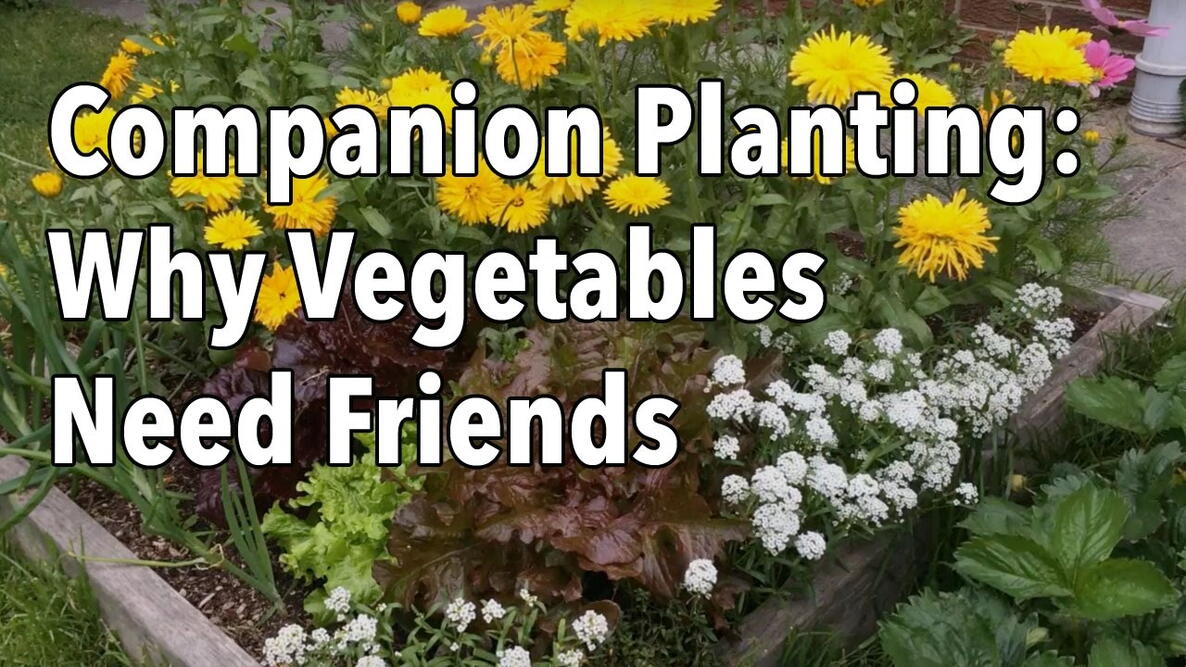
Also, many flowers make ideal companions for edible crops. Plant “simple” flowers such as calendula, marigold, and poached egg plant (Limnanthes douglasii) to attract beneficial insects to your garden and control pests such as aphids.
- For example, sunflowers can be used to create shade for sun-stressed crops.
- For example, nasturtiums can be used as a trap plant to entice aphids away from beans.
See our complete Companion Planting Chart for vegetables and flowers.
Three Sample Companion Garden Plans
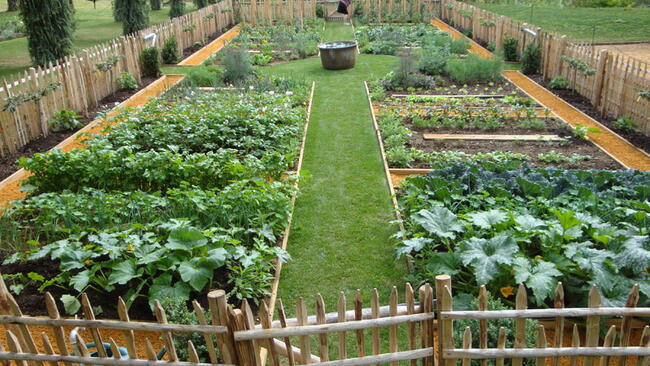
Below are real garden plans which employ the technique of companion planting. If you open the plans below, you can see it in much more detail.
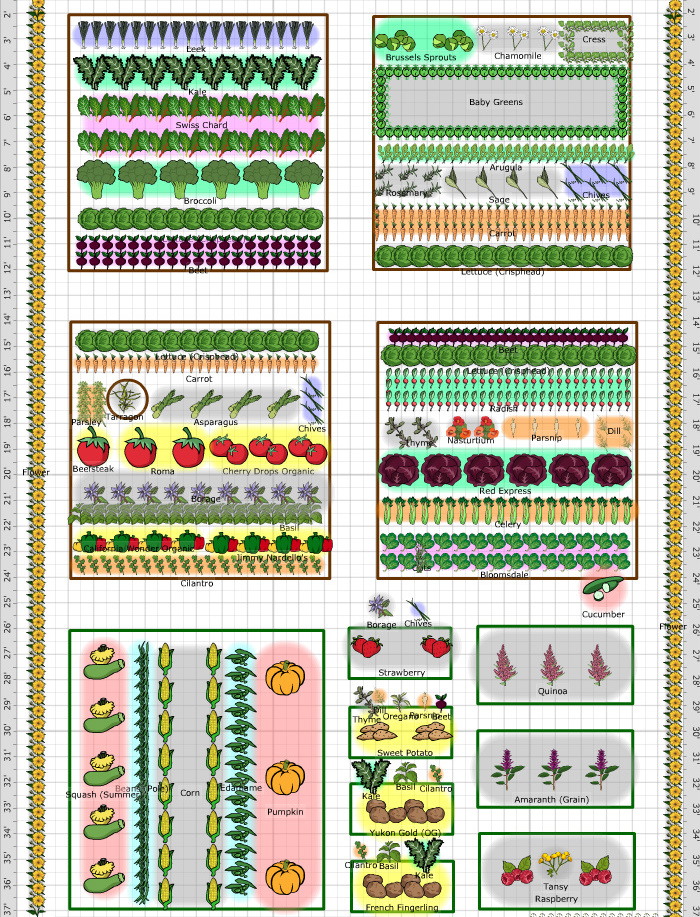
1. Companion Gardening (Kitchen Garden)
Garden Location: Connecticut
Garden Size: About 25 x 36 feet
Garden Type: Vegetables and Edible Flowers
Expand below garden plan and see plant list. (Note we’ve excluded fruit trees below which were added later to the plan that you’ll see.)
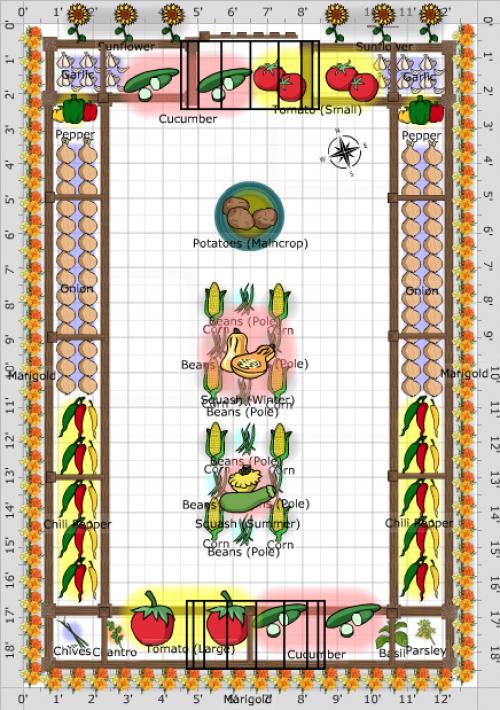
2. Companion Gardening (Three Sisters Plus)
Southwestern cuisine themed garden inspired by the three sisters companion planting method.
Garden Location: Southwest
Garden Size: 12 x 18 feet
Garden Type: Vegetables and Edible Flowers
Expand below garden plan and see plant list.
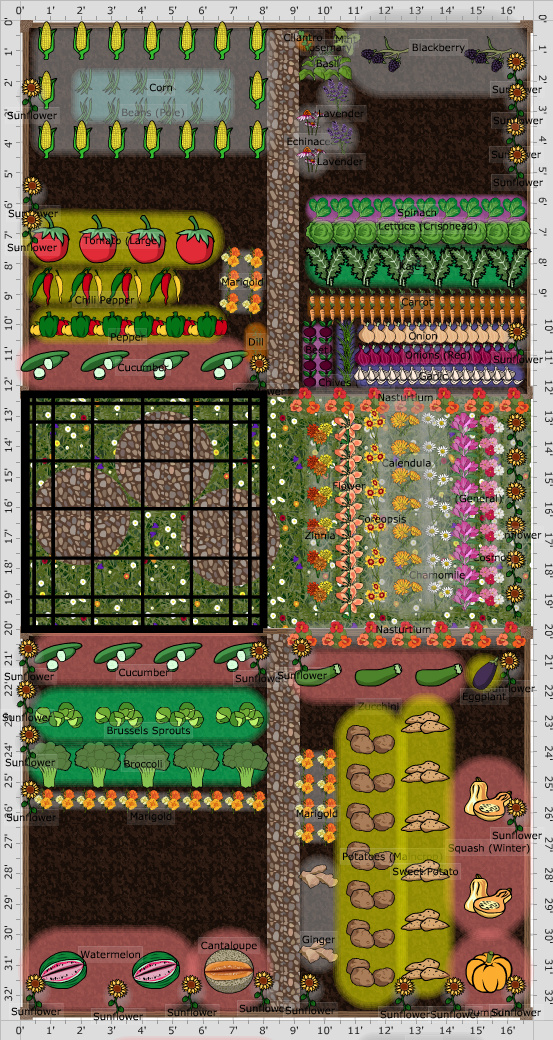
3. Companion Gardening (Community Garden)
Garden Location: Boulder, CO.
Garden Size: 16’ 9” x 32’ 9”
Garden Type: Raised Beds
Sunny or Shady: Sunny
Soil: Good Soil
Expand below garden plan and see plant list.
Find hundreds more garden plans shared by readers—all by location!
Learn about the Almanac Garden Planner which has a special Companion Planting feature that actually shows you which plants pair together to make it very easy to plan!

More Like This


Comments