
If you’ve ever wondered how to build a garden bed that waters itself, improves soil over time, and recycles yard debris all at once, hügelkultur might be your answer. This centuries-old gardening method—popular in permaculture systems—uses buried logs, branches, and organic matter to create a raised, mound-shaped bed that acts like a living sponge.
As the wood slowly decomposes, it stores moisture, releases nutrients, and improves soil structure year after year. The result? A low-maintenance, drought-resistant raised bed that can outperform traditional garden beds—especially in poor or compacted soil. Let’s dig into how hügelkultur works and why so many gardeners swear by it.
What is Hügelkultur?
Hügelkultur (usually transliterated into English simply as “hugelkultur”) is a method of gardening that has been used for centuries in Eastern Europe and Germany, often as part of a broader permaculture system.
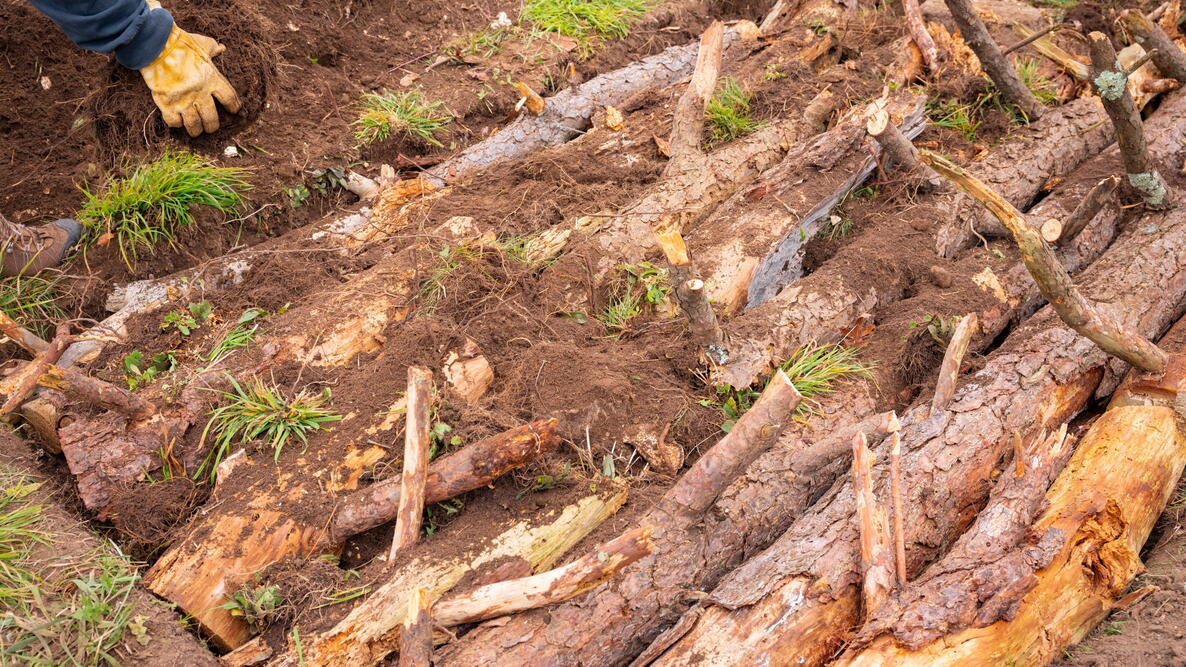
Hügelkultur is a centuries-old, traditional way of building a garden bed from rotten logs and plant debris. These mound shapes are created by marking out an area for a raised bed, clearing the land, and then heaping up woody material (ideally already partially rotted) topped with compost and soil.
Downed trees, fallen branches headed for the brush pile, and rough lumber can all be used. By essentially composting rotting wood, you can create a super-fertile, moisture-retaining garden bed.
These mounds can be 5 to 6 feet high. They are massive heaps of logs, branches, leaves, straw, cardboard, grass clippings, and manure or compost, mounded to be wider at the bottom than at the top. As the wood shrinks and breaks down, a hügelbed sinks; one that is 6 feet high, for example, will ultimately sink to about 2 feet after several years of decomposition and settling.
How Hugelkultur Beds Work
In the first few years, the heat-producing composting process warms the soil in a hügelbed, providing a somewhat longer growing season. The decaying woody matter is a source of long-term, slow-release nutrients and helps to keep excess nutrients from filtering into groundwater.
The wood, acting like a sponge, stores rainwater to release during drier times. Hügelbed soil is self-tilling over time. As woody material breaks down, tiny air pockets open in the crumbling soil, allowing air to reach plant roots. In time, you can plant into the topmost layer of soil/compost, which becomes rich with beneficial microorganisms.
First-year hügelbeds can be big producers. Murphy reports a harvest of 120 pounds of cucumbers and 42 good-sized pumpkins, as well as giant sunflowers, from two first-year beds. Murphy looks beyond the first few years, though: “These are serious, permanent raised beds. What you are building is a living, breathing sponge.”
Benefits of the Hügelkultur Raised Beds
The rotting wood hosts beneficial fungi, bacteria, insects, worms, and microbial growth that create nutrients your plants can use. Over time, the mound will shrink as the wood rots, but you can always add more soil or compost to the top. You will have created an ecosystem in which the beneficial organisms will thrive.
Hugelkultur is popular with gardeners who have struggled with heavy clay and poor or compacted soil. It is a good way to build up a planting bed and turn woody debris into a garden.
How to Build a Hügelkultur Bed (Step-by-Step)
- First, select a sunny spot that’s roughly 8 by 4 feet. (A bed built parallel to a slope is a good idea, as it will catch water.)
- If the site has grass or is weedy, you’ll need to clear it down to bare soil. To suppress weed growth, mow and cover the area with cardboard or wood chips.
- Now, dig out shallow pits, retaining the turf or topsoil for the tops of your mounds. Make the pit or trench 12 to 18 inches deep, keeping the same depth as the full length of the bed. Beds need to be narrow enough that you can reach the center; we suggest no more than 4 feet across.
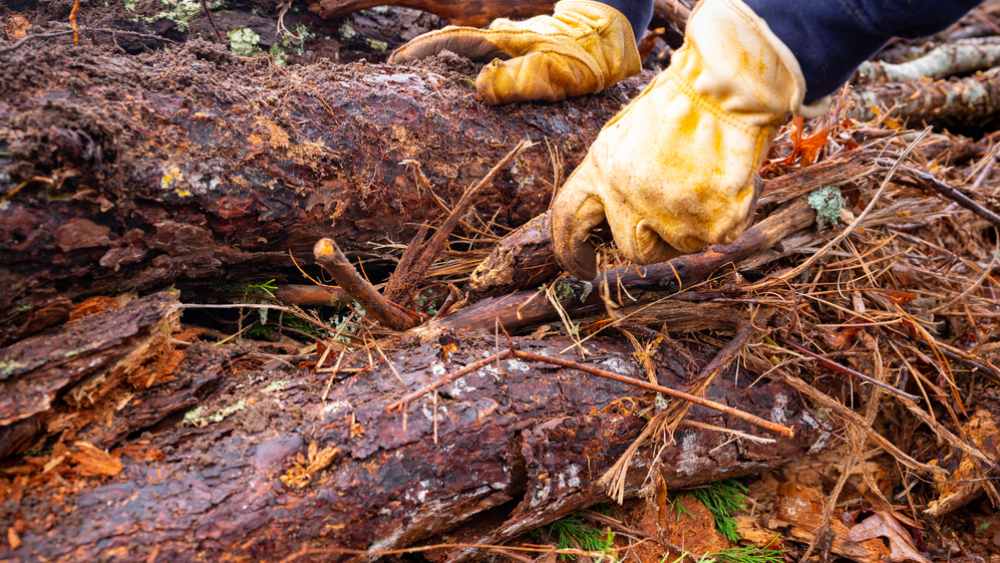
- Next, lay the woody material into the dug-out area, starting with large logs or downed trees. Add a layer of branches and twigs. A mix of hard- and softwoods is recommended. Avoid using woods that are slow to rot, such as locust, cedar, or redwood, or any that release toxins that inhibit plant growth, such as black walnut.
- Like building a lasagna garden on top of the wood, top the layer with grass and grass clippings—nearly any kind of organic material—and pack firmly. If you have excavated turf, place it root-side up on the wood.
- Continue to arrange the wood longitudinally and as tightly as possible. The pile can be as long and high as you like, but I suggest a 2- to 3-foot high bed as it’s easier to work with (and can last without water for 2 or 3 weeks). Some folks build them really tall, up to 5 or 6 feet high, but I would need heavy equipment to achieve that.
- Then, water the layers well. “When it sprouts mushrooms, you know it’s wet enough,” says Tim Murphy, a gardener in Kingston, New York. Fill in any cracks or spaces with grass, leaf litter, and manure. “The tighter, the better,” he adds.
- Finally, top off the bed with 2 to 3 inches of topsoil and a layer of mulch. Avoid overfilling by using our raised bed soil calculator.
Best Wood for Hügelkultur
The best woody species for hügelbeds are alder, apple, birch, cottonwood, maple, oak, poplar, and dry willow. Avoid treated wood, cedar, and allelopathic or toxic species, such as black cherry and black walnut.
Super-rotten wood is better than slightly aged wood.
Plants That Grow Best in Hugelkultur Beds
Plants that grow especially well in hügelbeds are sprawlers and climbers, such as cucumbers, legumes, melons, potatoes, and squashes.
Hügelbed Maintenance Tips
If you build this in the fall, let the whole thing settle over the winter, and it will be ready for planting next spring.
In the first year, the pile will need watering as the wood breaks down. The rotting wood will also be using up nitrogen that would otherwise be going to your plants, so it’s recommended that you plant legumes the first year since they produce their own nitrogen.
Note that the greater the mass, the greater the water retention. Experienced hügel gardeners have found that if the beds are high enough, they don’t require irrigation at all after the second year. Steep beds also mean more surface area for planting; plus, their height makes harvesting easier.
Eventually, the rotting wood will hold water like a sponge, making the bed drought-resistant. The top of the bed will be naturally drier than the base, so you can plant things that need more water nearer the bottom and those that like it, which will be drier near the top. You can plant on the sides as well as on the top and bottom, increasing yields in a small garden.
.jpg)
Hugelkultur beds transform logs and garden debris into a long-lasting, moisture-retaining raised bed system. If you want healthier soil, fewer watering sessions, and a more sustainable garden, hugelkultur is worth trying.

More Like This
- « Previous
- 1
- 2
- …
- 10
- Next »

Comments