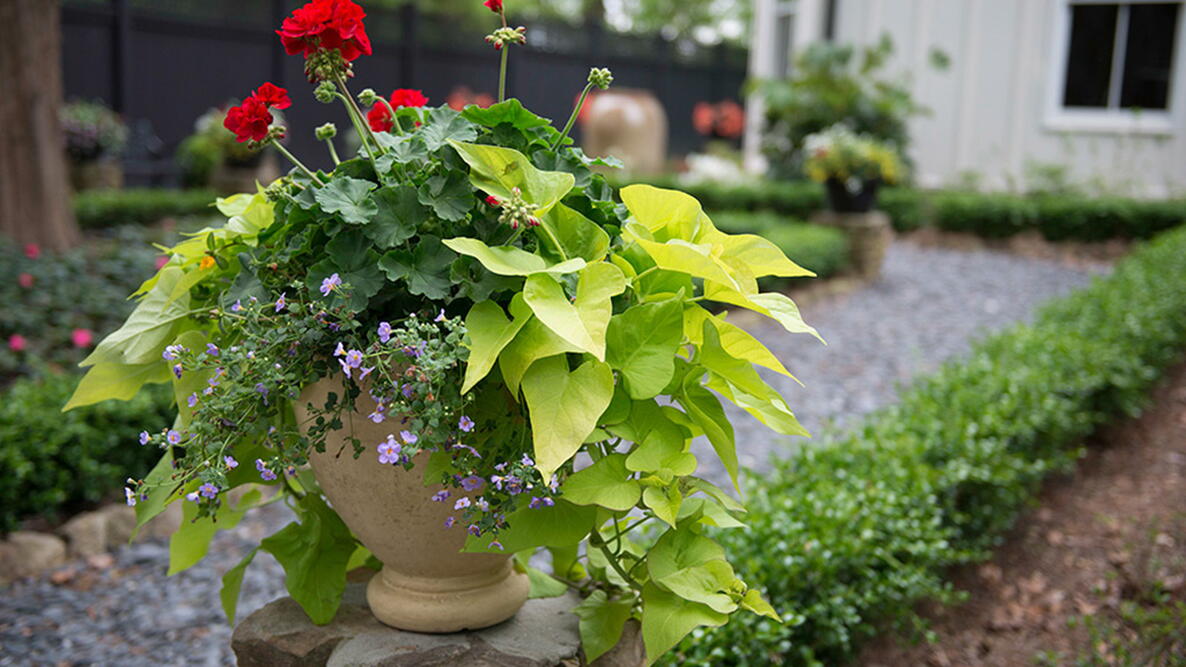

Want a yard full of flowers but short on space or time? Container gardening is an easy and creative way to grow beautiful plants in pots, balconies, patios, or small yards. Whether you’re a beginner or experienced gardener, container gardens offer flexibility, color, and instant impact.
Why Choose Container Gardening?
- If you have a troublesome spot where nothing will grow, try planting an instant garden in a container.
- If you lack sunny spots to grow all your favorites, containers will provide you with additional growing space.
- Striking container plants can act as focal points and interesting accents, or they can fill those bare spots that occur over the growing season.
- Containers are quick and easy to plant as well as portable, and the pots can be rearranged or replanted as needed.
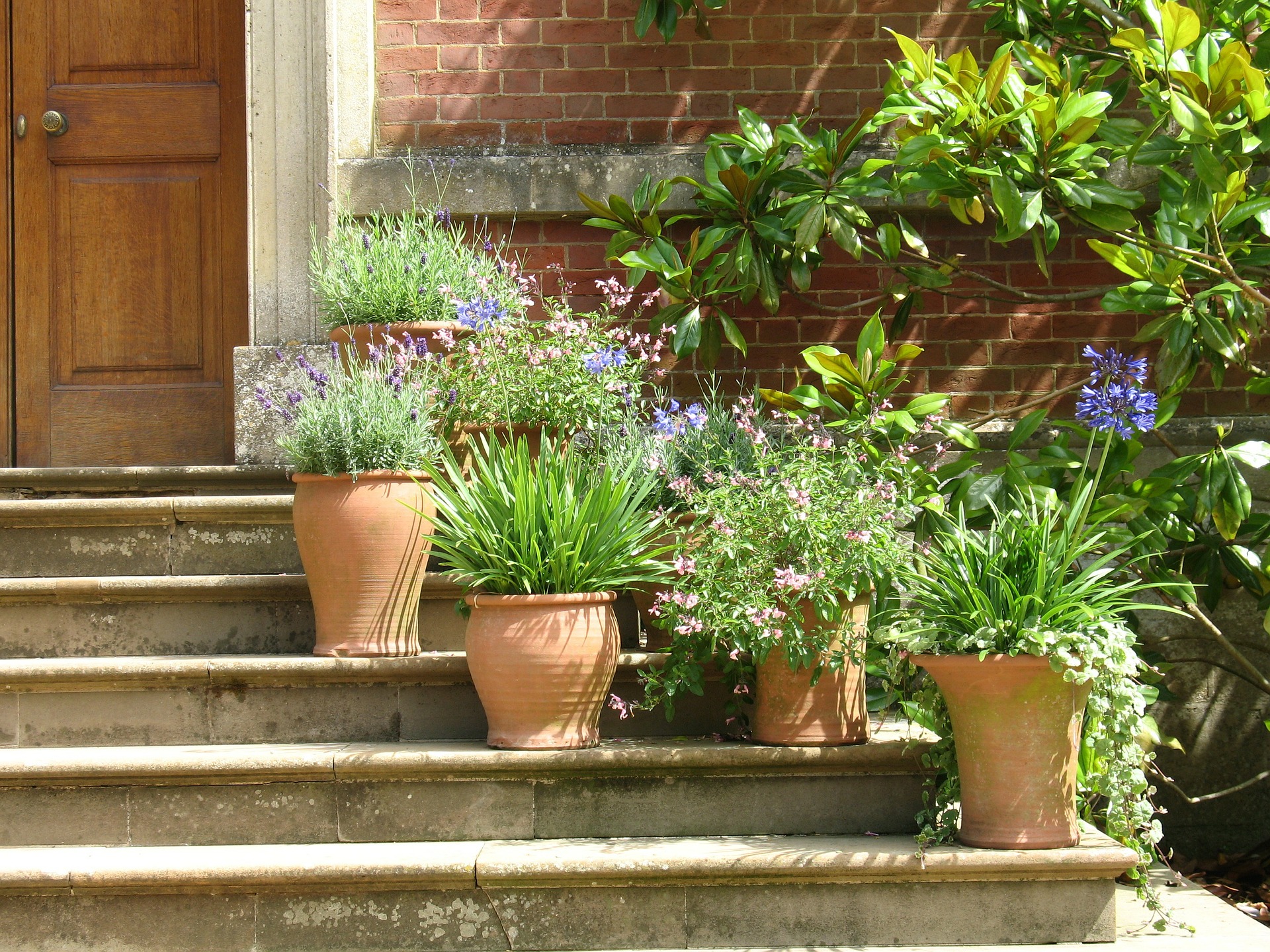
- A dazzling display of plants in a pot or hanging basket can transform a set of steps or an ordinary doorway into an inviting entry.
Choosing the Right Containers
To ensure success, use a large pot with good drainage. Make sure your container is large enough to hold all of the plants you want to use (18 to 24 inches in diameter is a good size range to start with). The larger the pot, the less likely the plants will dry out.
When choosing your pot, stick to just one or two different materials. Consider the design of your house. Terracotta containers look great against red brick houses. Galvanized metal pots enhance a modern plot. Glazed colored pots add a splash of color against stone.
How to Plant a Container Garden
You can use just about anything that will hold soil, but it has to have holes in the bottom for drainage or you’ll have floating plants after the first thunderstorm. Poor drainage is the most frequent cause of failure in container gardening. Pop in a plastic saucer at the bottom to hold water if needed.
The right soil is crucial to the success of your planting. You need high-quality non-peat-based compost mixed up with perlite or water-containing granules. About 2 scoops compost to 1 cup granules.
For large containers: Reduce the amount of soil and weight by partially filling up the bottoms with packing peanuts or empty plastic bottles. Spread a layer of newspaper and then cover with potting mix.
If you’ll be planting many many containers, save money and see how to make your own potting mixes.
Best Flowers and Plants for Containers
What you plant is a matter of personal taste, but always choose the healthiest plants you can find. See our best bets for window boxes.
Be sure to group plants by their sun and water requirements. There are no hard and fast rules for design; whatever is pleasing to you is perfect.
Consider choosing plants and flowers that are long-blooming and aren’t too delicate (in case you forget to water once!).
Best Flowers for Container Gardening
- Petunias (sun-loving, long-blooming)
- Geraniums (great for bright spaces)
- Begonias (perfect for shade)
- Impatiens (low-maintenance shade flowers)
- Fountain grass (adds texture and height)
See our entire list of best flowers for containers!
Container Garden Design Ideas
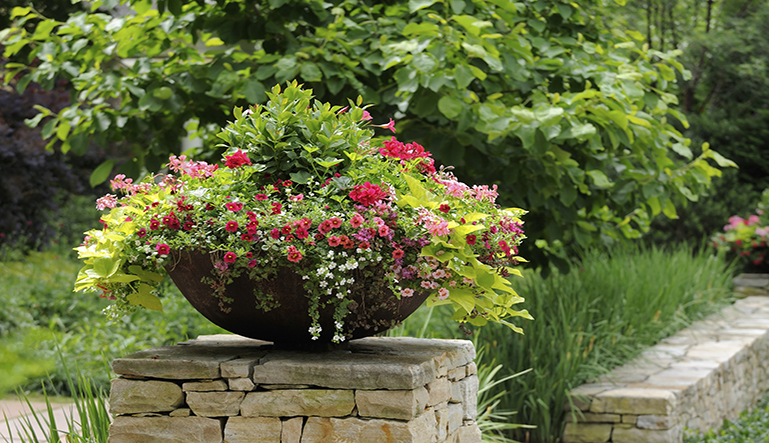
For a single gorgeous container, consider how to group plants into one pot. One formula that’s commonly used by designers is the “Thriller, Filler, Spiller.”
The Thriller, Filler, Spiller Container Design Method
This method is a popular container gardening technique that combines height, fullness, and trailing plants for a balanced and eye-catching display.
- The “Thriller” is the tallest plant and usually in the center of the container (or the back if the container’s only viewed from one side). It’s often the big bloomer or a dramatic ornamental grass or something interesting for a wow factor. Some examples are snapdragons, iris, lilies, and fountain grass.
- The “Filler” can be anything bushy and helps make the container look full. Fillers are generally placed around the Thriller. Some examples are alyssium, pentas, pansies, coleus, and petunia.
- The “Spiller” consists of trailing plants that are placed close to the edge of the container and hang over the edge. Examples are trailing begonia, variegated ivy, sweet potato vine, and trailing lantana.
If you like, you can plant all thrillers! This is your chance to try something different.
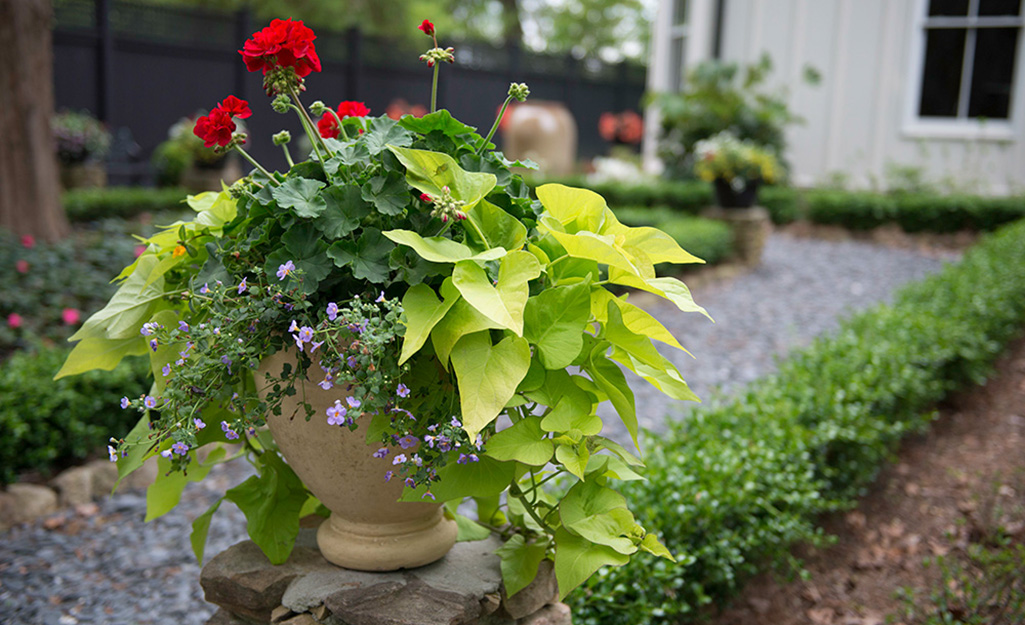
Big Pots for Big Impact
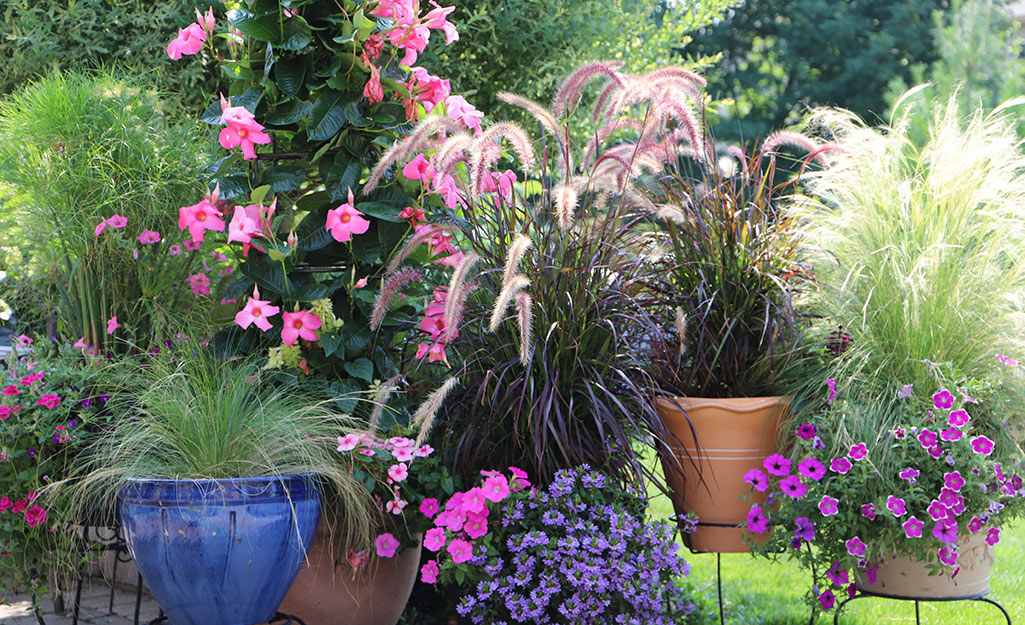
Bigger pots have a lot of impact; another idea is to group small- or medium-sized containers together. Use three or more containers in a group for a sense of repetition.
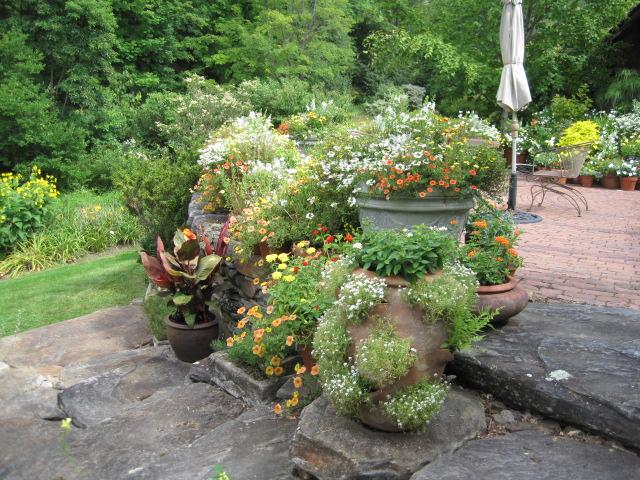
Use the thriller-filler-spiller idea here, too. Put the tallest in the center or back, place groups of fillers in the middle, and arrange cascading elements around the perimeter.
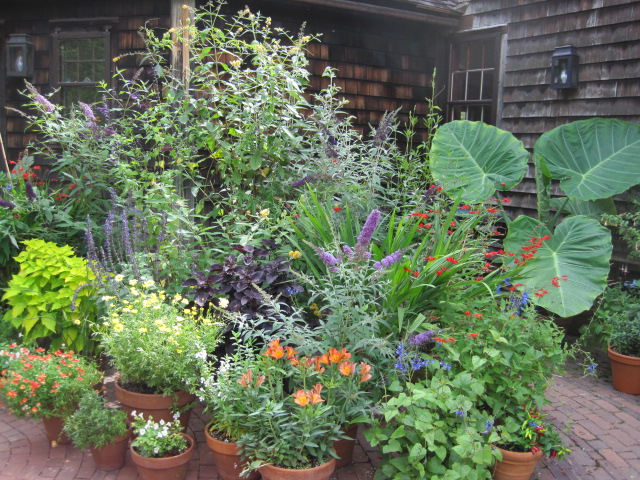 If you usually stick with pastels, but your alter ego loves bright orange and lime green, go for it! By planting in a container, you aren’t committed. If you hate it, you can move it someplace else or even take it apart and replant it.
When planning your creation, consider where you will place the pot. Will it be seen from all sides or just the front?
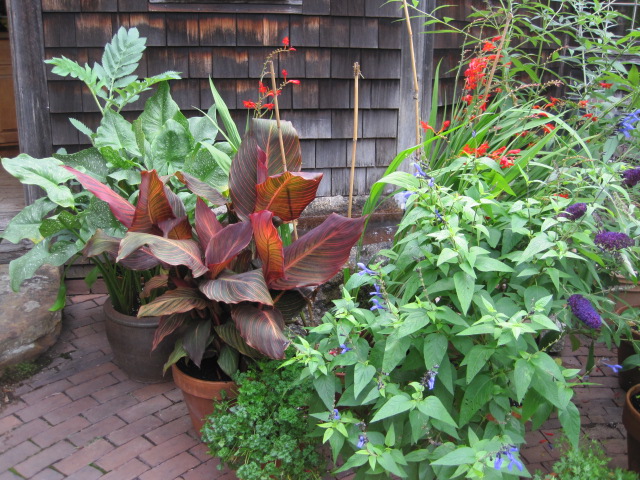
Go Tropical
Don’t be afraid of using tropicals such as colocasia, bananas, and cannas in really big pots to make a statement.
Container Care: Fertilizing and Watering
Because of the intensive planting, you will need to fertilize and water your containers often.
- A slow-release fertilizer mixed in the soil during planting time will keep the plants blooming all summer long.
- Water once a day, or more if it’s hot or windy, and make sure the compost is completely soaked through.
- Deadhead fading flowers regularly to encourage continuous blooms throughout the summer. Don’t hesitate to shear back bloomers if they look tired and leggy. They will reward you with more blossoms later in the season.
- Feed plants every few weeks or as recommended with quality liquid fertilizer.
Container gardening makes it easy for anyone to grow beautiful flowers, no matter the space. With the right plants, soil, and design, even a small patio or balcony can become a vibrant garden full of color and life.
There are no excuses for not planting at least one container this summer—and once you get started, you will find it hard to stop with just one. Try to contain yourself!
More Like This

Comments