

Most of my favorite flowering vines belong to the plant family Ipomoea. While the classic morning glory is the most common member, this family includes over 300 species—ranging from the sweet potato to fast-growing twining climbers.
Morning glory vines can reach ten feet or more in a single season. In fact, their quick coverage made them a popular “privy plant” in the past to camouflage outhouses. As their name suggests, the blooms open in the morning and gradually fade by afternoon, wrapping their vines tightly around wood, wire, string, or each other. Fittingly, in the language of flowers, Ipomoea symbolizes bonds and attachments.
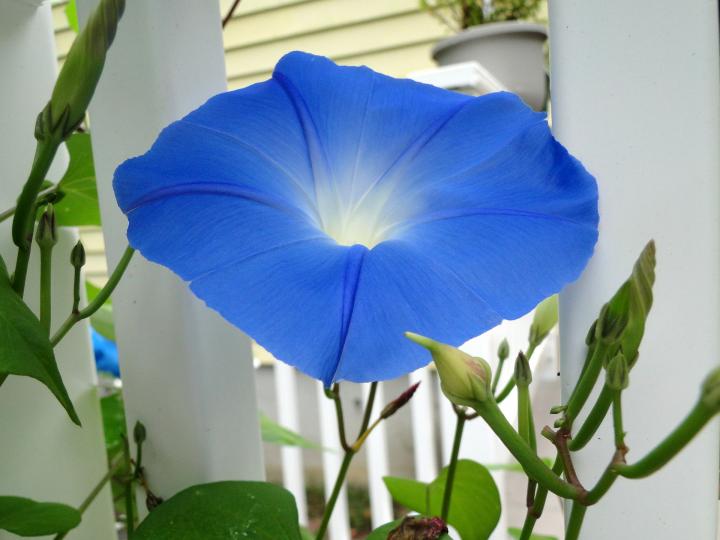
Top Morning Glory Cultivars (Ipomoea purpurea & tricolor)
While many gardeners love the classic heart-shaped leaves and sky-blue flowers of ‘Clarke’s Heavenly Blue’, morning glories offer a rich palette of colors and forms:
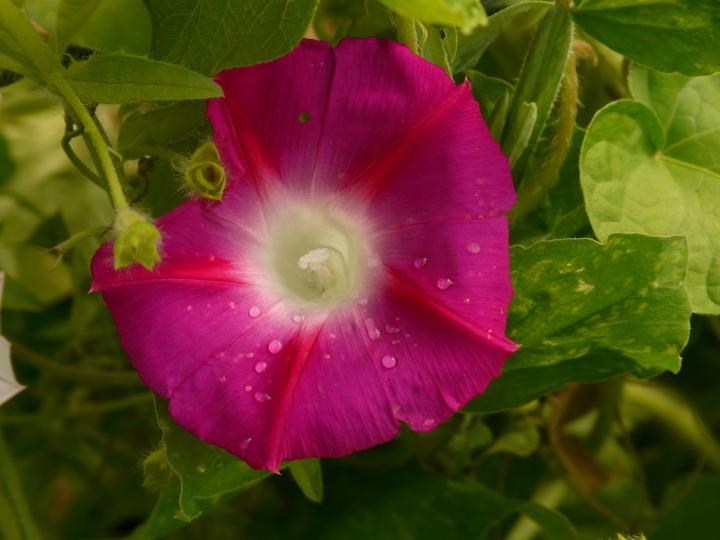
- ‘Scarlett O’Hara’: Features rich, wine-red blossoms with a pure white throat.
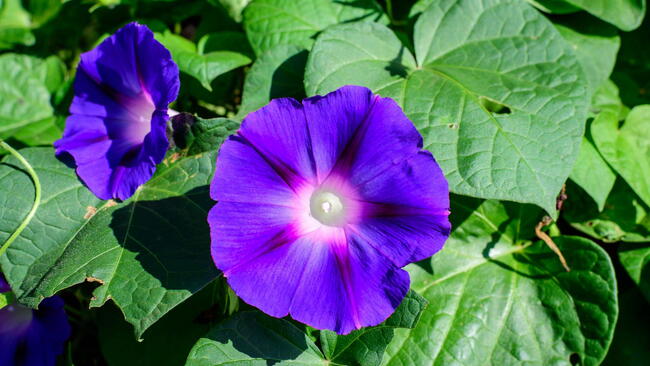
- ‘Kniola’s Black Knight’: Showcases deep purple blooms highlighted by a striking hot-pink throat.
- ‘Flying Saucers’: Displays unique, silvery-white flowers streaked with vibrant blue.
- ‘Sunrise Serenade’: A double-flowering variety with large, ruffled red blossoms that stay open longer than single varieties. (Note: This cultivar needs a bit of help climbing and should be tied to its support).
- ‘Grandpa Ott’s’: A vigorous heirloom climber with dark blue flowers and a red star in the center. This is the famous plant that helped launch the Seed Savers Exchange!
Unique Ipomoea Species to Try
Beyond standard morning glories, several related species bring distinct shapes, scents, and wildlife benefits to the garden:
- Moonflower (Ipomoea alba): Resembles a large white morning glory, but its fragrant blooms open at night—making it essential for moon gardens.
- Cardinal Climber (Ipomoea × multifida): Features deeply cut foliage and bright red, tubular flowers that hummingbirds find irresistible.
- Cypress Vine (Ipomoea quamoclit): Similar to the Cardinal Climber with matching red trumpet flowers, but boasts fine, fern-like foliage.
- Spanish Flag (Ipomoea lobata): Produces racemes of small tubular flowers that transition from bright red to orange, yellow, and finally white. A single plant can hold hundreds of multi-colored blossoms at once, resembling tiny flags.
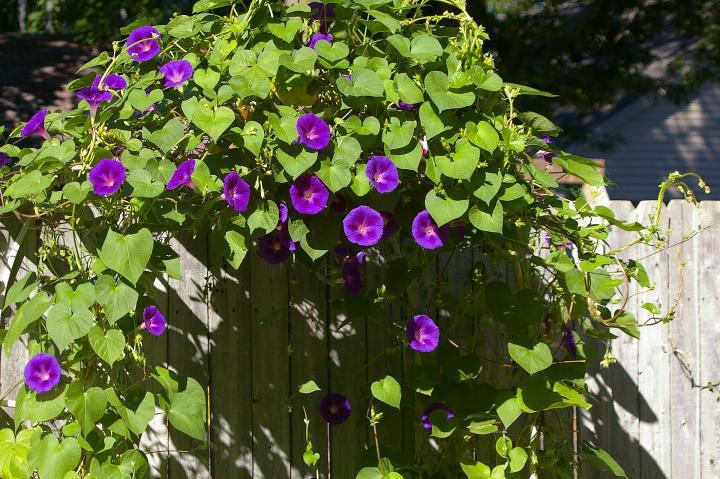
Growing Morning Glories
All Ipomoeas prefer a sunny location with well-drained soil and tolerate drought. No need to fertilize them, in fact overly fertile soil will promote lush leaf growth instead of flowers. Soak the seeds overnight before planting to soften the seed coat and speed germination.
Flowering vines are fast growers and will cover an unsightly spot in your yard in no time.They are charming when grown on a trellis or twined around the railings of your sunny porch or deck. They can be trained to form a living fence or privacy screen, provide shade, or just add a wall of color. As an architectural element, they lend a new dimension to any garden. Time to think about growing up!
Read more about growing this vine on our Morning Glory Plant page.
More Like This



I would not recommend eating any part of the morning glory even though Poison Control sources claim that the flowers are okay and the seeds are the poisonous part. You can get similarly colored vinegar using chive blossoms, which are totally safe and edible. The vinegar will take on a mild onion flavor as well - an added bonus for salad dressing!
- « Previous
- 1
- 2
- …
- 10
- Next »

Comments