
Watch for the Harvest Moon!

Mark your calendars! On Monday, October 6, 2025, the full Harvest Moon reaches peak illumination at 11:47 P.M. Eastern Time. This isn’t just any Moon—it’s the first of three Supermoons in 2025, making it the largest and brightest full Moon of the year. Rising low on the horizon, it will appear bigger, brighter, and more golden than any other Moon this year, casting long, glowing light across autumn fields, landscapes, and evening skies. Gardeners, photographers, and stargazers alike will find it a sight to remember.
When to See the Full Harvest Supermoon
The Harvest Supermoon peaks at 11:47 P.M. EDT on Monday, October 6, 2025. Convert Eastern Time to your time zone using our converter.
Because it is a Supermoon—occurring when the Moon is at perigee, its closest point to Earth—it will appear noticeably larger and brighter than a typical full Moon. Use the Almanac’s Moonrise and Moonset calculator to catch the perfect view.
What Makes the Harvest Moon Special
The Harvest Moon is the full Moon closest to the autumnal equinox (September 22 or 23). Unlike other full Moons, it rises about the same time for several nights, providing extended evening light. Historically, this extra illumination helped farmers complete their harvests before fall frosts.
Fun fact: In 2025, October’s full Moon is closer to the equinox than September’s, so it takes the name Harvest Moon, while September’s Moon is called the Corn Moon.
Read more about the Harvest Moon!
Why 2025’s Supermoon Is a Must-See
This October full Moon combines two spectacular features:
- Harvest Moon: Provides multiple nights of near-sunset rises and extended evening light.
- Supermoon: At perigee, the Moon is the closest it will be all year, making it the largest and brightest full Moon of 2025.
This combination creates a visually striking Moon, low on the horizon, perfect for photography or enjoying the glowing autumn evening sky.
First Supermoon of the Year
This Harvest Supermoon is also the first of three consecutive Supermoons in 2025, which means it will appear larger and brighter than any full Moon seen earlier this year. Being at perigee, its closest point to Earth, enhances its size and luminosity, giving skywatchers and photographers a prime opportunity to capture dramatic lunar landscapes.
Best Times and Locations to View the Harvest Supermoon
- Horizon viewing: The Moon appears largest when rising or setting.
- Open landscapes: Fields, parks, or waterfronts add scale and drama.
- Local timing: Peak illumination is at 11:47 P.M. EDT, but it is visible well before and after.
Photography Tips for Capturing the Moon at Its Brightest
- Use a tripod for sharp images.
- Include foreground objects, such as trees or buildings, to provide scale.
- Adjust exposure to capture the Moon’s brightness without overexposing.
- Plan your shot around Moonrise or Moonset for maximum size effect.
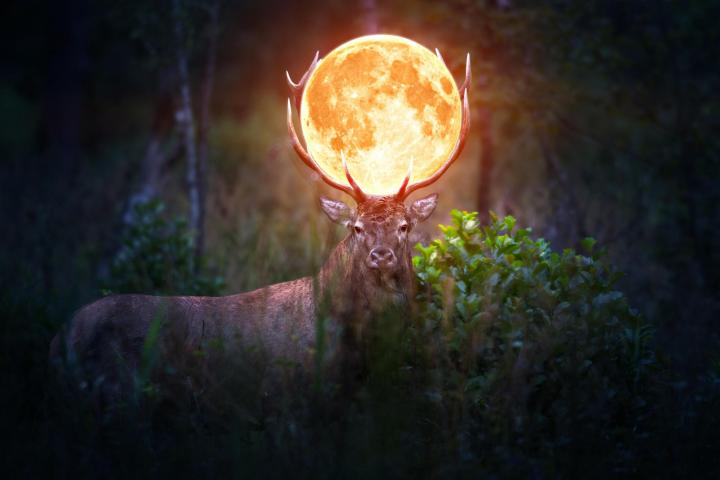
Harvest Moon Traditions and Folklore
Different cultures have given full Moons descriptive names based on seasonal changes, natural events, and human activities. These names helped people track the year, plan agriculture, and mark seasonal transitions.
Other traditional October Moon names include:
- Hunter’s Moon: When October is not a Harvest Moon, signaling hunting season.
- Drying Rice Moon: Dakota tradition, post-harvest rice preparation.
- Falling Leaves Moon: Anishinaabe name for the transition to fall.
- Freezing Moon / Ice Moon: Ojibwe and Haida names marking colder temperatures.
- Migrating Moon: Cree name marking southward bird migrations.
When is the next full Moon? Consult our Full Moon Calendar to find out!
Gardening and folklore tips:
- Planting under a waning Moon may yield slower-growing but larger crops.
- Babies born a day after the full Moon are said to enjoy endurance and success.
- A new Moon in dreams can signal increased wealth or a happy marriage.
- The Harvest Supermoon provides extended evening light, ideal for gardening or harvesting activities.
→ Read more about Full Moon names and meanings.
How the Supermoon Affects Tides and Nighttime Light
- Tides: Supermoons can cause slightly higher than normal tides, though effects are mild for most locations.
- Nighttime illumination: The Moon’s brightness enhances evening visibility, perfect for stargazing and outdoor activities.
Moon Phases for October 2025
See all Moon phase dates and times (in Eastern Daylight Time) below. Check your Moon Phase Calendar for local viewing times.
.png) | Full Moon: October 6, 11:47 P.M. EDT |
.png) | Last Quarter: October 13, 2:13 P.M. EDT |
.png) | New Moon: October 21, 8:25 A.M. EDT |
.png) | First Quarter: October 29, 12:21 P.M. EDT |
Best Days in October 2025
Below are some of the best days for certain activities, based on the Moon’s sign and phase in October.
| Activity | Best Days |
| Harvesting aboveground crops | 1, 26-28 |
| Harvesting belowground crops | 17, 18 |
| Setting Eggs | 1, 2, 10, 11 |
| Fishing | 1-6, 21-31 |

More Like This




Hi, Ruth, Above-ground crops are planted during the light of the Moon (new to full); below-ground crops are planted during the dark of the Moon (from the day after it is full to the day before it is new again). Planting is done in the daytime; planting at night is optional!
- « Previous
- 1
- 2
- …
- 10
- Next »

Comments