
Grow your sweetest carrots yet with these soil-smart gardening tips

Ever pulled a funky-shaped carrot out of the ground and loved it anyway? That’s the charm of homegrown carrots—quirky, colorful, and way sweeter than store-bought! With just the right soil (yes, that’s the secret), you can grow juicy, crunchy carrots in all shapes and shades. Whether you’re dreaming of classic orange or curious about purple or round varieties, here’s how to make your carrot patch thrive from seed to harvest.
About Carrots
The carrot (Daucus carota ssp. sativus) is a root vegetable in the Umbelliferae family. Today’s cultivars are all domesticated forms of the wild carrot, Daucus carota, native to Europe and Southwestern Asia. The wild carrot has a more woody texture and is less palatable. They have a long history, dating from 3000 B.C. The orange carrot is relatively new to gardens and kitchens: It first appeared in the Netherlands in the 17th century. Carrots did not become popular in the United States until after World War I, when soldiers returning from Europe brought seeds and stories of having eaten and enjoyed them.
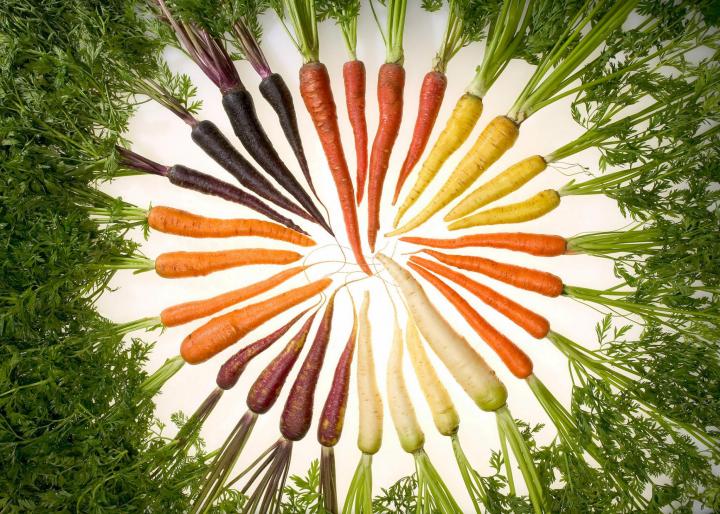
The colorful roots are usually orange, but there are also heirloom cultivars that come in purple, black, red, white, and yellow hues. Eaten raw or cooked, carrots are an excellent source of vitamins A, K, and B6 and also contain large quantities of beta-carotene and nutrients. The stems and leaves are rarely eaten, though they are edible.
Carrots grown in the garden taste more flavorful, fresher, and juicier because the sugar that makes a carrot sweet begins to be replaced by fiber as it ages in grocery stores. Another reason to grow carrots in the garden is that there are so many more varieties to try, from Belgian whites to Purple Dragon to Parisian heirlooms that are round!
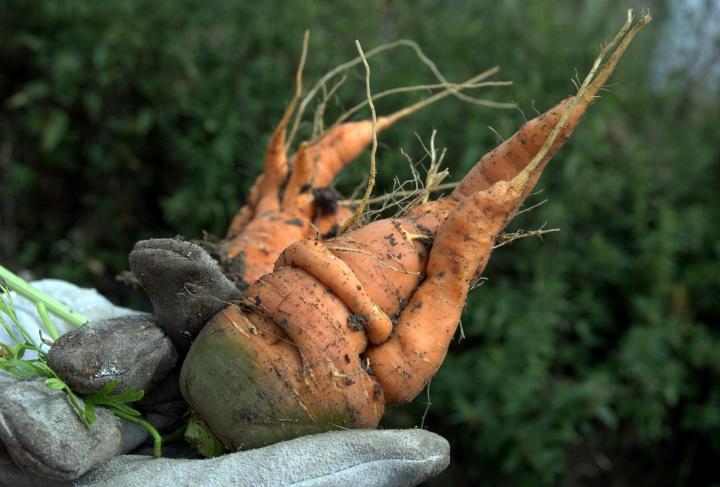
Don’t expect to get perfectly straight “grocery store” carrots in the garden, especially if your soil isn’t loose, well-draining, and sandy or loamy. Your carrots will still taste better, whatever their shape!
Read Next
Types
Carrots come in a rainbow of colors, sizes, and shapes.
- ‘Bolero’: slightly tapered; 7 to 8 inches; resists most leaf pests and blights
- ‘Danvers’: classic heirloom; 6 to 8 inches long, that tapers at the end and has a rich, dark orange color; suited to heavy soil
- ‘Little Finger’: heirloom; a small Nantes type of carrot only 4 inches long and one inch thick; good for containers
- ‘Nantes’: cylindrical (not tapered); 6 to 7 inches; exceptionally sweet; crisp texture
- ‘Thumberline’: heirloom; round carrot, good for clumpy or clayey soil and containers
- For unusual colors, try heirloom ‘Red Cored Chantenay’ and bright ‘Solar Yellow’
- ‘Adelaide’: true baby carrot; miniature Nantes type (cylindrical, smooth, nearly same diameter from end to end; blunt, not pointed tip); mature at 3 to 4 inches
- ‘Bambino’: harvest at 4 inches; dwarf tops; cylindrical, blunt roots; good for canning and pickling
- ‘Little Finger’: heirloom; miniature Nantes type; 3 to 4 inches long; good for canning and pickling
- ‘Romance’: Nantes type; 6 to 7 inches long, with tapered root; orange roots brighten after washing
- ‘Romeo’: 1- to 1 1/2-inch rounds; smooth skin, needs no peeling
- Thumbelina’: heirloom; 1- to 2-inch rounds; needs no peeling
- ‘Touchon’: heirloom; considered best of the Nantes type; quick to mature; 6 inches long
Harvesting
How and When to Harvest Carrots
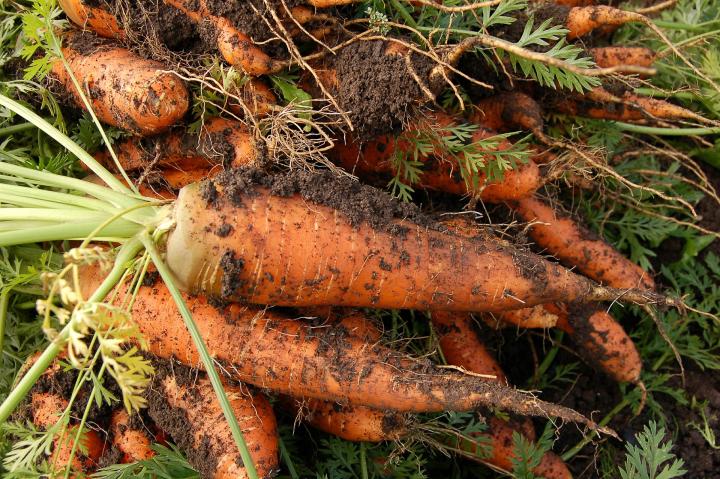
How do you know when your carrots are ready? Have a little root around and check the approximate width of the roots by looking at the neck of the root. The first roots should be ready as soon as 2 months from sowing.
- Generally, the smaller the carrot, the better the taste. Carrots should be about as wide as your thumb or at least ½ of an inch in diameter.
- Younger and shallower roots should come away easily enough simply by gripping them firmly at the base of the foliage. It often helps to push down on the root first and then twist it as you gently pull upwards.
- Larger, longer roots—particularly those of maincrop carrots that are sown for winter eating—may need to be eased up with the help of a fork.
- Harvest in stages—or as roots reach full size. In this way, you’ll stagger your harvest over many weeks.
- If you’re growing carrots in the spring and early summer, harvest before daily temperatures get too hot, as the heat can cause carrot roots to grow fibrous.
- If you are harvesting in the fall, carrots taste much better after one or more frosts. (A frost encourages the plant to start storing energy—sugars—in its root for later use.) Following the first hard frost in the fall, cover carrot tops with an 18-inch layer of shredded leaves to preserve them for harvesting later.
- Note: Carrots are biennials. If you fail to harvest and leave the carrots in the ground, the tops will flower and produce seeds next year.
How Do You Store Fresh Carrots?
- To store freshly harvested carrots, twist or cut off all but 1/2 inch of the tops, scrub off any dirt under cold running water, and air-dry. Seal in airtight plastic bags and refrigerate. If you simply put fresh carrots in the refrigerator, they’ll go limp in a few hours.
- You may leave mature carrots in the soil for temporary storage if the ground will not freeze and pests aren’t a problem.
- Carrots can also be stored in tubs of moist sand or dry sawdust in a cool, dry area.
Gardening Products




Hi BillBoy, Thanks for answering the other question on this page. Here are some thoughts on your carrots, based on advice from cooperative extensions:
- If the carrots are short and fat, hat's often because the soil is too heavy and you'll need to amend with leaves and sand. Carrots do well in light (sandy), fluffy soil that is not too full of amendments. Also, you might want to think them further; try an inch apart after the leaves reach about three inches high.
- In terms of the "hairy" issue:This happens because of excess nitrogen. If you added fertilizer right before you planted your carrots, that makes them “hairy.” If you add manure-laden compost to your soil, do so in the fall, then let it overwinter before planting carrots in the spring. Carrot roots will also become hairy in waterlogged ground.
- Root-knot nematodes may cause deformed carrots. You can either verify this with a soil test and then you might have to solarize (treat soil with the sun’s heat using plastic sheeting in the summer), or rotate your carrots to another area next time.
Hope this helps.
Sandy soil is great for carrots. If you plant mid-summer, then the carrots should mature quickly in fall weather to product those sweet "baby" carrots. Also, consider the variety that you are planting. Here are some Baby varieties recommended the Illinois cooperative extension:
Baby Spike (52 days; 3 to 4 inch roots, 1/2 inch thick; excellent internal color; tender; holds small size well)
Little Finger (65 days; tiny tender roots; 5 inch roots, 1/2 inch thick; golden orange, sweet and crisp)
Minicor (55 days; slender fingerling carrots; colors early; uniform, cylindrical, blunt tip; good flavor)
Short 'n Sweet (68 days; rich, sweet flavor; 4 inch roots, broad at shoulder, tapered to a point; good for heavy or poor soil)
Cindi, We LOVE hearing these stories. Thanks for sharing, congrats on staying patient and seeing those carrots through!
Hi Mike,
Voles and mice have been known to tunnel down into the soil and eat root crops. Did you see any signs of tunnels in your raised beds? Slugs and some insects also eat root vegetables but you would have some carrot left with signs of holes or marks where insects nibbled.
- « Previous
- 1
- 2
- …
- 10
- Next »

Comments