
Planting, Growing, and Caring for Roses

Growing
Deadheading Roses
After roses bloom, be sure to deadhead religiously to prolong flowering. Every leaf has a growth bud, so removing old flower blossoms encourages the plant to make more flowers instead of using the energy to make seeds. In addition, you always want to snip off any soggy rose flowers to prevent rot from setting in.
- It’s worth deadheading at least once a week and even daily in midsummer.
- To deadhead, cut back to the first leaf below the spent flower. A new shoot will then grow from this point.
- As well as deadheading religiously, keep the beds clean. Remove any debris around the rose bush that can harbor disease and insects.
In late summer and early fall: If your rose produces good hips (rugosas), remove only the petals, so the hips can continue developing. Hips can be harvested and dried on screens, away from sunlight, then stored in an airtight container.
Stop deadheading all your rose bushes 3 to 4 weeks before the first hard frost so as not to encourage new growth at a time when the cold may damage new shoots.
Watering Roses
- Diligently water your roses. Soak the entire root zone at least twice weekly in dry summer weather. Avoid frequent shallow sprinklings, which won’t reach the deeper roots and may encourage fungus. In the fall reduce the amount of water, but do not allow roses to completely dry out.
- Roses love water—but don’t drown them. That is, they don’t like to sit in water, and they’ll die if the soil is too wet in winter. The ideal soil is rich and loose, with good drainage. One of the worst mistakes you can make is to not provide adequate drainage.
- Use mulch around your roses. To help conserve water, reduce stress, and encourage healthy growth, apply a 2- to 4-inch layer of chopped and shredded leaves, grass clippings, or shredded bark around the base of your roses. Allow about 1 inch of space between the mulch and the base stem of the plant. See our Mulching Guide for more information.

Feeding and Fertilizing Roses
- Artificial liquid fertilizers tend to promote plant growth that is soft and tender, and this type of foliage can attract aphids and other pests. Instead, rely on compost and natural fertilizers to feed your plants before and throughout the blooming cycle.
- Once a month between April and July, you could apply a balanced granular fertilizer (5-10-5 or 5-10-10). Allow 3/4 to 1 cup for each bush, and sprinkle it around the drip line, not against the stem. See our fertilizer guide for more information.
- In May and June, you could scratch in an additional tablespoon of Epsom salts along with the fertilizer; the magnesium sulfate will encourage new growth from the bottom of the bush and make flower colors more intense.
- Fertilize with rabbit food; it contains alfalfa meal, which supplies a growth stimulant, nitrogen, and trace elements. Scratch 1/2 cup of pellets into the soil around a rosebush, then water well.
- Banana peels are a good source of calcium, sulfur, magnesium, and phosphates—all things that roses like. (Note that it will take longer for your roses to reap the benefits from bananas than it would with pure soil amendments.) Here are three ways to serve them up:
- Lay a strip of peel at the base of each bush.
- Bury a black, mushy banana next to each bush.
- Chop up the peels, let them sit for 2 weeks in a sealed jar of water, and pour the mixture under each bush.
Pruning Roses
- In North America, repeat blooming roses such as floribunda and hybrid tea roses need heavy annual pruning, which is done in the spring when plants begin to leaf out for the new season. (Roses are often not the earliest plants in the garden to respond to spring’s warming temperatures, so be patient.) Give the plant time to show its leaf buds, then prune above that level.
- But do not prune old-fashioned roses and climbers in spring. they bloom on wood from the previous year’s growth. Prune in the late summer immediately after flowering.
- At any time of the year, remove dead, diseased, or damaged wood and remove diseased foliage. Learn more about common rose diseases.
- When you prune, wear elbow-length gloves that are thick enough to protect your hands from thorns or a clumsy slip but flexible enough to allow you to hold your tools. Always wear safety goggles; branches can whip back when released.
- Use sharp pruning shears for smaller growth. For growth more than half an inch thick, use loppers, which look like giant, long-handle shears. A small pruning saw is handy for large and heavy, old stems, as it cuts on both the push and the pull.
- As much as two-thirds can cut back large rose canes and smaller ones to within 6 to 12 inches of the ground. In general, cutting back hard promotes stronger growth.
- When you prune, start by removing all stems that are crossing, rubbing against each other, damaged, discolored, or competing for space. Leave only the most vigorous, healthy canes. When pruning, check to make sure the stems show no sign of discoloration.
- Prune 1/4-inch above an outward-facing bud to prevent compacted growth. Cut at an angle. Any cuts you make that are greater than the thickness of a pencil should be sealed with nail polish or wood glue to prevent cane borers from entering.
- Not all types of roses are pruned the same way or at the same time of year. Learn more here: How to Prune Roses.
Winterizing Roses
- In the fall, shorten the extra-tall canes to 30 inches to reduce damage from winter winds (which can loosen and damage roots).
- Clean up the rose beds to prevent overwintering of diseases. Collect any infected leaves that have fallen to the ground. One last spray for fungus with a dormant spray is a good idea, too.
- Stop fertilizing 6 weeks before the first fall frost, but continue watering during dry fall weather to help keep plants healthy during a dry winter.
- Add mulch or compost around the roses after a few frosts but before the ground freezes. Where temperatures stay below freezing during winter, enclose the plant with a sturdy mesh cylinder, filling the enclosure with compost, mulch, dry wood chips, pine needles, or chopped leaves (don’t use maple leaves for mulch, as they can promote mold growth).
Container roses acquired in late summer or fall can be overwintered above ground.
In northern zones, expose the plant to the first deep freeze (this helps with dormancy). Put it in a dark, unheated room, basement, or garage. Water occasionally, only enough to moisten the soil. Bring the plant outdoors when it shows signs of coming back to life. Plant when the soil warms.
In tropical climate areas (where it’s never below 20°F), container roses can remain outdoors. Water regularly to keep roots alive.

Types
Some classes of roses bloom only once a year in spring, but flowers can cover plants for more than a month. Remontant roses bloom a second time in a season, generally 50 to 60 days after the first flush of flowers.
Traditionally, roses were notoriously challenging to grow. However, roses have changed. There are now many modern easy-to-grow types of roses available. Here are some of our favorites:
These three are considered to be the easiest roses to grow:
- Knock Out shrub roses: continuous blooms; high disease resistance; require no spraying, dusting, pruning, deadheading; hardy to Zone 5
- Flower Carpet ground cover roses: continuous blooms; require no deadheading; drought-tolerant once established; minimal pruning; hardy in Zones 4 to 11
- David Austin climbers (to 6 feet), including ‘Gertrude Jekyll’: continuous pink blooms; strong fragrance; hardy in Zones 4 to 11
- See 3 easy roses for beginners!
Rugosa roses include a 5-foot-tall/-wide shrub, ‘Jens Munk’: pink blooms in June through August; disease-resistant; hardy to Zone 2
“Bests” are highly subjective. These roses tend to be crowd-pleasers, but choose a rose that pleases you:
- Best pink rose—‘New Dawn’ (the first U.S.-patented plant): blush-pink hybrid climber (15+ feet); sweet fragrance; disease-resistant; good cut flower; hardy in Zones 5 to 9
- Best red rose—‘Don Juan’: hybrid climber (up to 12 feet); sweet fragrance; good cut flower; spiny stems; hardy in Zones 6 to 9
- Best white rose—‘Iceberg’: hybrid climber (up to 12 feet); honey scent; disease-resistant; heat-/humidity-tolerant; good cut flower; hardy in Zones 4 to 9
- Best yellow rose—‘Sunsprite’ (aka ‘KORresia’): 3-foot bush floribunda hybrid; fragrant; disease-resistant; good cut flower; hardy in Zones 5 to 9
- Best rose for fragrance—‘Pink Peace’: vigorous hybrid bush; sweet scent; large (6-inch), continuous double blooms; good cut flower; hardy in Zones 5 to 10
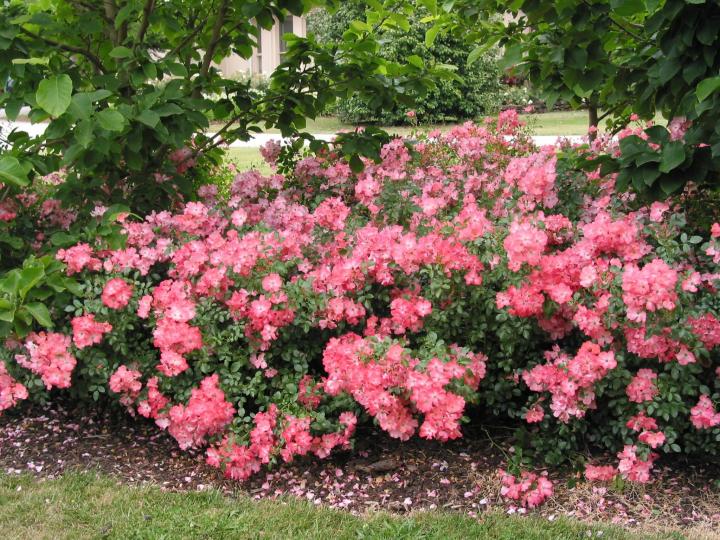
See also our list of disease-resistant rose varieties.
Gardening Products
Cooking Notes
The tart reddish-orange hips of rugosa roses are used for jams, jellies, syrups, pies, teas, and wine. Check out our Rose Hip Jam recipe.
Rose petals are edible and can be tossed into salads for color, candied to decorate cakes, or distilled to make rose water. Make sure the rose petals are pesticide free.




Hi Jamey,
Make sure your newly planted roses get plenty of sunshine and water. No need to fertilize yet. The mix of compost and manure will nurish the bushes as they get established. Only cut back any dead branches now. Add extra mulch or leaves around the bushes in the fall to protect them from severe cold. Good luck!
Hi Ann,
Uncover your roses when night temperatures are consistently over 32 degrees.
- « Previous
- 1
- 2
- …
- 10
- Next »

Comments