Learn How to Grow More Food in Less Space!

Grow more in less space with interplanting, succession planting, and other techniques. Robin has five simple gardening tips for ensuring a bountiful harvest, even if you only have a small space to work with!
5 Tips for Small-Space Gardening
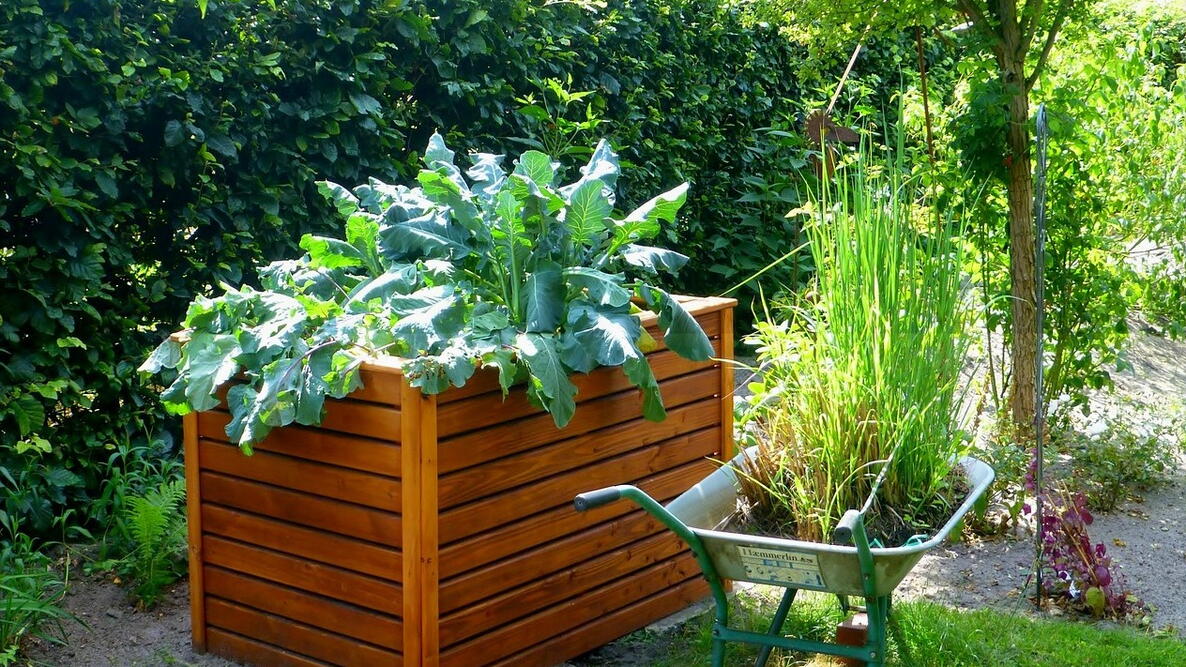
1. Use Raised Beds
Forget about growing plants single file in long, parallel rows. You can grow up to 10 times the amount of produce in the same space by using raised beds and square-foot gardening.
In a raised garden bed, you keep outside weeds from your garden soil, prevent water runoff and soil compaction, and worry less about slugs, snails, and other garden pests. Also, garden boxes allow you to concentrate your energy in a small area, meaning you can work, water, weed, and fertilize as economically as possible. You can make the most of the entire growing season by using season-extending devices such as cold frames, cloches, row covers, and plastic tunnels, too.
Here’s how to build your own raised garden bed.
2. Keep Seedlings Coming
Succession planting keeps the garden in continual production. Whenever one crop is harvested, have seedlings ready to transplant in its place. For the best results, use quick-maturing vegetables such as radishes or salad greens to fit several crops into one season and spread out the harvest. See 5 fast-growing veggies to try.
3. Interplant (Intercrop)
“Interplanting” or “intercropping” is the practice of planting small crops in between bigger ones; the small, fast-growing crops will be ready before the big ones need the extra space. If you have a small area, this lets you use your space more efficiently and for longer.
To “interplant,” plants should be placed close enough so that their leaves will touch when they’re mature, shading the ground between them. This will keep weeds down and conserve moisture, reducing the need to mulch and weed.
As the plants begin to crowd out their neighbors, harvest the early-maturing ones, leaving room for the others to develop. For example, plant lettuce around longer-season vegetables such as broccoli, peppers, or tomatoes.
Check out our video to learn more about interplanting.
4. Plant Companions, Not Competitors
Some intercropping partners thrive if their roots occupy a different depth of soil. Pairing shallow-rooted vegetables, such as bush beans, with deeply rooted beets makes good use of space without creating root competition. Similarly, planting heavy feeders such as cabbage or cucumbers with light-feeding carrots or beans reduces the competition for soil nutrients. The best intercropping partners are companion plants that have different demands and complement each other, such as the Three Sisters: corn, beans, and squash. Refer to our vegetable companion planting chart for more recommended pairings.
5. Grow Up, Not Out
Lay out your garden plot with the fence, trellis, or wall on the north side. By planting the tallest plants there, you will avoid shading the smaller ones. Vining plants, if left to sprawl, take up valuable space in a small garden, so help them grow up.
- Cucumbers will eagerly climb a nylon net fence, with the subsequent bonus result that the dangling fruits grow straighter and are easier to pick.
- Tomatoes produce more fruit and ripen earlier if kept off the ground on a trellis or in a wire cage.
- Peas and pole beans naturally reach for the sky and will cover a wire fence or twine around a tripod of poles.
Some heavier plants, such as cantaloupes, watermelons, and winter squashes, may need help in climbing, so tie their vines to the structure to get them going in the right direction. Support the fruit with slings to keep them from tearing off the vine too soon.
Read more about the art of vertical gardening and fit more in less space!
Plot Out Your Garden
Good soil, adequate sunshine, and sufficient drainage are the key requirements for a successful vegetable garden, but planning your garden’s layout shouldn’t be a last-minute thought. Every garden—and every gardener—is different, so create a garden tailored to your space and needs.
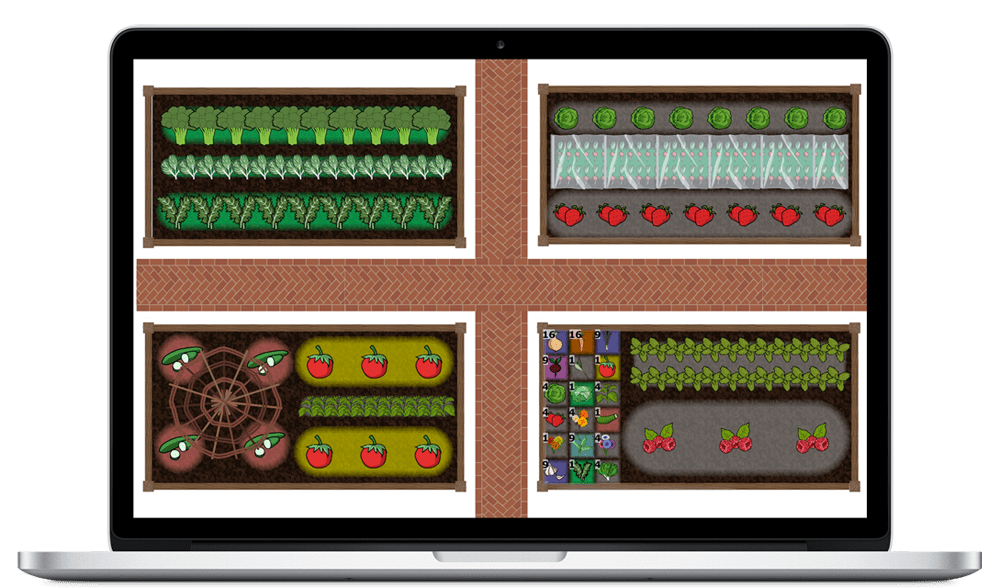
For example, a 100-square-foot garden (10x10 feet) can easily yield a wide variety of veggies. Bisecting it with two narrow paths forms four beds that are easy to reach into and tend. (One square = one square foot.)
To plan out your own garden, use The Old Farmer’s Almanac Garden Planner. You can try it free for 7 days—ample time to design your best garden yet!
More Like This



Hi Laura,
To figure out how space the right number of vegetables in your raised garden, try our free online Garden Planner here:
gardenplanner.almanac.com
Raised gardens are usually a great solution for rainy, wet weather. This way, the beds won't suffer from wet soil. Adding lots of organic matter such as partially rotting straw or compost also helps. If wet weather is a common issue, consider planting vegetables with short growing cycles such as tomatoes, peas, radishes, potatoes, beans, and carrots.
You can include manure in your mix but make sure that it is extremely well-rotted and the animals that produced it were from organic systems; many gardeners have had whole crops killed off by using manure from animals grazed on land sprayed with herbicides.
Make sure that when you add sand you mix it with soil or compost, as using sand on its own can form a hard-packed layer. Mixed with other materials however it helps to open up the soil and improve the structure, making it more free-draining.
Some people (especially square foot gardeners) also add vermiculite or perlite to their raised bed mixes, but if you have access to leafmold this is a much more economical option, and will also help to improve the soil structure.
Hi Deborah,
Wow, that's a lot of vegetables. Any vegetable that vines will benefit from a trellis. Squashes may get a little heavy and you may need to give them extra support on the trellis. Peas and beans that are not bush types should also have something to climb on. Artichokes don't usually need a trellis. You need to check your seed package or look online to see how big or tall each variety will grow. Good luck! It sounds like you have a great start to a productive vegetable garden.
You do need 6 to 8 hours of sun for vegetables to grow. It's the heat that can be a problem in Texas. You can consider: providing some shade on the south or southwest side to protect the veggies from afternoon sun. You should avoid overhead shade or structures that block sunlight. Mulch generously and water with drip hose at the base of the plants. Make sure that the soil stays moist (NOT wet) or soggy. This keeps the root environment cool.
Also, use heat-tolerant varieties for your area! Check out some online resources from Texas A&M (http://aggie-horticulture.tamu.edu/vegetable/ and http://plantdiseasehandbook.tamu.edu ).
- « Previous
- 1
- 2
- …
- 10
- Next »

Comments