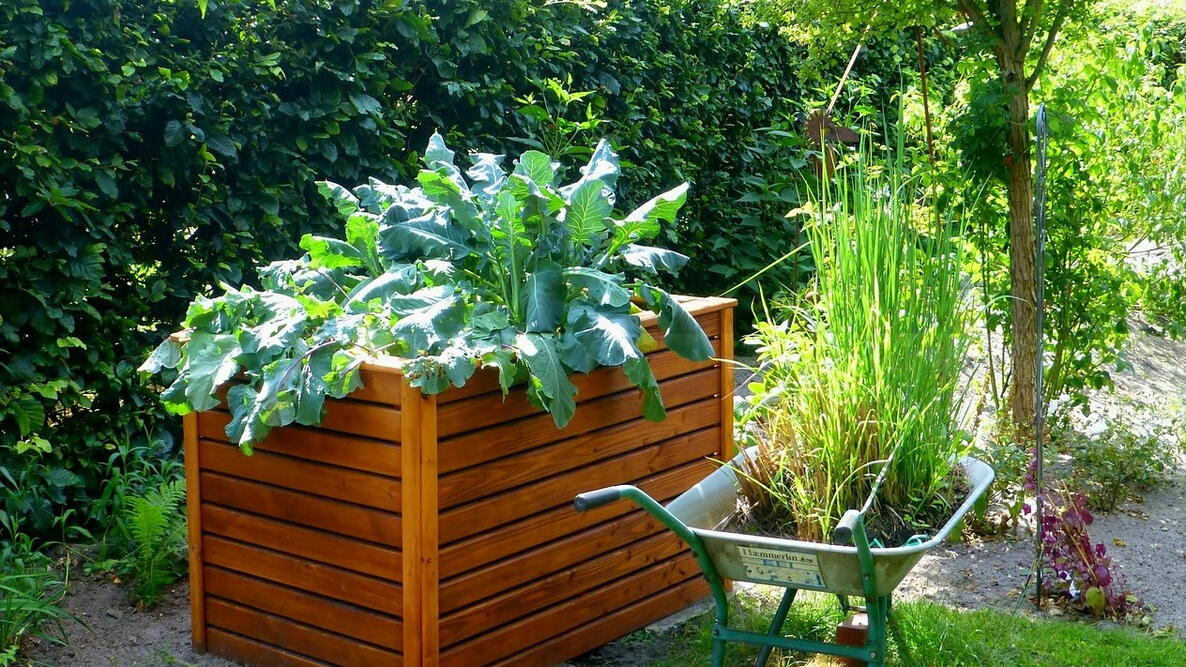

Think you need a big backyard to grow a productive vegetable garden? Think again! With a few smart gardening techniques, you can harvest an abundance of fresh vegetables from even the smallest spaces. Whether you’re growing in raised beds, containers, or a compact backyard plot, maximizing every square foot is the key to success.
How can you grow more vegetables in a small garden?
Five of the best space-saving gardening techniques are:
Use raised beds
Practice succession planting
Interplant compatible crops
Grow companion plants together
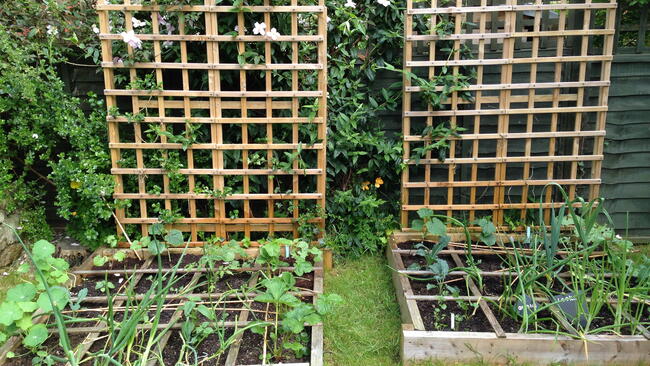
Use trellises and vertical supports
Why Small-Space Gardening Works
You don’t need a large backyard to grow a productive vegetable garden. By using smart gardening techniques, even a small plot—or raised bed, patio, or balcony—can produce an impressive harvest. The key is making the most of every square foot through efficient planting methods that reduce wasted space and keep your garden producing throughout the growing season.
Raised beds, succession planting, interplanting, companion planting, and vertical gardening all help maximize yields while improving plant health and making garden maintenance easier. With a little planning, a small-space garden can provide fresh vegetables, herbs, and flowers from spring through fall.
5 Tips for Small-Space Gardening
1. Grow More in Raised Beds
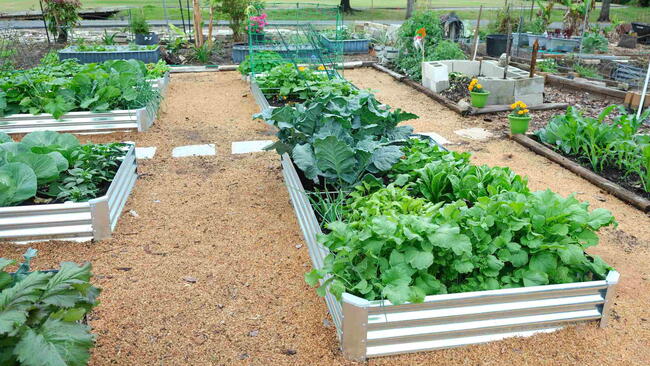
Forget about growing plants single file in long, parallel rows. You can grow up to 10 times the amount of produce in the same space by using raised beds and square-foot gardening.
In a raised garden bed, you keep outside weeds from your garden soil, prevent water runoff and soil compaction, and worry less about slugs, snails, and other garden pests. Also, garden boxes allow you to concentrate your energy in a small area, meaning you can work, water, weed, and fertilize as economically as possible. You can make the most of the entire growing season by using season-extending devices such as cold frames, cloches, row covers, and plastic tunnels too.
Here’s how to build your own raised garden bed.
2. Practice Succession Planting
Succession planting keeps the garden in continual production. Whenever one crop is harvested, have seedlings ready to transplant in its place. For the best results, use quick-maturing vegetables such as radishes or salad greens to fit several crops into one season and spread out the harvest. See 5 fast-growing veggies to try.
3. Interplant Crops for Higher Yields
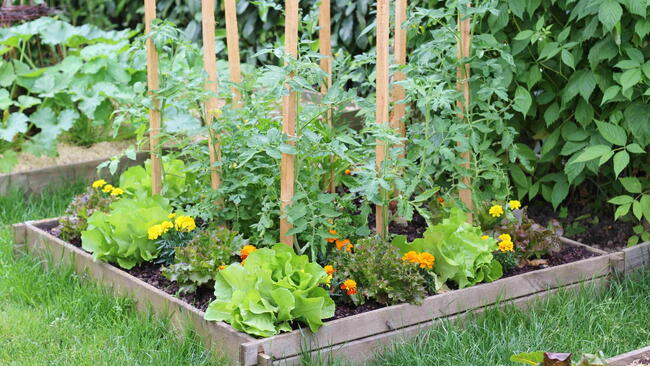
“Interplanting” or “intercropping” is the practice of planting small crops in between bigger ones; the small, fast-growing crops will be ready before the big ones need the extra space. If you have a small area, this lets you use your space more efficiently and for longer.
To “interplant,” plants should be placed close enough so that their leaves will touch when they’re mature, shading the ground between them. This will keep weeds down and conserve moisture, reducing the need to mulch and weed.
As the plants begin to crowd out their neighbors, harvest the early-maturing ones, leaving room for the others to develop. For example, plant lettuce around longer-season vegetables such as broccoli, peppers, or tomatoes.
Check out our video to learn more about interplanting.
4. Pair Companion Plants
Some intercropping partners thrive if their roots occupy a different depth of soil. Pairing shallow-rooted vegetables, such as bush beans, with deeply rooted beets makes good use of space without creating root competition. Similarly, planting heavy feeders such as cabbages or cucumbers with light-feeding carrots or beans reduces the competition for soil nutrients. The best intercropping partners are companion plants that have different demands and complement each other, such as the Three Sisters: corn, beans, and squash. Refer to our vegetable companion planting chart for more recommended pairings.
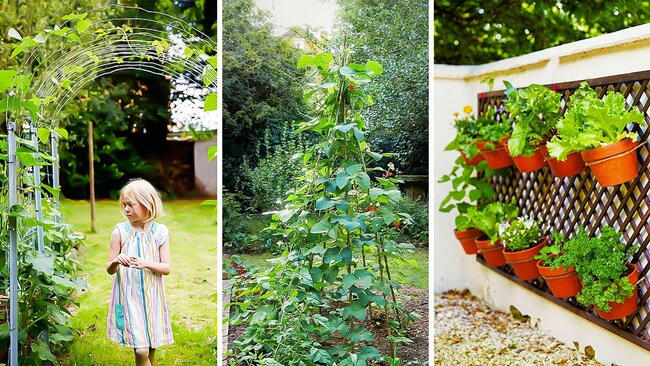
5. Grow Vertically
Lay out your garden plot with the fence, trellis, or wall on the north side. By planting the tallest plants there, you will avoid shading the smaller ones. Vining plants, if left to sprawl, take up valuable space in a small garden, so help them grow up.
- Cucumbers will eagerly climb a nylon net fence, with the subsequent bonus result that the dangling fruits grow straighter and are easier to pick.
- Tomatoes produce more fruit and ripen earlier if kept off the ground on a trellis or in a wire cage.
- Peas and pole beans naturally reach for the sky and will cover a wire fence or twine around a tripod of poles.
Some heavier plants, such as cantaloupes, watermelons, and winter squashes, may need help in climbing, so tie their vines to the structure to get them going in the right direction. Support the fruit with slings to keep them from tearing off the vine too soon.
Read more about the art of vertical gardening and fit more in less space!
Best Space-Saving Gardening Methods
| Technique | Best For | Main Benefit |
|---|---|---|
| Raised beds | All gardens | More plants per square foot |
| Succession planting | Continuous harvest | Multiple crops each season |
| Interplanting | Vegetable beds | Maximizes unused space |
| Companion planting | Mixed gardens | Better plant health and efficiency |
| Vertical gardening | Vining crops | Saves valuable ground space |
FAQs
What is small-space gardening?
Small-space gardening is growing vegetables, herbs, or flowers in limited areas by using efficient tools and techniques such as raised beds, vertical supports, and succession planting.
What vegetables grow best in a small garden?
Lettuces, spinach, carrots, radishes, bush beans, peppers, tomatoes, cucumbers, and herbs are all excellent choices for compact gardens.
How can I grow more vegetables in less space?
Use raised beds, plant crops in succession, grow vertically, and interplant fast-growing vegetables between slower-growing crops.
Is vertical gardening worth it?
Yes. Trellising cucumbers, tomatoes, peas, beans, and squash frees up ground space, improves airflow, and makes harvesting easier.
Plot Out Your Garden
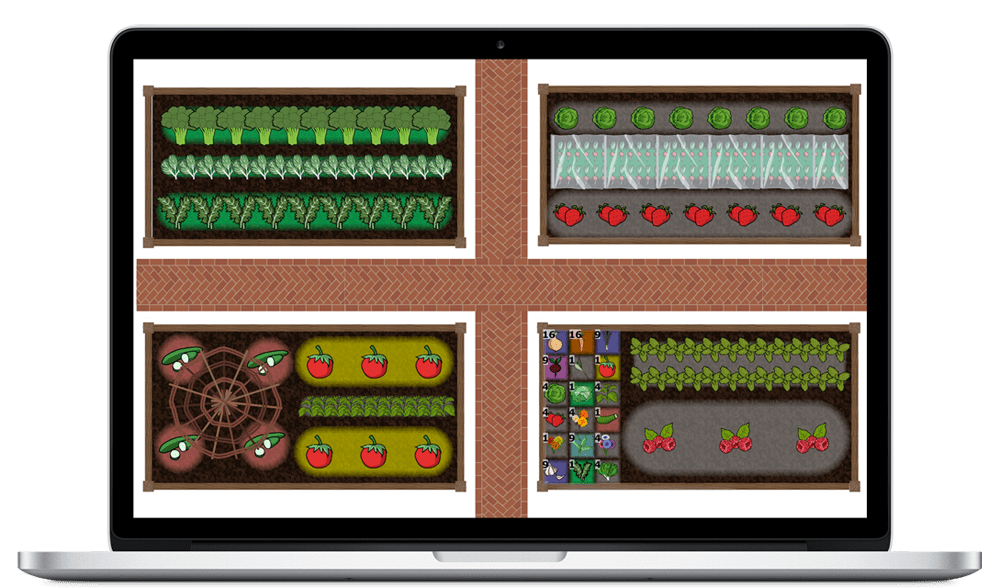
Good soil, adequate sunshine, and sufficient drainage are key requirements for a successful vegetable garden, but planning your garden’s layout shouldn’t be a last-minute thought. Every garden—and every gardener—is different, so create a garden tailored to your space and needs.
For example, a 100-square-foot garden (10x10 feet) can easily yield a wide variety of veggies. Bisecting it with two narrow paths forms four beds that are easy to reach into and tend. (One square = one square foot.)
To plan out your own garden, use The Old Farmer’s Almanac Garden Planner. You can try it free for 7 days—ample time to design your best garden yet!
More Like This

What a disappointment! It sounds like blossom end rot, resulting from uneven moisture. See here for more information: https://www.almanac.com/plant/squash-and-zucchini This is often a result of improper pH levels. Get an inexpensive kit (more here https://www.almanac.com/blog/gardening/garden-journal/soil-testing-better-garden ) or contact your local cooperative extension about having a more thorough test; find you coop service here: https://www.almanac.com/search/site/cooperative%20extension
And there's this: are you rotating the plants in the beds, not planting the same thing in the same soil every year? Change the place you plant every year. Here's some advice on that: https://www.almanac.com/video/how-rotate-your-vegetable-crops
And it might not be a bad idea to mix in some fresh compost every spring. We hope this helps and the zukes are beautiful this year.
Twelve inches is ideal, but that doesn't mean you will not have success with a LOT of vegetables. Did you break up and loosen the soil under? Remember plant roots will take advantage of that, too! Even if you have not you, you can do that if you haven't yet filled the bed with soil. Here's our general advice, which addresses these and other aspects: https://www.almanac.com/content/how-build-raised-garden-bed
We hope you harvest a heap!
We have no easy answer but a couple of ideas. It might be rabbits; you do not say what the fence is made of, and they can squeeze through very small places. The apparent almost-overnight disappearance is especially puzzling but we'll take a stab at this: Is your soil too rich? That is, could the pH be off? is it holding water (is it too tick/rich/heavy to drain well) and drowning the roots? Compost is good but maybe, just maybe the mixture lacks essential nutrients. You could do a soil test. Cooperative extensions perform the most thorough tests; find the service nearest you here: https://www.almanac.com/content/raised-bed-gardens-and-small-plots#comment-85906
When you contact the service, ask them if they have any other ideas, based on your location.
We hope this helps!

To avoid shading out neighboring plants, rows that run north to south are the best.
- « Previous
- 1
- 2
- …
- 10
- Next »

Comments