
Planting, Growing, and Harvesting Sweet Corn

Read Next
Planting
The most common reasons for slow growth include poor light levels, not enough moisture, or a lack of nutrients. Plant in full sun (at least 6 to 8 hours of direct sunlight). Soil needs to be consistently moist (though well-draining), as corn tends to suck up a lot of water. Corn is a hungry plant, so it’s important to enrich beds with lots of organic matter, such as garden compost (ideally in the fall).
When to Plant Corn
- Most gardeners sow corn directly in the garden soil (versus indoors) so that their sensitive roots aren’t disturbed when transplanting.
- Corn is very sensitive to frost; do not plant soil temperature is at least 60°F (16°C), or 65°F (18°C) for supersweet varieties. Usually, this is 2 or 3 weeks after the last frost in spring. See our Planting Calendar for corn based on average frost dates.
- If you live in an area with a shorter growing season, choose an early variety that will mature well before the first fall frost. The ground can be warmed by a black plastic cover; sow seeds through holes in the plastic.
- A couple of weeks after planting your first round of corn, plant another round in order to extend the harvest.
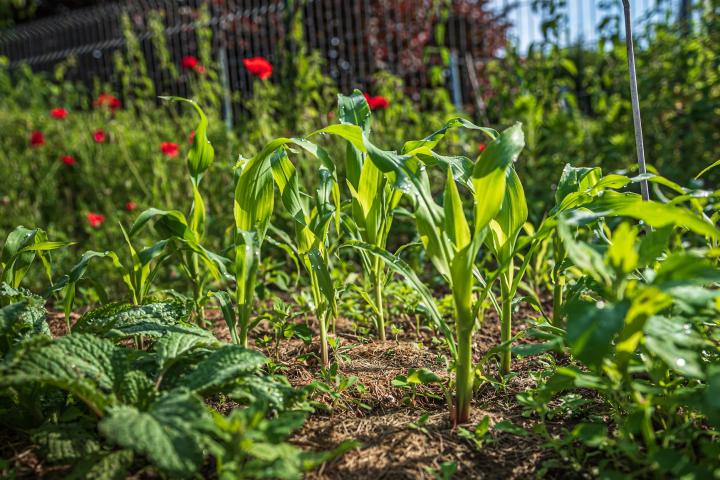
How to Plant Corn
- To speed germination, moisten seeds, wrap them in moist paper towels, and store them in a plastic bag for 24 hours.
- Because corn is wind-pollinated, it’s essential to plant in a block, rather than a single row. For decent pollination, we recommend a modest block of, say, 10 to 50 plants. This maximizes the chances of the pollen released from the male tassels at the top of the plants drifting down into contact with the female silks lower down. Incomplete or inconsistent kernel development, with the cobs only partly or sporadically filled, is down to poor pollination. The silks protruding from the end of each cob are responsible for carrying the pollen down to the kernels. One strand connects to one kernel, so for complete fill, every strand of the silk must be pollinated.
- Sow seeds about 1½ to 2 inches deep and 12 inches apart in rows 2½ to 3 feet apart. Don’t plant too close together or you run the risk of disappointingly small cobs.
- You may choose to fertilize at planting time with a general purpose (10-10-10 fertilizer); corn is meant to grow rapidly.
- Water well at planting time.
Sowing Corn Indoors
If you’re going to start seeds early, sow the seeds in pots under the protection of a greenhouse, hoop house, or cold frame. This means you can begin sowing three to four weeks before your last frost date, giving you a head start on corn sown outdoors—a huge advantage for areas with shorter growing seasons.
Sow eight to ten seeds 1/2 inch deep into 4-inch-wide pots, or sow two seeds per module in a plug tray and remove the weakest of the two seedlings when they emerge. Keep the potting soil moist as they grow on.
Harden off the plants as your recommended planting time approaches by placing them outside for increasingly longer spells over the course of about a week. Plants should be at least 6 inches tall by the time they’re transplanted outdoors.
Check out this video for great tips on growing juicy corn:
Types
Types of Sweet Corn
There are four main types of hybrid sweet corn: sugary (su), sugar-enhanced (se), shrunken (sh, sh2), and synergistic (sy). Each one contains a different level of sucrose, changing the flavor and texture of the corn. The type of corn will be listed right on the seed packet.
It’s important to be aware of which type of corn you’re growing—not only because of the sugar content, but also due to how easily the types can cross-pollinate. If the wrong combination of types cross-pollinates, the ears that are produced may be of subpar quality.
- Sugary (su) sweet corn is the classic sweet corn. Sugary varieties grow vigorously and are stress resistant. The kernels aren’t too sweet and are said to have a “traditional” taste. However, the sugars in sugary sweet corn quickly turn to starch after the ears are picked, so they need to be eaten right after picking. Do not plant near shrunken or synergistic types.
- Sugar-enhanced (se) sweet corn is slightly sweeter than sugary varieties. They keep their sweetness for a longer period of time after harvest (a few days) than sugary varieties. They grow well with few issues. Do not plant near shrunken types.
- Shrunken (sh, sh2) sweet corn—also called “supersweet”—are the sweetest varieties, containing two to three times more sugar than sugary varieties. The sugar in their kernels lasts even longer after harvest (up to a week) than the other types, but kernels tend to be more crunchy and not taste as “corny.” Shrunken types are also more finicky overall. Do not plant them near any other types; hybrid kernels turn out starchy and tough.
- Synergistic (sy) sweet corn combines sugar-enhanced with one of the other two types to create varieties that have the best of both worlds. Synergistic types tend to have very sweet, tender kernels with a good taste and some synergistic varieties can keep up to a week after harvest. Do not plant near sugary or shrunken types.
Recommended varieties include:
- ‘Argent’: sugar-enhanced variety, good taste. White kernels.
- ‘Iochief’: midseason, normal-sugar variety. Yellow kernels.
- ‘Luther Hill’: dwarf, normal-sugar variety. Produces 4- to 6-inch ears on 4- to 5-foot stalks. White kernels. Grow at least nine dwarf plants in a block of three or four rows.
- ‘Silver Queen’: normal-sugar variety. Resistant to some bacterial diseases. White kernels.
- ‘Sweet Sunshine’: supersweet variety. Disease resistant and high yield. Yellow kernels.
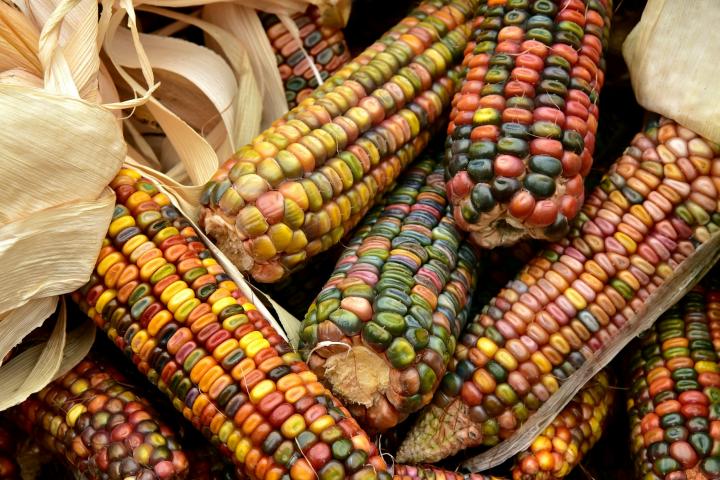
Corn can be a feast for the eyes, too! Look for these ornamental varieties:
- ‘Glass Gem’: Sporting multi-colored, semi-transparent kernels, this is a favorite for kids.
- ‘Painted Mountain’: Looking for the classic “maize” colors? This variety has a great diversity of natural tones. Check out our video to learn more about growing and using painted mountain corn.
Harvesting
- The warmer the air, the more quickly corn matures. It is usually ripe about 15 to 23 days after silking and sooner if temperatures are exceptionally high.
- When two ears grow on a stalk, the upper ear matures 1 to 2 days before the lower one.
- At harvest, ears should be rounded or blunt, not pointed, with tassels turning brown and kernels full and milky.
- To test, pull down some husk and pierce a kernel with a fingernail. If it’s white, or milky, it’s ready. The milk stage is brief; in hot weather (over 85°F/29°C), sweet corn is at peak for only 1 to 2 days, so check it frequently. Corn harvested a few days after milk stage will not be as sweet.
- Pull ears downward and twist to remove from stalk.
- Sweet corn varieties (except for supersweet varieties) lose their sweetness soon after harvest. Immediately after picking, prepare the ears for eating or preservation.
- Prepare for eating or preserving immediately after picking. Enjoy your harvested corncobs as soon as you can. The quicker they’re cooked, the sweeter they will be!
- If immature corn suffers a late-season frost, the plants and cobs can be damaged and result in the death of the plant or poor-tasting corn.

How to Store Corn
- Sweet corn freezes well, especially if removed from ears before freezing. Learn how to properly freeze corn.
- Corn can also be harvested for other purposes!
Gardening Products
Cooking Notes
- If too much hot pepper or spice has been added to a soup or stew, adding a can of sweet corn can help.
- Popcorn is also a favorite snack if you have leftover kernels. Learn how to make homemade popcorn here.

More Like This




Mix in compost, compost and more compost. Lots of recycling centers have compost for free. And if you haven't got enough compost, just add any dead organic material as it becomes available (like dead leaves as a mulch, some dried manure etc). It will eventually break down, and improve the soil quality.
In terms of your neighbor's cats in the garden:
Some readers say to try spraying a solution of a little cayenne and water. It's nontoxic to the animals, doesn't hurt the plants, cats hate the smell. Reapply after rain.
You could also try placing moth balls around the edges of your garden.
There are also commercial cat repellents that you can get at garden centers or online at pet supply stores and gardening supply centers. Make sure that the repellent that you get is safe for any children, plants, pets, or other animals etc. that may be around.
Definitely follow the direction on your seed packet. Spacing depends on the variety of corn you are planting. Also we adjusted our spacing on this page after viewing more typical sweet corn varieties.
The reason that we plant extra seeds is because some do not germinate--plus you want to thin out the poorer seedings, saving the best plant from each spot.
Pollination happens once you have the silks. We plant it blocks of rows instead of a long, single row because corn is wind-pollinated and the pollen would distribute better this way.
I hope we're answering your question! All the best with some juicy garden-fresh corn!
It depends on the variety, but the days to maturity are usually about 65 to 75 days.
We understand! Here is a very helpful page on how to deter redwing blackbirds from your sweet corn:
http://extension.umass.edu/vegetable/alerts/preventing-bird-damage-sweet-corn
What often is most effective is a combination of visual and auditory deterrants. For example, combine scare-eye balloons with auditory repellents like shellcrackers or distress calls.
- « Previous
- 1
- 2
- …
- 10
- Next »

Comments