
Photo Credit
Tienuskin/Shutterstock
Subhead
Plant gladiolus to enjoy bold blooms and beautiful summer bouquets.

Read Next
Planting
For the best blooms, plant glads in full sun (6 to 8 hours of sunlight per day) in well-draining soil that’s moderately fertile. They will not do well in heavy, soggy soil. Mix compost (humus) into your soil to improve consistency and fertility.
When to Plant Gladiolus
- Start planting gladiolus corms in the spring once the danger of frost has passed and the soil has warmed to at least 55°F (13°C). See your local frost dates here.
- From your last frost date to early summer, plant another round of corms every ten days or so. This will result in continuous blooms through early fall!
- Depending on the variety, it takes between 60 and 90 days from the time glads are planted for the corms to root, grow, and bloom.
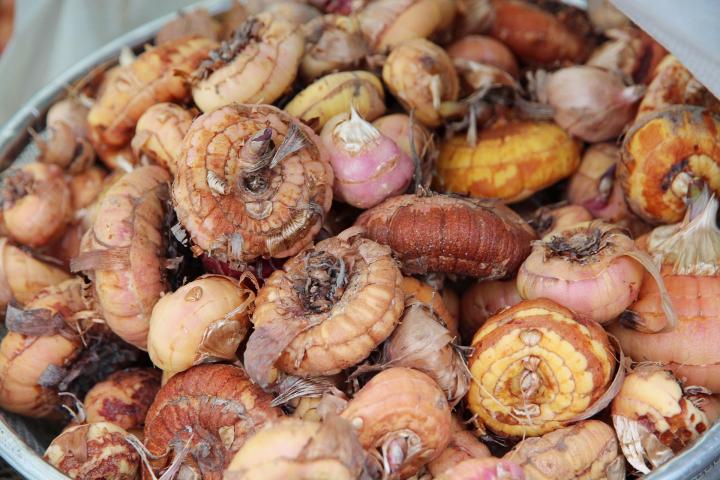
How to Plant Gladiolus
- Ready your garden by using a garden fork or tiller to loosen the soil to about 12 to 15 inches deep. After loosening the soil, mix in a 2- to 4-inch layer of compost or aged manure.
- To ensure large-sized blooms, plant corms that are 1¼ inch or larger in diameter.
- Set the corm in the hole about 4 inches deep with the pointed end facing up. Cover with soil and press firmly.
- Space the corms 6 to 8 inches apart.
- If you grow gladioli primarily for cut flowers, plant them in rows. It’s easier to tend the plants and to harvest the flowers.
- If planted with other flowers in borders or annual beds, plant the corms in groups of 7 or more for the best effect.
- Water the corms thoroughly at planting.
- If you’re planting tall varieties, be sure to stake them at planting time. Be careful not to damage the corms with the stakes.
Growing
How to Grow Gladiolus
- Put a 2- to 4-inch layer of mulch around your gladioli to keep your soil moist and help prevent weeds.
- If you get less than 1 inch of rain a week, water your plants regularly throughout the summer. Otherwise, water them moderately when they are growing to keep the soil moist.
- Remove the faded/dead flowers to ensure continuous blooms. Once all the flowers on a stalk are gone, cut the stalk off at about 2 to 3 inches above the soil.
- Be sure to leave the plant intact so it can mature and grow the corms for the next season.
Winter Protection for Gladiolus
- If you live in USDA Hardiness Zone 8 or warmer, put down a layer of hay or straw for winter protection. Gladiolus can remain in the ground through winter, provided a hard freeze (28°F or colder) isn’t common in your area.
- In colder regions (Zone 7 or colder), dig up gladioli corms once the foliage has faded after the first fall frost. A light frost will kill the foliage but not the rest of the plant. Be sure to dig up the gladiolus corms before a hard freeze (28°F), or the plants could be fatally damaged.
- All that said, many gardeners who live in the “border” Zones 6 and 7 have tried leaving them glads in the ground and found that they survived; this is a judgment call based on your microclimate, your variety of gladiolus, and climate shifts.
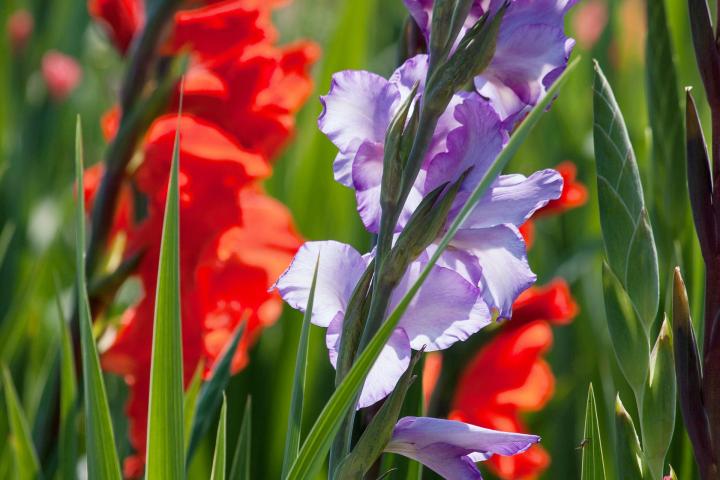
Digging Up and Storing Gladioli Corms
To dig up the gladioli corms for winter storage, follow these tips:
- Use a spade and dig up the entire plant, grasping the top to pull it out of the soil. Avoid bruising or injuring corms while digging. Shake off all loose soil (do not wash them off) and discard damaged corms. Cut the stalk down to 1 to 2 inches above the corm. Save the small cormels separately if you so desire. These will bloom in 2 to 3 years if you replant them each spring.
- Allow the corms to dry in the sun for 1 or 2 days if the weather agrees. Sift out excess soil and place corms in wooden flats or trays. Cure in a warm and airy location for 2 to 3 weeks. Remove and throw away the oldest bottom corms (from the base of the new ones).
- Don’t remove the husks on the corms.
- Dust the corms with a fungicide (“bulb dust”) to avoid disease problems. Place dust and bulbs in a paper bag and shake vigorously.
- Store the corms in paper or cloth bags, pantyhose, or old onion sacks. Stack or hang the containers so air can move among them. Store the corms at 35° to 45°F (2° to 7°C) in low humidity. A cool basement is quite suitable. Do not allow corms to freeze.
- Replant these corms in the spring for another year of beautiful blooms.
Learn more tips for storing gladiolus through the winter.
Types
Gladioli come in a variety of sizes and colors, with the most popular being part of the following hybrid groups:
- Grandiflora Hybrids: These are the classic gladioli that produce a plentiful amount of large (5- to 6-inch) blooms in a range of colors. The plants produce flower stalks that reach up to 4 feet in height and are winter hardy to Zone 7.
- Dwarf Grandiflora Hybrids: These miniature glads are an excellent choice for containers and cutting gardens, as their flowers are about half the size of Grandifloras, and their shorter stalks don’t typically require staking. They are also winter hardy to Zone 7. Glamini gladioli are included in this group; they are pest-resistant and will bloom in full sun or partial shade.
- Nanus Hybrids: Hardy to Zone 5, these smaller gladioli look a lot like Grandifloras, but do not produce as many flowers. They tend to grow no larger than about 2 feet in height, which makes them perfect for containers or small spaces.
Some specific gladiolus varieties of note include:
- ‘Black Star’ has deep purple-red blooms
- ‘Candyman’ for its beautiful, deep pink flowers
- ‘Costa’ sports ruffled flowers in blue-purple
- ‘Dream’s End’ makes a good background plant because its flower spike is up to 3 feet tall (and it has pretty light orange flowers with large yellow centers)
- ‘Fun Time’ has yellow flowers edged with red
- ‘Green Time’ for its unusual lime-green flowers
- ‘Prins Claus’ has white flowers with splashes of pink on its petals
- ‘Priscilla’ produces off-white flowers with a yellow center and a pink edge
Harvesting
To cut glads for bouquets, follow these tips:
- Cut the flower stalks early in the morning or at night, not during the heat of the day.
- Use a sharp knife and bring a bucket of lukewarm water to the flower bed; cut diagonally through the stalks and place in the bucket.
- Cut stalks with only one or two open flowers. The rest of the buds will open after you put them in a vase. Leave at least four leaves on the plant in the ground if you want to reuse the corms.
- Place the bucket with the flowers in a cool dark place for a few hours before arranging them in a vase.
- Remove lower fading flowers and cut about 1 inch off the bottom of each flower stalk every few days.
Gardening Products

More Like This



Sounds like deer--who do like to eat the tops off glads. See our deer page for ideas on how to deter: http://www.almanac.com/content/deer
My Gladiolus bloomed good and everything. But when they bloomed, the flower bent over all the way. I tried placing it up right, but it came fully out! It wasnt yellow, it just came right out for no reason. Then I noticed another one was bending. So I tried placing it up right, I heard a tiny snap, and I put dirt on it. The next day it started yellowing! All my other Gladiolus I placed upright with dirt are yellowing and im afraid it will end up like the first one. Please help!
Stake glads first thing to avoid the likelihood of damaging their roots with the stakes. Otherwise, they will easily blow over and snap. Once they die, they will yellow. If plants are yellow or stunted before their natural end, there is a virus infection and there is no cure; you need to pull them out.
I've been having the problem! I read that tall varieties need staking or a grid with stakes and string. I'm hoping mine will come back next year and I can catch them before they start to bend.
This is my 1st attempt at growing Glads.... they were planted at about 6-8 inches depth.. they have beautiful TALL leaves, but no sign of blooms.... what should I do???
Hang in there. Glads bloom in mid- to -late summer. We hope it's just a matter of time.
Mine took a full year before they bloomed. I planted thm last year for the first time and had big tall shoots but no blooms. This year they finally did bloom and they were beautiful. I did have to stake them though. I was wondering if they would continue to bloom but they haven't.
Help! My gladious are doing well, up to last week. They were growing up beautifully, as I opened up a new area in my garden for them this early spring. Got them planted in good mircle grow soil, and all green and well. 2 weeks ago, I notice some yellowing of one of stalks' leaves, and a few days go by, the whole stalk went yellow, dried up and died. I pull it out. Thought it was just lacking water. Out of the 20 planted in the same location, this is just one that died. I didn't think much of it. Since then, I've watered all the rest of the glads at least once per day, and everything looks good. Then this morning, I notice some other glads are yellowing too. They're getting plenty of sun and water. Yellowing?! I don't know why! Virus? How do I know? What should I treat the soil with so that the rest of the corms planted don't get infected,too? I have tomatoes and other veggies planted nearby and don't want to use dangerous pesticides on the soil.
Any help appreciated. Thanks in advance.
Yellowing leaves could indicate several things, from overwatering to pests or diseases. Glads like it moist, but not waterlogged; provide about 1 inch of water per week and make sure the soil is well-drained.
Dry rot is a fungal disease that causes corky, dry, brown or black spots on corms; leaves may show black fungi spots at the bases; red-brown lesions may appear on leaves. The plants may turn yellow and die early. With this disease, destroy infected plants and replant next year in a different area that is well-drained; harvest corms in fall in dry weather. With several diseases, it is best not to plant in the same area the next time, because the new plants might contract the disease if it lives in the soil.
Check for signs of insects, under leaves or in the areas where the leaves attached to the main stem. Mites can cause yellowing leaves as they feed on plant juices.
To better diagnose the problem, you might want to bring in a sample to a local nursery or your county's Cooperative Extension. For the Cooperative Extension information for your area, see:
http://www.almanac.com/content/cooperative-extension-services
Hi Can I use Peat Moss or a Lawn Fertilizer when planting my Gladiolus Bubs? Thank you
- « Previous
- 1
- 2
- …
- 10
- Next »
📣The Gardening Club Just Got Better! 3 Deliveries, 10% Store Discount, and more!

Comments