
Planting, Growing, and Harvesting Zucchini & Summer Squash

Ever found a giant zucchini hiding under a leaf like it’s trying to win “Vegetable Hide-and-Seek”? You’re not alone. Zucchini and summer squash are famously productive—and delightfully sneaky! Whether you’re dreaming of crispy sautéed slices or a freezer full of zucchini bread, this guide will walk you through growing these summer staples from seed to squash. Get ready for a harvest that just might overrun your kitchen (in the best way).
About Zucchini
Note that squash is generally divided into two categories: summer squash (harvested in summer) and winter squash (harvested in autumn). The skin of summer squash is edible, unlike the skin of winter squash. Most summer squashes now come in bush varieties, which take up less space, whereas winter squashes are vining plants that need more space.
Zucchini are warm-season crops with compact, bushy, or trailing varieties to pick from. Compact types are suitable for containers—indeed, anywhere you don’t have a lot of space—while trailing types may be trained as climbers to grow up supports such as a trellis or wire mesh.
Green zucchini are always going to be popular, but try a few of their more charismatic cousins as well, including varieties with yellow fruits, striped or ribbed fruits, and even round fruits.
This guide focuses on summer squash. Summer squash varieties include zucchini, yellow squash (straightneck squash), and crookneck squash. Note: All types of summer squash require very similar care, so even though we mainly refer to zucchini on this page, consider it to be applicable to whatever summer squash variety you’re growing!
Zucchini is a vigorous grower. While each plant will produce several squash during peak season, you’ll typically find that one or two zucchini plants will produce a “bumper” (unusually large) crop, leaving you to give the squash away to neighbors or bake lots of zucchini bread!
Read Next
Types
- ‘Cashflow’: cylindrical zucchini type
- ‘Cocozella (di Napoli)’: zucchini heirloom; dark green, slender
- ‘Goldbar’: yellow summer squash
- ‘Horn of Plenty’: yellow crookneck type
- ‘Sunburst’: pattypan/scallop type
- ‘Tigress’: zucchini type
Harvesting
Harvest summer squash when tender and a bit immature (6 to 8 inches long) for more flavor. Believe us, oversize squash has very little taste. Many people wait too long to harvest. If you have ever had a negative experience with zucchini before, it’s probably because they were left to become bruisers.
- Most varieties average 60 days to maturity, and are ready as soon as a week after flowering. (Check the seed packet for more exact information.)
- Cut (do not break) fruit off the vine with a sharp knife, or you risk damaging the soft stem of the plant. Leave at least 1 inch of stem on the fruit.
- To slow production, harvest fruit when small and/or remove male flowers.
- If the harvest is interrupted (say, by your vacation), remove large squash on your return to reduce demands on the plants for moisture and nutrients.
- Complete the harvest before the first fall frost; summer squash is highly susceptible to frost and heat damage.
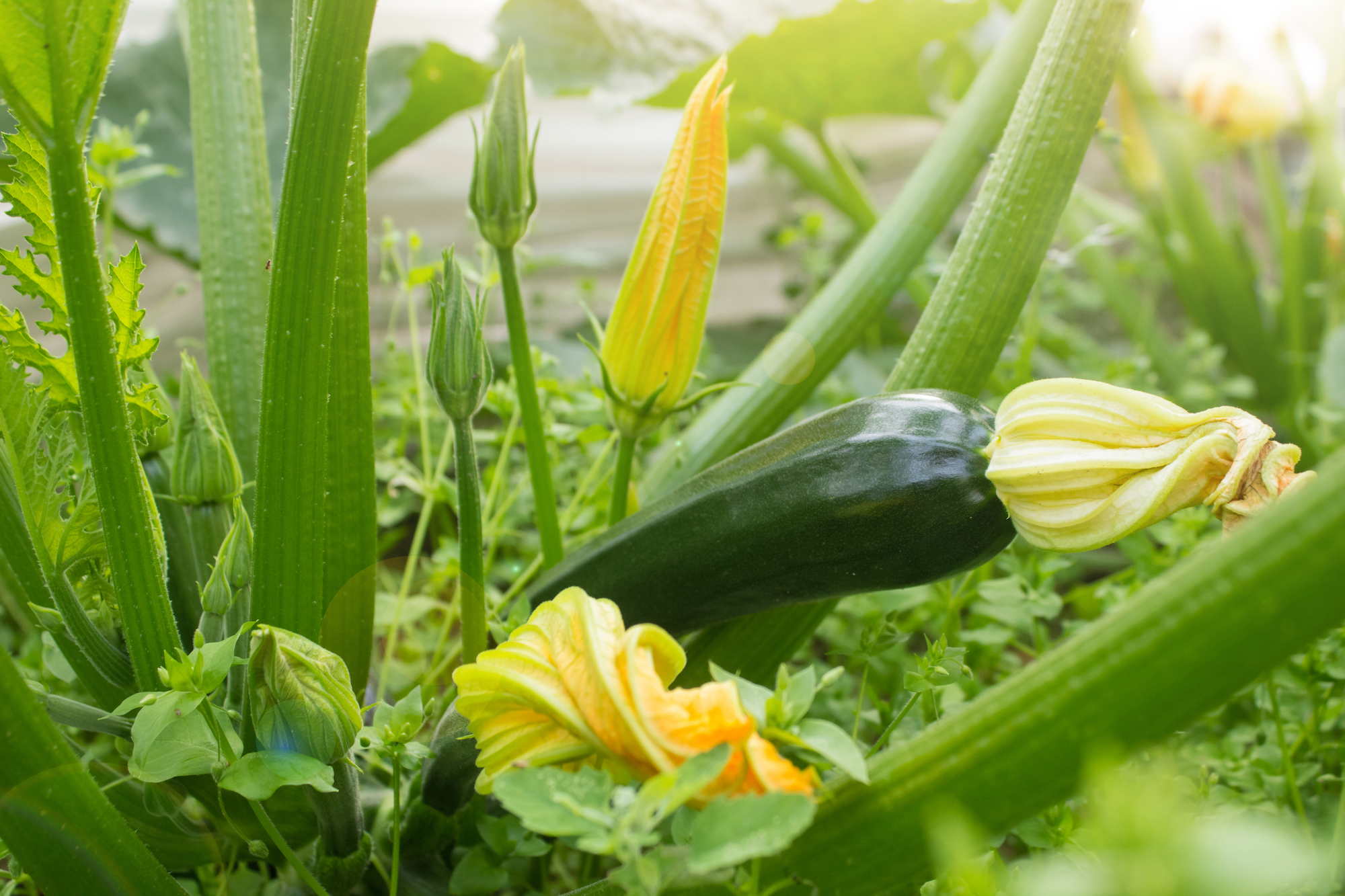
In fact, the flowers make good eating too, typically stuffed or simply battered and then fried. But only pick the male flowers—the ones without a bulge behind them—or else you won’t get any fruit!
How to Store Zucchini
- Fresh summer squash has a relatively short shelf life. Store unwashed zucchini in a plastic or paper bag with one end open to encourage air circulation, and pop them in the refrigerator crisper drawer. They’ll keep for 10 days.
- Too much zucchini? Freeze it! It will keep for 3 months. See how to blanch and store zucchini in the freezer!
Gardening Products
Cooking Notes
- Zucchini can be overwhelming once it starts producing. While zucchini bread is great, there are many other ways to enjoy this summer squash! See our Best Zucchini Recipes.
- Squash flowers are edible and make a tasty treat when fried in a light batter.

More Like This


Comments

The greyish appearance suggests downy mildrew or another fungus. The best ways to combat: spray with a fungicide (as your garden center), improve air circulation, use wider spacing when planting, avoid shade, do not water leaves with overhead sprinkling or get leaves wet (water at soil leve), and use resistant cultivars.
Normally, the male flowers on squash show up first, followed by the females in about 7 to 10 days, though it seems to take longer if it's been rainy.
Your diagnosis seems correct. The flowers were not fertilized because of the lack of bee activity. This can be influenced by rain and weather conditions. To aide pollination. With a Q-tip, take off the pollen from the stamen of the male flower and brush it onto the female flower's stigma in the center. You could also pluck a male flower (the one without the bulb or ovary at its base), strip off the petals, and use its pollen-covered stamen as a brush. Do this all in the morning when both male and female flowers are open. Next year, get some bee-loving flowers for natural pollination!
- « Previous
- 1
- 2
- …
- 10
- Next »

The tiny fruit at the base of the female blossom is what grows into the big fruit. If it's eaten after polliination, then the fruit will not mature. In terms of zucchini protection, it really depends on the pest. We doubt the issue is voles as they are usually springtime pests. If you are sure you have a rodent issue (versus beetles or slugs or other pest), it could be rabbits. See ways to deter rabbits here: http://www.almanac.com/content/rabbits