
Caption
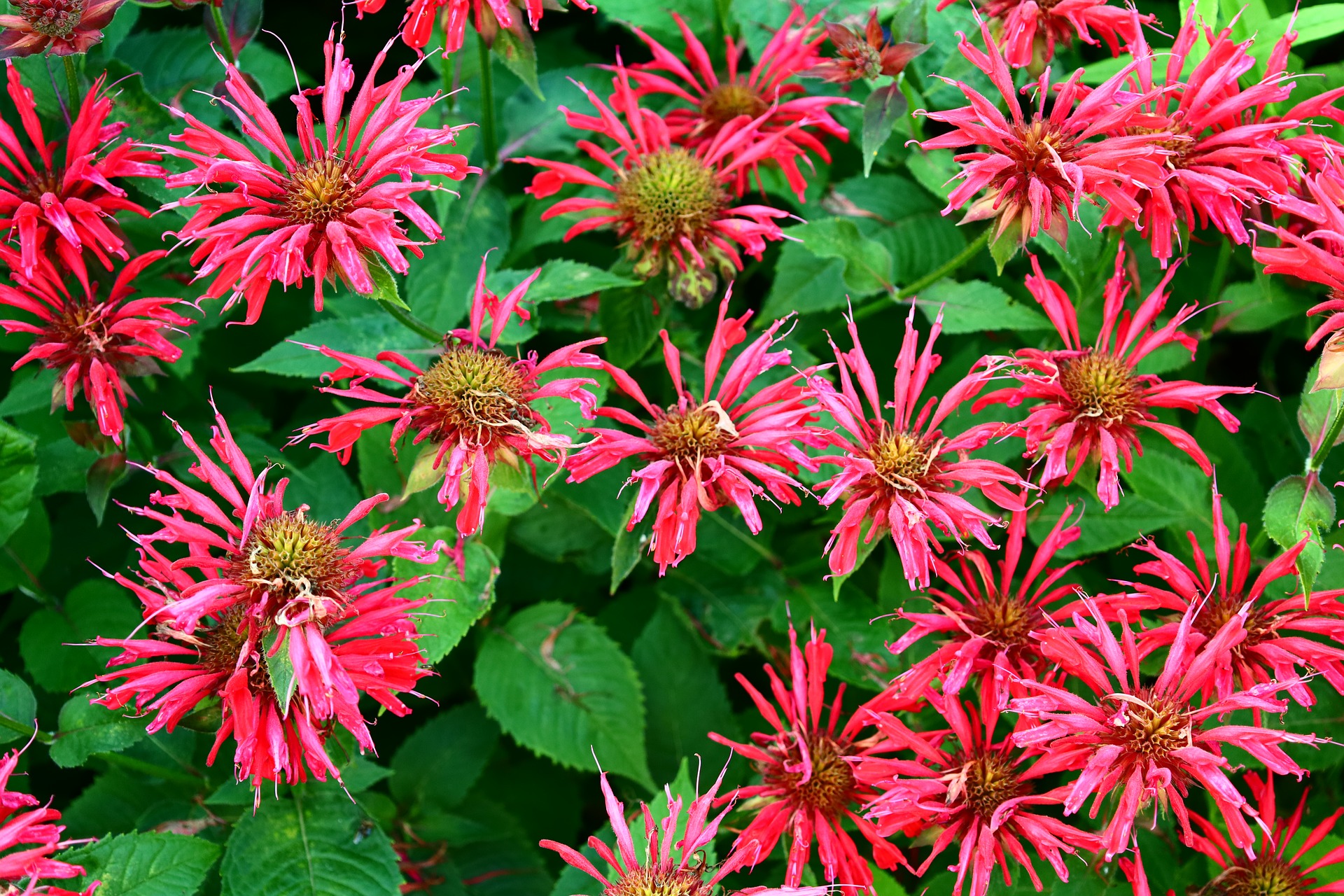
Flowering bee balm (Monarda) in the garden
Planting, Growing, and Caring for Bee Balm Flowers

Bee balm is a native perennial that flowers in summertime. This plant is beloved by hummingbirds, bees, and butterflies! Learn how to plant and grow bee balm flowers—a great addition to a pollinator garden.
About Bee Balm
Bee balm (Monarda spp.), also called wild bergamot, is known for its attractive scarlet flowers that bloom in the summertime and its fragrant foliage. In June and July, slender, tubular flowers are produced in 2- to 3-inch–wide flower heads. Flower colors include white, pink, red, lavender, and purple.
In the garden, its most frequent visitors are hummingbirds, bees, and butterflies because they have the long tongues required to reach the tubular flowers’ nectar. Bumblebees and a few other insects are too big to get into some of the smaller tubular flowers of some bee balms, so the insects practice something called “nectar robbing.” The insects punch a tiny hole at the base of the flower to access the nectar, bypassing the flower’s pollen and “robbing” it of its nectar. Find more flowers that are great for bees.
The seed heads also attract birds in the fall and winter. Learn more about plants that attract butterflies and hummingbirds.
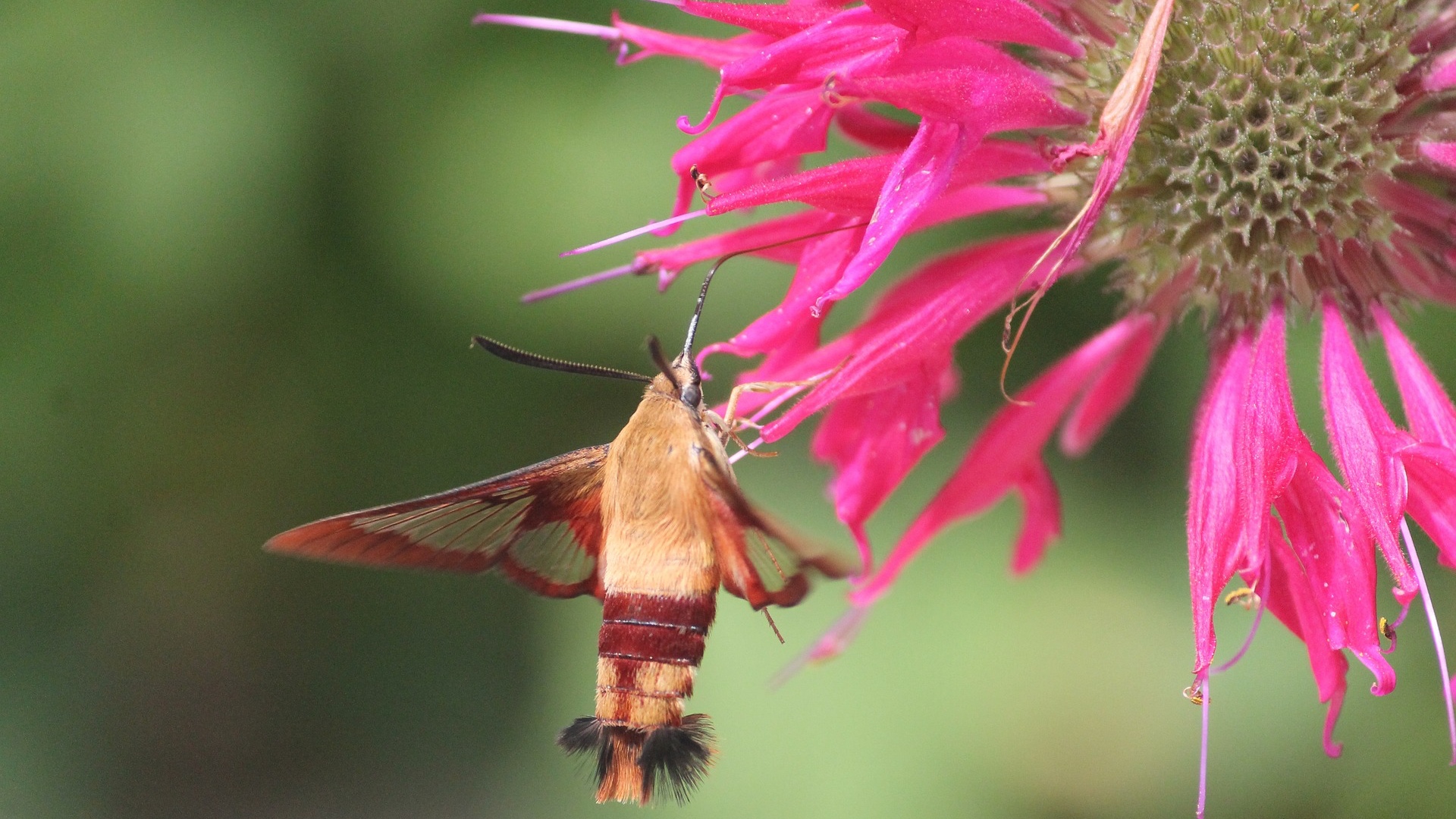
Given its height (2–4 feet), bee balm makes for an excellent background plant in a flower bed. Consider it as part of a pollinator garden!
Check out this video to learn more about the benefits of growing bee balm:
Read Next
Types
- Monarda didyma is bright red and grows 3 to 4 feet tall.
- M. didyma varieties that are resistant to powdery mildew include ‘Marshall’s Delight’ (bright pink), ‘Jacob Cline’ (deep red), and ‘Raspberry Wine’ (dark red).
- M. fistulosa produces lavender-pink blooms in late summer; tolerant of dry soils; commonly called “wild bergamot.”
- M. pringlei grows 18 inches tall and is immune to powdery mildew. ‘Petite Wonder’ and ‘Petite Delight’ are pink varieties.
Gardening Products
More Like This



Is it possible the flower heads are just done? Prompt removal of the spent flower heads will prolong the bloom period.
Bee balms like an even supply of moisture during the growing season. For best performance, water bee balms every 7 to 10 days during dry periods. When watering, soak the soil to a depth of 6 to 8 inches. Applying a mulch around the plants will help to conserve soil moisture and reduce the frequency of watering.
These flowers do indeed get powdery mildew, a fungal disease. What you'll see in this case is a "powder" on the upper leaf surfaces and lots of leaf drop.
To avoid this issue, 1. plant in full sun, 2. space plants 1 1/2 to 2 feet apart, 3. divide plants every 2 to 3 years and 4. water during dry periods. Also, remove and destroy disease-infested plant debris in the fall. The fungal spores of powdery mildew survive the winter on disease-infested plant debris. The removal and destruction of this material removes the source of next year's infection.
Finally, buy mildew-resistant varieties. Varieties that possess good mildew resistance include 'Marshall's Delight' (bright pink flowers), 'Gardenview Scarlet' (scarlet-red flowers), 'Violet Queen' (violet-blue flowers), 'Raspberry Wine'(wine-red flowers), and 'Colrain Red' (purplish red flowers).

Comments