
Caption
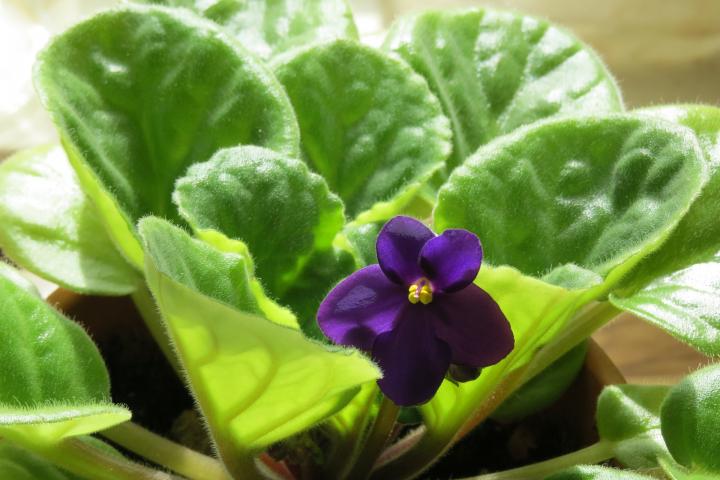
African Violets are delightful houseplants and will brighten up any room with their purple, pink, or white colors.
Growing African Violet Plants: Watering, Light, Repotting, and Pests

Read Next
Planting
How to Plant African Violets
- You can use an actual African violet potting mix or an all-purpose potting soil, as long as it is well-draining. Here’s how to create your own mix.
- Keep African violets planted in small pots and repot every few years to mix in fresh soil. Being a bit pot-bound encourages African violets to bloom more, so don’t be too quick to give them more space.
- The soil should be loose and well-draining; high organic matter content is a plus. Learn about organic soil amendments.
- When repotting African violets, don’t plant them any deeper than they were already planted, and be careful not to bury the crown. African violets’ stems can be susceptible to rot if kept too moist.
Growing
How to Care for African Violets
Watering
- Keep the soil lightly moist, but be careful not to overwater, as African violets’ soft stems are very susceptible to rot. Learn more about proper watering and care.
- Use room-temperature water, as chilled water can leave marks on the leaves.
- Leaves are susceptible to rot and fungal spots if kept in high humidity, so water African violets from the bottom to avoid getting excess water on the foliage.
Lighting
- African violets prefer bright, indirect light. Avoid direct sunlight and keep them at least a few feet away from bright south- or west-facing windows. An east- or north-facing window gives them the best lighting without the risk of burning their sensitive foliage.
- Artificial lighting works well, too. Use fluorescent or LED bulbs to supplement natural lighting.
- Thin, dark green leaves and leggy stems tell you the plant is getting too little light; light green or bleached leaves indicate too much light.
Fertilizing
- During the active growing season (spring and summer), fertilize every 2 weeks with a high-phosphorous plant food. Only start fertilizing when the plant appears to need an extra boost (slow, thin growth; pale or yellowing leaves).
- Over-fertilizing is a more common problem than under-fertilizing since most soil mixes come infused with plenty of nutrients.
General African Violet Care
- According to Julie Weisenhorn, an Extension educator at the University of Minnesota, “If you are comfortable, your African violet is comfortable. Optimal room temperature for growing African violets is between 60°F and 80°F and ideally 70°F.” However, some are more tolerant of cooler conditions. In any case, keep them away from drafty windows in winter.
- Plants should be shifted to larger pots as they grow, but keeping African violets slightly root-bound can encourage them to bloom. One sign that your violet needs repotting is wilted leaves.
- The fuzzy leaves have a tendency to collect dust and dirt. Brush them off gently with a small, soft-bristled paintbrush.
For more information on African violets, visit the website of the African Violet Society of America.
Types
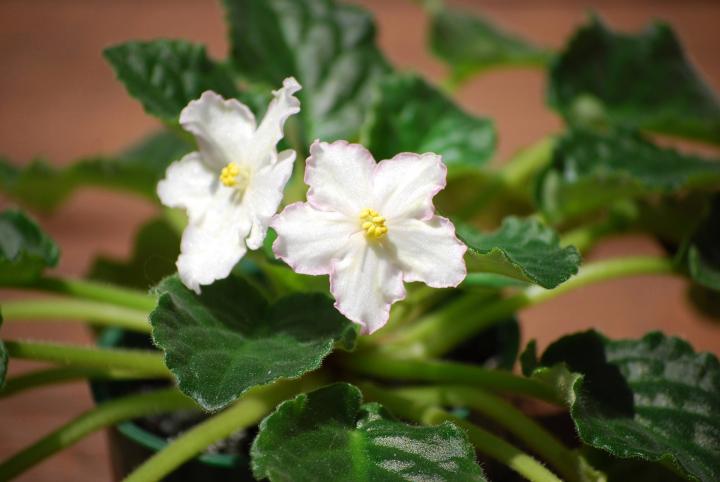
Hundreds of varieties and hybrids exist, from miniature violets to trailing varieties! They differ mainly in the colors of their flowers, which range from white to purple, though some varieties also have variegation in their foliage and flowers.
African violets are typically classified by size, based on how wide they grow:
- Miniature: less than 8 inches across
- Standard: 8–16 inches across
- Large: more than 16 inches across
Gardening Products




African violets grow well under artificial light, such as in an office. Try it out!
If you are using African Violet plant food, that's a good thing; it's fertilizer that's high nitrogen content which causes leaf growth at the expense of blooms. If you have old leaves, it's OK to remove them.
The usual reason African Violets do not bloom is lack of light. They could do with 12 hours of bright light! You say your plant is getting plenty of light, however, fall is approaching and the daylight hours are lessening. If you really wanted blooms in fall/winter, you could consider inexpensive “cool white” fluorescent lights. Here are more reasons for lack of blooms:
http://www.avsa.org/faq-blooming
If your African Violet flowers turn brown, it's possible that your plant has Botrytis blight which is caused by a fungus from too much humidity and poor air circulation. Isolate the infected plant
and remove the diseased leaves and blooms. Increase air circulation by spacing plants at least 1 foot apart. You can also apply a fungicide. We would suggesting taking a sample to your local cooperative extension or garden nursery.

Comments